
Food safety guides
What can cats eat?
The answer, before the article. 10 categories covering what is safe, what needs care, and what to never let near your cat.
- Published sources
- Verdict up front
- Free, no sign-up

What can cats eat? Quite a lot of ordinary food, from a specific list: plain cooked chicken, a little tuna, a spoonful of pumpkin, a bite of melon. The harder question is what human food is bad for cats, since a handful of ordinary kitchen staples, harmless to a person or a dog, are dangerous to a cat. This page indexes human foods cats can and cannot eat, organized into ten categories, so you can go straight to what you need.
Why a cat's food safety list isn't a dog's, or a person's
Cats are obligate carnivores, not just picky eaters. Their bodies run on animal protein and fat, not the broader diet a dog or a person can process, and they need nutrients like taurine that occur almost exclusively in meat. Cats also lack some of the liver enzymes other mammals use to break down plant compounds and sugars, which is why a dog's food safety list doesn't transfer cleanly to a cat. Onion and garlic show this well: both damage a cat's red blood cells at a smaller dose than they would a dog of similar size, and body size adds to the gap. An amount of chocolate a large dog shrugs off is proportionally much bigger for a four-kilogram cat, so the line between foods poisonous to cats and foods that are merely rich sits somewhere most people don't expect.
How the safe, caution and never verdicts work
Every guide opens with one of three verdicts, stated before any explanation. Safe means fine for a healthy adult cat in a reasonable amount. Caution means not toxic, but with a real catch: a prep step, a small portion, or a part of the food, a pit, a peel, a skin, removed first. Never means no safe amount exists, and the guide covers what to do if it already happened. Each verdict is tied to a reason drawn from veterinary and nutrition sources, not stated as an unexplained rule.
What the ten categories cover
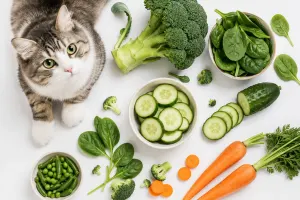
The categories here split the question by type of food, since almost everything in front of a cat fits one of ten groups. Fruits covers what fruits can cats eat, from a safe bite of melon or blueberry to the grapes and raisins that never belong in a bowl. Vegetables covers what vegetables can cats eat, plain cooked carrot and pumpkin included, and why raw onion and garlic never make the list.
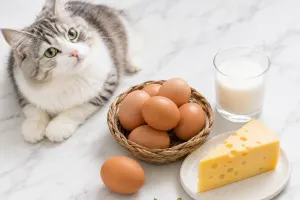
Meat and seafood answers what meat can cats eat, chicken and tuna included, and why fish works better as an occasional extra than a daily habit. Toxic foods gathers every genuine never verdict, chocolate, grapes and alcohol among them, into one list with what to do if it happens. The remaining six work the same way: dairy and eggs for cheese and eggs, grains and seeds for rice and bread, and sweets, junk food, herbs and spices, and treats and snacks for the rest of a normal counter.
Frequently asked questions
How does the safe, caution and never system work on this site?
Every food guide opens with one of three verdicts. Safe means fine for a healthy adult cat in a normal amount. Caution means not toxic, but with a real catch, a prep step, a small portion limit, or a part of the food to remove first. Never means there is no safe amount, and the guide covers what to do if it already happened.
What human foods can cats eat?
Plain cooked meat and fish are the safest human foods for a cat, since they're closest to a cat's normal diet. Small amounts of a few fruits and vegetables, like melon, blueberries, cooked carrot or pumpkin, work as an occasional extra. Each category guide on this page covers exactly which foods qualify and how much is reasonable to offer.
What can cats not eat?
A short list of ordinary kitchen ingredients is dangerous to cats in any amount: onion, garlic, chocolate, grapes, raisins, alcohol and xylitol among them. These are not a matter of moderation the way many other foods are. The toxic foods guide covers the full list, why each one is dangerous, and what to do if your cat eats one.
What should I do if my cat eats something on the never list?
Call your vet or an animal poison control line right away, rather than waiting to see if symptoms show up. Have the packaging, or a rough idea of what and how much your cat ate, ready to describe. Do not try to induce vomiting on your own unless a vet specifically tells you to, since that is not safe for every ingredient.
What are the signs my cat ate something toxic?
Vomiting, diarrhea, drooling, weakness and pale gums are common early signs across most toxic foods, though the exact pattern depends on what was eaten. Tremors, a fast heart rate or rapid breathing can follow chocolate, caffeine or alcohol specifically. Any known or suspected ingestion is worth a call to your vet immediately, even before symptoms appear.
Do treats count differently than a regular meal?
Treats and human food extras are meant to stay a small slice of a cat's day, not a habit that competes with a balanced diet. A common guideline keeps treats and extras under about 10 percent of daily calories, with the rest coming from a complete cat food. The cat calorie calculator can work out what that 10 percent looks like for your cat.
Why does a cat need a different food safety list than a dog?
Cats are obligate carnivores with a smaller body and a more sensitive response to certain compounds than dogs have. Onion and garlic, for example, are more dangerous to a cat than to a similarly sized dog, because a cat processes the sulfur compounds involved less efficiently. A food safety list built for dogs does not transfer safely to a cat.
Where does the safety information on this site come from?
Each guide draws on established veterinary and feline-nutrition sources, including the ASPCA Animal Poison Control Center and the Cornell Feline Health Center, both named at the bottom of every guide. Nothing here is written as a diagnosis, and anything that looks like a real emergency is a reason to call your vet directly rather than rely on a website.
Every category, at a glance
Ten categories, each with its own verdict, safety table and sources.
 In moderation
Fruits
Can Cats Eat Fruit?
Small amounts of melon, blueberries or apple flesh are fine. Never grapes or raisins.
 In moderation
Vegetables
Can Cats Eat Vegetables?
Plain cooked carrot, broccoli or pumpkin in small amounts. Skip onion, garlic and leek entirely.
 Safe
Safe
Meat & Seafood
Can Cats Eat Meat and Fish?
Yes, this is what a cat's body runs on. Keep it plain, cooked and boneless, since raw, bones and processed meats carry the real risk.
 In moderation
Dairy & Eggs
Can Cats Eat Dairy and Eggs?
Cooked egg is fine in small amounts. Most adult cats lose the enzyme to digest lactose, so milk and cheese are occasional, not routine.
 Never
Never
Toxic Foods
What Foods Are Toxic to Cats?
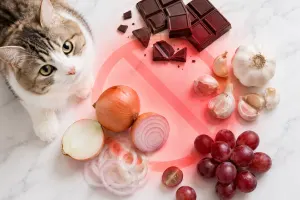
Onion, garlic, chocolate, grapes, raisins, alcohol, caffeine and xylitol. Call a vet immediately if your cat eats any of these.
 In moderation
Grains & Seeds
Can Cats Eat Grains and Seeds?
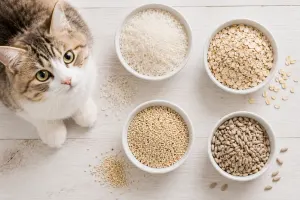
Plain cooked rice, oats and most seeds are harmless in tiny amounts. Corn cobs and raw dough are the real risks here.
 Never
Never
Sweets
Can Cats Eat Sweets?
No. Chocolate is a confirmed poison, xylitol is an unconfirmed one treated the same way, and no sweet offers real nutrition.
 Never
Never
Junk & Fast Food
Can Cats Eat Junk Food or Fast Food?
No. Fries, chips, burgers and pizza carry far more salt and fat than a cat's body can process, and the fat load is a genuine pancreatitis trigger.
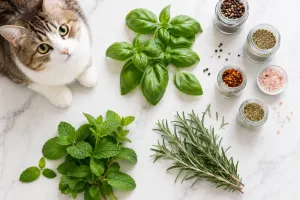 In moderation
Herbs & Spices
What Spices Can Cats Eat?
Basil and rosemary are fine in small amounts. Onion powder and nutmeg are not, even in a trace hidden in a seasoning blend.
 Safe
Safe
Treats & Snacks
Can Cats Eat Treats & Snacks?
Yes. Commercial cat treats and plain human snacks both work, as long as they stay under about 10 percent of a cat's daily calories.

Not sure what your cat just ate?
Search any food by name, or work out a safe portion with our free calculators. Both take about thirty seconds.
