
Can Cats Eat Meat and Fish?
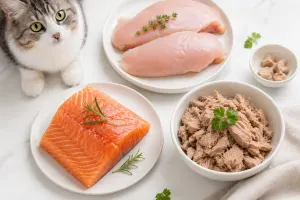
Why cats react differently to meat & seafood
Meat and fish are the one category on this site a cat's body is actually built to run on. Cats are obligate carnivores, a biological classification meaning they can't meet their basic nutrient needs from anything but animal tissue. The clearest example is taurine, an amino acid that keeps heart muscle contracting properly and the retina intact. Most mammals synthesize their own taurine from other amino acids, but cats can't, so it has to come from what they eat, and it's found almost exclusively in animal muscle and organ tissue, not in plants or grains.
A cat fed a diet without enough taurine can develop dilated cardiomyopathy, a weakening and enlargement of the heart, and retinal degeneration, both well documented consequences of the deficiency. Complete commercial cat foods are formulated around this reality, built on animal protein with taurine present at the levels a cat needs. Plain cooked meat and fish sit close to that same foundation, which is why, unlike almost every other category on this site, the question here isn't whether cats should be eating meat, it's how it's prepared and which specific items or amounts cross into real risk.
Raw meat and fish carry a genuine bacterial load, cooked bones turn brittle and splinter, organ meat fed too often overloads a cat with vitamin A, and a diet built heavily around fish brings its own separate problems. None of that changes the underlying picture: a cat's short digestive tract is built to process protein and fat efficiently rather than ferment plant fiber, its teeth are built for shearing rather than grinding, and its metabolism runs preferentially on protein and fat for energy rather than carbohydrate.
Meat and fish are the default this page starts from as safe. The guidance below is about staying inside the boundaries that keep it that way, not about whether to feed it at all.
Cooked, plain and boneless
Which meat & seafood are safe for cats?
The verdict above covers meat & seafood as a whole. For the specific one in front of you, this is the breakdown.
| Item | Verdict | Note |
|---|---|---|
| Plain cooked chicken |
Safe
Skinless, boneless and unseasoned, this is the protein most cats tolerate best and the one most complete cat foods are built around. See our chicken guide for full detail on skin, broth and bones. |
Skinless, boneless and unseasoned, this is the protein most cats tolerate best and the one most complete cat foods are built around. See our chicken guide for full detail on skin, broth and bones. |
| Plain cooked turkey |
Safe
Lean and easy to digest cooked and unseasoned. Skip pre-brined or self-basting turkey, which is often injected with a sodium solution well beyond what a cat's kidneys need to process. |
Lean and easy to digest cooked and unseasoned. Skip pre-brined or self-basting turkey, which is often injected with a sodium solution well beyond what a cat's kidneys need to process. |
| Plain cooked beef |
Safe
A good source of protein and iron in small, plain, cooked amounts. Trim visible fat first, since beef fat is calorie-dense and adds little a complete diet doesn't already provide. |
A good source of protein and iron in small, plain, cooked amounts. Trim visible fat first, since beef fat is calorie-dense and adds little a complete diet doesn't already provide. |
| Plain cooked pork |
Safe
Fine cooked through and plain, lean cuts only. Skip anything cured, smoked or seasoned, and always cook pork fully, since undercooked pork carries its own parasite risk beyond ordinary bacteria. |
Fine cooked through and plain, lean cuts only. Skip anything cured, smoked or seasoned, and always cook pork fully, since undercooked pork carries its own parasite risk beyond ordinary bacteria. |
| Plain cooked lamb |
Safe
A less common but perfectly reasonable protein cooked and plain. Naturally fattier than chicken or turkey, so trim visible fat and keep portions on the smaller side. |
A less common but perfectly reasonable protein cooked and plain. Naturally fattier than chicken or turkey, so trim visible fat and keep portions on the smaller side. |
| Plain cooked white fish (cod, haddock, tilapia) |
Safe
Low in fat and easy on digestion, cooked and boneless. A reasonable occasional addition, though like any fish it's better as a rotation item than a daily feature. |
Low in fat and easy on digestion, cooked and boneless. A reasonable occasional addition, though like any fish it's better as a rotation item than a daily feature. |
| Salmon (cooked) |
Safe
Cooked, boneless and plain salmon is a good occasional addition. Oilier than white fish, so keep it a few times a week at most rather than daily, given the fat-balance issues fish-heavy diets can cause. |
Cooked, boneless and plain salmon is a good occasional addition. Oilier than white fish, so keep it a few times a week at most rather than daily, given the fat-balance issues fish-heavy diets can cause. |
| Shrimp (cooked, shelled) |
Safe
Plain, fully cooked and shelled shrimp, tail removed, is fine in small amounts. Skip fried, buttered or seasoned shrimp, and remove the shell and tail entirely, since they're a choking hazard. |
Plain, fully cooked and shelled shrimp, tail removed, is fine in small amounts. Skip fried, buttered or seasoned shrimp, and remove the shell and tail entirely, since they're a choking hazard. |
| Canned tuna |
Caution
Fine as an occasional small treat, not a regular feature. Tuna is one of the oily fish most linked to steatitis when overfed. See our tuna guide for portion specifics. |
Fine as an occasional small treat, not a regular feature. Tuna is one of the oily fish most linked to steatitis when overfed. See our tuna guide for portion specifics. |
| Raw meat |
Never
Carries a real risk of salmonella and campylobacter that can sicken a cat and spread to people handling the food. Cornell Feline Health Center and the AVMA both advise against raw diets for this reason. |
Carries a real risk of salmonella and campylobacter that can sicken a cat and spread to people handling the food. Cornell Feline Health Center and the AVMA both advise against raw diets for this reason. |
| Raw fish |
Never
Carries the same bacterial risk as raw meat, plus thiaminase, an enzyme in some raw fish that destroys vitamin B1 and can cause thiamine deficiency with regular feeding. Cooking eliminates both problems. |
Carries the same bacterial risk as raw meat, plus thiaminase, an enzyme in some raw fish that destroys vitamin B1 and can cause thiamine deficiency with regular feeding. Cooking eliminates both problems. |
| Liver and other organ meat |
Caution
Nutrient-dense but very high in vitamin A. Feeding it regularly over weeks to months can cause hypervitaminosis A, a buildup that leads to painful, irreversible bone changes. Keep it occasional and small. |
Nutrient-dense but very high in vitamin A. Feeding it regularly over weeks to months can cause hypervitaminosis A, a buildup that leads to painful, irreversible bone changes. Keep it occasional and small. |
| Cooked bones |
Never
Cooking dries bones out and makes them brittle, so they splinter into sharp fragments that can lodge in the throat or perforate the gut on the way through. Never safe, poultry bones included. |
Cooking dries bones out and makes them brittle, so they splinter into sharp fragments that can lodge in the throat or perforate the gut on the way through. Never safe, poultry bones included. |
| Raw bones |
Caution
Less likely to splinter than cooked bone, but still a real choking and tooth-fracture risk, plus the same salmonella and campylobacter exposure as any raw meat. Only worth feeding under a vet's guidance. |
Less likely to splinter than cooked bone, but still a real choking and tooth-fracture risk, plus the same salmonella and campylobacter exposure as any raw meat. Only worth feeding under a vet's guidance. |
| Deli or lunch meat and ham |
Caution
Usually high in sodium and often cured with nitrates, sometimes flavored with onion or garlic powder, which is genuinely toxic to cats. A plain, unseasoned sliver is lower risk than a regular habit. |
Usually high in sodium and often cured with nitrates, sometimes flavored with onion or garlic powder, which is genuinely toxic to cats. A plain, unseasoned sliver is lower risk than a regular habit. |
| Bacon and sausage |
Never
Cured, salted and high in fat, and sausage in particular is frequently seasoned with onion or garlic powder. The combination of sodium, fat and hidden allium seasoning makes these worth avoiding as food, not just treats. |
Cured, salted and high in fat, and sausage in particular is frequently seasoned with onion or garlic powder. The combination of sodium, fat and hidden allium seasoning makes these worth avoiding as food, not just treats. |
Safe means fine as described here. Caution means keep it small, plain and occasional. Never means no safe amount, keep it out of reach.
How much meat or fish can a cat eat?
Plain cooked chicken, turkey, beef, lean pork or lamb, with all bones removed and nothing added, no salt, oil, butter, garlic or onion, is a solid addition to a normal diet, whether mixed into a meal or given as an occasional extra. As with any treat or topper, keep it under roughly 10 percent of daily calories so it doesn't crowd out a complete, balanced food; our calorie calculator gives a working number for a specific cat's weight.
Chicken is the protein most people reach for first, and our chicken guide covers plain cooked chicken in full, including skin, broth and seasoning specifics. Fish works the same way in small amounts, and our tuna guide goes deeper on canned tuna, portion size and why it should stay a treat rather than a diet staple. What tips plain meat and fish from a good addition into a real risk is almost always one of four things.
Raw meat and fish carry salmonella and campylobacter, which can make a cat unwell and can also spread to the people preparing the food or cleaning a litter tray afterward; cooking removes that risk entirely. Our raw chicken guide covers the actual contamination numbers and the newer bird flu risk in full. Bones, cooked ones especially, dry out and turn brittle in a way raw bone doesn't, so they splinter into sharp fragments that can catch in the throat or perforate the gut; raw bone is a more supervised, vet-guided topic and not a casual substitute.
Organ meat like liver is genuinely nutritious in small amounts but concentrated in vitamin A, so it needs to stay occasional, not a regular feature. Fish specifically is best kept to a few times a week rather than a daily habit, since a fish-heavy diet carries its own separate risks around thiamine and fat balance, covered below. Processed meats, deli ham, bacon and sausage, are worth treating as a different food entirely, not a variation on plain meat, given their salt, preservatives and often onion or garlic seasoning.
How to introduce meat or fish to your cat safely
Introduce a new meat or fish the same way you'd introduce any new food: plain, cooked, in a genuinely small amount, one protein at a time. A teaspoon-sized piece of plain cooked chicken, turkey or white fish on its own, not mixed into a full meal, is enough for a first try, since the goal at this stage is watching how one specific food sits with a specific cat, not feeding a meal's worth of it.
Offering two new proteins together, a bit of turkey and a bit of salmon the same day, makes it impossible to tell which one caused a problem if something goes wrong. After that first taste, the next 24 hours matter more than the first few minutes. Most reactions show up as vomiting, loose stool or reduced appetite within that window rather than immediately, so a cat that seems fine right after eating can still react later the same day.
If nothing unusual turns up, that item can move into a normal rotation at the small, occasional amounts described above. If a cat does react, that's worth noting and avoiding going forward rather than retesting, since a genuine sensitivity to a protein doesn't typically resolve with repeated exposure. This same first-taste approach applies every time a new protein gets introduced, since a cat that handles chicken fine can still react differently to beef, pork or a new fish.
Which meat & seafood should cats never eat?
- Raw meat and raw fish: a real bacterial risk from salmonella and campylobacter that can sicken a cat and spread to anyone handling the food or a litter tray afterward.
- Cooked bones of any kind, poultry included: cooking makes them brittle enough to splinter and injure the throat or gut on the way through.
- Liver or other organ meat fed often or in large amounts: concentrated vitamin A builds up over weeks to months and can cause hypervitaminosis A, a painful, irreversible bone condition.
- Processed meats like deli ham, bacon and sausage: high sodium, nitrates, and often hidden onion or garlic powder. See our toxic foods guide for what onion and garlic actually do.
- A diet built heavily around fish, day after day: raw fish brings thiamine breakdown, and too much oily fish without enough vitamin E is linked to steatitis, a painful fat inflammation.
- Fat trimmings, skin and cooking drippings offered regularly: a recognized pancreatitis risk factor, even though none of it is toxic on its own.
- Raw bones without a vet's guidance: less likely to splinter than cooked bone, but still a choking, tooth-fracture and bacterial risk.
Full guides: Can Cats Eat Chicken?, Can Cats Eat Raw Chicken?, Can Cats Eat Tuna?, Can Cats Eat Ham?, Northwest Naturals Cat Food Recall
Signs of a bad reaction to watch for
- Vomiting or diarrhea within a day of raw meat or fish specifically.
- Drooling, pawing at the mouth, gagging or difficulty swallowing after any bone-in food, cooked or raw.
- Reduced appetite, a hunched posture or repeated vomiting after fatty trimmings or drippings, possible signs of pancreatitis.
- Stiffness, reluctance to move the neck, or painful joints developing over weeks to months on a liver-heavy diet, a sign of vitamin A toxicity.
- Lethargy, wobbliness, loss of appetite or vomiting developing over weeks on a raw, fish-heavy diet, a sign of thiamine deficiency.
- Tender or lumpy fat under the skin along with reduced appetite, signs of steatitis from too much oily fish.
Any of these, or anything that seems off beyond what is listed here, is worth a call to your vet. Our guide to the early signs a cat is sick covers the wider list of what to watch for at any time, not just after eating something new.
Frequently asked questions
Can cats eat meat?
Yes. Cats are obligate carnivores, meaning their bodies need nutrients, taurine especially, that come almost only from animal tissue. Plain cooked chicken, turkey, beef, pork or lamb, with no bones, salt or seasoning, is a genuinely good addition to a normal diet. The real risks in this category come from raw meat, bones and processed cuts, not from meat itself.
Can cats eat fish?
Yes, in moderation. Plain cooked fish like salmon, white fish or a small amount of canned tuna is fine as an occasional addition. A diet built heavily around fish carries its own risks though: thiamine breakdown from raw fish, and steatitis, a painful fat inflammation, from too much oily fish without enough vitamin E.
Can cats eat raw meat or raw fish? Is raw meat safe for cats?
Not recommended. Raw meat and raw fish carry a real risk of salmonella and campylobacter, which can make a cat sick and spread to people handling the food or a litter tray. Cornell Feline Health Center and the AVMA both advise against raw diets for this reason. Cooking removes the risk.
Can cats eat turkey, beef or pork?
Yes, plain and cooked. Turkey, beef and lean pork, boneless and without salt, oil or seasoning, are all reasonable additions to a cat's diet in small amounts. Avoid fatty cuts, skin, and any pork that's cured or processed, like bacon or sausage, which carry a separate sodium and seasoning risk.
Can cats eat bones?
Cooked bones should never be fed: cooking dries them out and makes them brittle, so they splinter and can injure the throat or gut. Raw bones are a more nuanced topic, less likely to splinter, but still a choking, tooth-fracture and bacterial risk, best handled only under a vet's guidance.
Can cats eat liver?
In small, occasional amounts, yes. Liver is nutrient-dense but very high in vitamin A, and feeding it regularly over weeks to months can cause hypervitaminosis A, a toxic buildup that leads to painful, irreversible bone and joint changes. Treat liver as an occasional topper, not a regular protein source.
Can cats eat ham, bacon, sausage or deli meat?
Best avoided as a regular food. Ham, bacon, sausage and deli meat are cured or processed with sodium and nitrates a cat's diet doesn't need, and often hidden onion or garlic powder, which is genuinely toxic to cats. An occasional plain, unseasoned sliver is lower risk than a habit.
Can cats eat salmon and shrimp?
Yes, cooked and plain. Cooked, boneless salmon and shelled, cooked shrimp are both fine as an occasional addition, without seasoning, oil or butter. Keep portions small and infrequent rather than a daily habit, since a diet too heavy in fish carries its own separate risks.
Sources for this guide
- ASPCA Animal Poison Control Center The reference list behind which human foods are genuinely toxic to cats.
- Cornell Feline Health Center Background on feline nutrition and why cats need a meat-based diet.
- WSAVA Global Nutrition Guidelines The nutritional framework behind why extras cannot replace a complete diet.
 By Ahsan Nawaz
Published Updated
