
Can Cats Eat Junk Food or Fast Food?
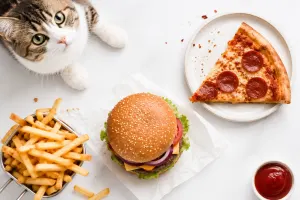
Why cats react differently to junk & fast food
Fast food and packaged snacks are formulated for a much larger animal with different nutrition needs, and several of the ingredients that make them taste good to a person carry a real, checkable risk for a cat. Onion and garlic powder are standard in burger seasoning, breading, ketchup and barbecue sauce, and the powdered form is not a smaller dose than the fresh vegetable, it is a more concentrated one, since dehydrating onion or garlic removes the water and leaves the toxic compound behind.
Salt is a separate risk with its own threshold: symptoms can start around half a gram of salt per kilogram of body weight, so a typical 9-pound cat can reach that point with roughly 2 grams, well under a teaspoon, which a heavily salted portion of fries or chips can approach faster than it looks.
Fat is the third mechanism, and the one with the most serious downside: a sudden greasy meal is a real trigger for pancreatitis in cats, an inflamed, painful pancreas, not just an upset stomach. Caffeine in soda and theobromine in chocolate are different again, both stimulants a cat's body clears far more slowly than a person's does.
Salt, fat and hidden onion
Which junk & fast food are most dangerous to cats?
The verdict above covers junk & fast food as a whole. For the specific one in front of you, this is the breakdown.
| Item | Verdict | Note |
|---|---|---|
| French fries (plain) |
Caution
Cooked potato is not toxic, cooking destroys most of its solanine. The real risk is the oil and salt, and any dip: never offer ketchup, mayo or a seasoned fry, both often hide onion powder. |
Cooked potato is not toxic, cooking destroys most of its solanine. The real risk is the oil and salt, and any dip: never offer ketchup, mayo or a seasoned fry, both often hide onion powder. |
| Potato chips |
Caution
A stray plain chip is not an emergency, no nutrition and roughly 35 to 40 percent fat by weight. Any flavored chip, barbecue, sour cream and onion, ranch, hides onion or garlic powder: skip entirely. |
A stray plain chip is not an emergency, no nutrition and roughly 35 to 40 percent fat by weight. Any flavored chip, barbecue, sour cream and onion, ranch, hides onion or garlic powder: skip entirely. |
| Pizza (cheese) |
Caution
A lick of plain cheese is about the outer limit; most adult cats have reduced lactase and can get loose stool from it. A garlic- or onion-seasoned crust or sauce is a hard no. |
A lick of plain cheese is about the outer limit; most adult cats have reduced lactase and can get loose stool from it. A garlic- or onion-seasoned crust or sauce is a hard no. |
| Burger patty (plain, home-cooked) |
Caution
The lowest-risk item here if genuinely plain: a thumbnail-sized piece of lean, trimmed beef, cooked at home with no seasoning, given occasionally. Restaurant patties often carry hidden salt or onion powder even when ordered plain. |
The lowest-risk item here if genuinely plain: a thumbnail-sized piece of lean, trimmed beef, cooked at home with no seasoning, given occasionally. Restaurant patties often carry hidden salt or onion powder even when ordered plain. |
| Burger (fast food, bun and sauce) |
Never
Buns, seasoning blends and sauces like ketchup or special sauce routinely carry onion or garlic powder, genuinely toxic to a cat's red blood cells, on top of salt levels far past what a cat handles. |
Buns, seasoning blends and sauces like ketchup or special sauce routinely carry onion or garlic powder, genuinely toxic to a cat's red blood cells, on top of salt levels far past what a cat handles. |
| Fried chicken (breaded) |
Caution
Standard breading recipes use onion and garlic powder as base seasoning, not a rare addition. Bone-in pieces can also splinter and injure the throat or gut. Plain meat only, skin, breading and bones removed. |
Standard breading recipes use onion and garlic powder as base seasoning, not a rare addition. Bone-in pieces can also splinter and injure the throat or gut. Plain meat only, skin, breading and bones removed. |
| Soda & soft drinks |
Never
Caffeine drives up heart rate and causes tremors and restlessness in cats, and a small body means a small dose goes further. Caffeine-free soda skips that risk but is still sugar water, no nutritional point. |
Caffeine drives up heart rate and causes tremors and restlessness in cats, and a small body means a small dose goes further. Caffeine-free soda skips that risk but is still sugar water, no nutritional point. |
| Candy and chocolate |
Never
Chocolate's theobromine is a genuine cardiac and neurological toxin, darker chocolate more so, and any real amount is worth a call to a vet. Plain sugar candy is lower-risk but a choking hazard, no upside. |
Chocolate's theobromine is a genuine cardiac and neurological toxin, darker chocolate more so, and any real amount is worth a call to a vet. Plain sugar candy is lower-risk but a choking hazard, no upside. |
| Ice cream (plain) |
Caution
Most adult cats have little of the enzyme needed to digest lactose, so a small lick can bring on loose stool. Any chocolate, coffee or mocha flavor moves this from caution straight to unsafe. |
Most adult cats have little of the enzyme needed to digest lactose, so a small lick can bring on loose stool. Any chocolate, coffee or mocha flavor moves this from caution straight to unsafe. |
Safe means fine as described here. Caution means keep it small, plain and occasional. Never means no safe amount, keep it out of reach.
What to do if your cat ate junk food
A single dropped fry, a lick of a plain bun or a corner of a plain cheese-only crust is not an emergency for most cats, and the table below breaks down which specific item carries which risk. What warrants a call to a vet is anything seasoned: a bite of a fully dressed burger with sauce, a ketchup-dipped fry, a flavored chip, a slice of pepperoni pizza, or fried chicken with the breading still on, since onion and garlic powder are standard in all of those and there is no established safe dose for a cat.
Soda and any candy or dessert containing chocolate get the same treatment regardless of amount, since caffeine and theobromine are toxic on their own terms and a cat's body clears them slowly. If a cat gets into any of those, do not wait to see if it seems fine: hemolytic anemia from onion or garlic can take three to five days to peak, so a cat that looks normal an hour later has not necessarily dodged anything.
Call a vet or an animal poison control line, and mention what was eaten and roughly how much. For everything else here, the ceiling is small and occasional rather than zero, and the table below is the actual guide to follow, not a blanket rule.
Full guides: Can Cats Eat Cheese?, Can Cats Eat Chicken?, Can Cats Eat Popcorn?
Signs of a bad reaction to watch for
- Vomiting, diarrhea or lethargy within hours of a fatty or salty item, most common after fries, chips or a burger patty
- Pale or yellow-tinged gums, weakness or dark urine, which can take three to five days to appear after any onion- or garlic-seasoned food
- Abdominal pain, hunching or reluctance to be touched near the belly, possible signs of pancreatitis after a fatty meal
Any of these, or anything that seems off beyond what is listed here, is worth a call to your vet. Our guide to the early signs a cat is sick covers the wider list of what to watch for at any time, not just after eating something new.
Frequently asked questions
Can cats eat fast food?
No, not as a regular food. Fast food is built around salt, fat and onion or garlic seasoning in the bun, sauce and breading, all genuine risks for a cat. A small taste of something plain, an unsalted fry or a corner of a plain bun, is not an emergency, but nothing on a fast food menu is worth offering on purpose.
Can cats eat pizza?
A tiny lick of plain cheese is about as far as pizza safely goes, and even that can cause loose stool in a cat with reduced lactase, common in adult cats. Any slice with a seasoned crust, sauce, pepperoni or sausage should stay off-limits, since onion and garlic powder are common in all four.
What should I do if my cat eats fast food?
It depends what was eaten. A plain fry or a corner of a plain bun usually just needs watching for an upset stomach. Anything seasoned, sauced or containing chocolate is different: onion and garlic damage red blood cells over three to five days, and caffeine or theobromine act fast, so call a vet or animal poison control rather than waiting to see.
Why is fried food especially risky for cats?
Because of the fat, not the frying itself. A sudden greasy meal is a real trigger for pancreatitis in cats, a painful, inflamed pancreas, and that risk applies whether the fat comes from fries, fried chicken skin or a greasy burger patty.
Sources for this guide
- ASPCA Animal Poison Control Center The reference list behind which human foods are genuinely toxic to cats.
- Cornell Feline Health Center Background on feline nutrition and why cats need a meat-based diet.
- WSAVA Global Nutrition Guidelines The nutritional framework behind why extras cannot replace a complete diet.
 By Ahsan Nawaz
Published Updated
