Can Cats Eat Cheese? A Safe Feeding Guide

On this page
Cheese is not the kind of danger chocolate or onion is, but it is not a food a cat's body is built to handle well either. Most cats will beg for it, drawn in by the fat and salt more than anything a cat actually needs, and it is one of the most commonly shared human foods precisely because it smells strong and cats find it hard to ignore. Most of what actually matters here comes down to lactose, fat, and one genuinely useful exception that has nothing to do with snacking.
This guide is written from published veterinary sources, named and linked as they come up and listed again at the bottom.
Is cheese safe for cats?
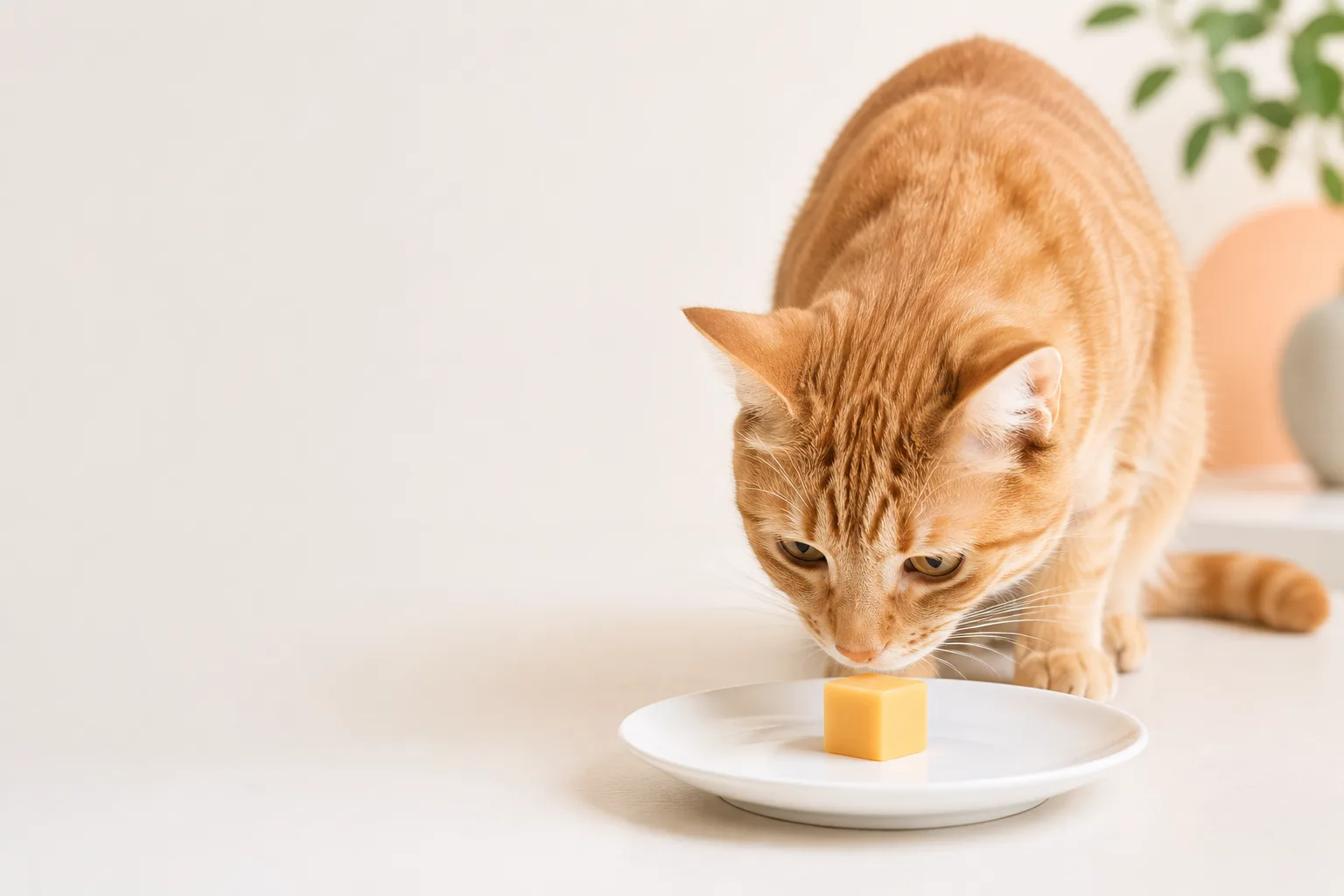
In small amounts, sometimes. A plain, unflavored piece of hard cheese is not toxic to a cat and will not cause the kind of emergency that onion, garlic or chocolate would, so an occasional bite is not a reason to panic. Whether a particular cat actually does well with it depends on two things: how well that cat handles lactose, which varies a lot from one cat to the next, and how the extra fat and sodium sit against the rest of its diet over time.
Neither of those is something you can tell just by looking at a cat, so cheese is best treated as an occasional small extra rather than a food that is simply "fine." Safe in a small amount is not the same as recommended as a regular treat, and the two get confused often enough that it is worth saying plainly. Think of cheese the way you would a rich, salty snack for yourself: fine now and then, not something to build a habit around.
Why are cats lactose intolerant?
Because most cats stop producing enough lactase, as the ASPCA explains, the enzyme that breaks lactose down into sugars the body can absorb, once they are weaned off their mother's milk. Kittens make plenty of lactase while nursing, since milk is their only food, but that supply tapers off with age in most cats, the same way it does in a large share of adult humans who become lactose intolerant later in life.
An adult cat given milk or a soft, lactose-heavy dairy product is often trying to digest a sugar its gut is no longer well equipped to break down. Without enough lactase, lactose passes through largely undigested, drawing water into the intestine and feeding bacteria along the way, which is why dairy in general, not cheese specifically, is such a common cause of loose stools, gas and stomach upset in adult cats.
It is worth remembering this is a digestive issue rather than a poisoning risk: an adult cat that sneaks a lick of milk or ice cream is far more likely to end up with an unpleasant afternoon than any lasting harm, but it is still worth avoiding on purpose.
Is some cheese better than others?
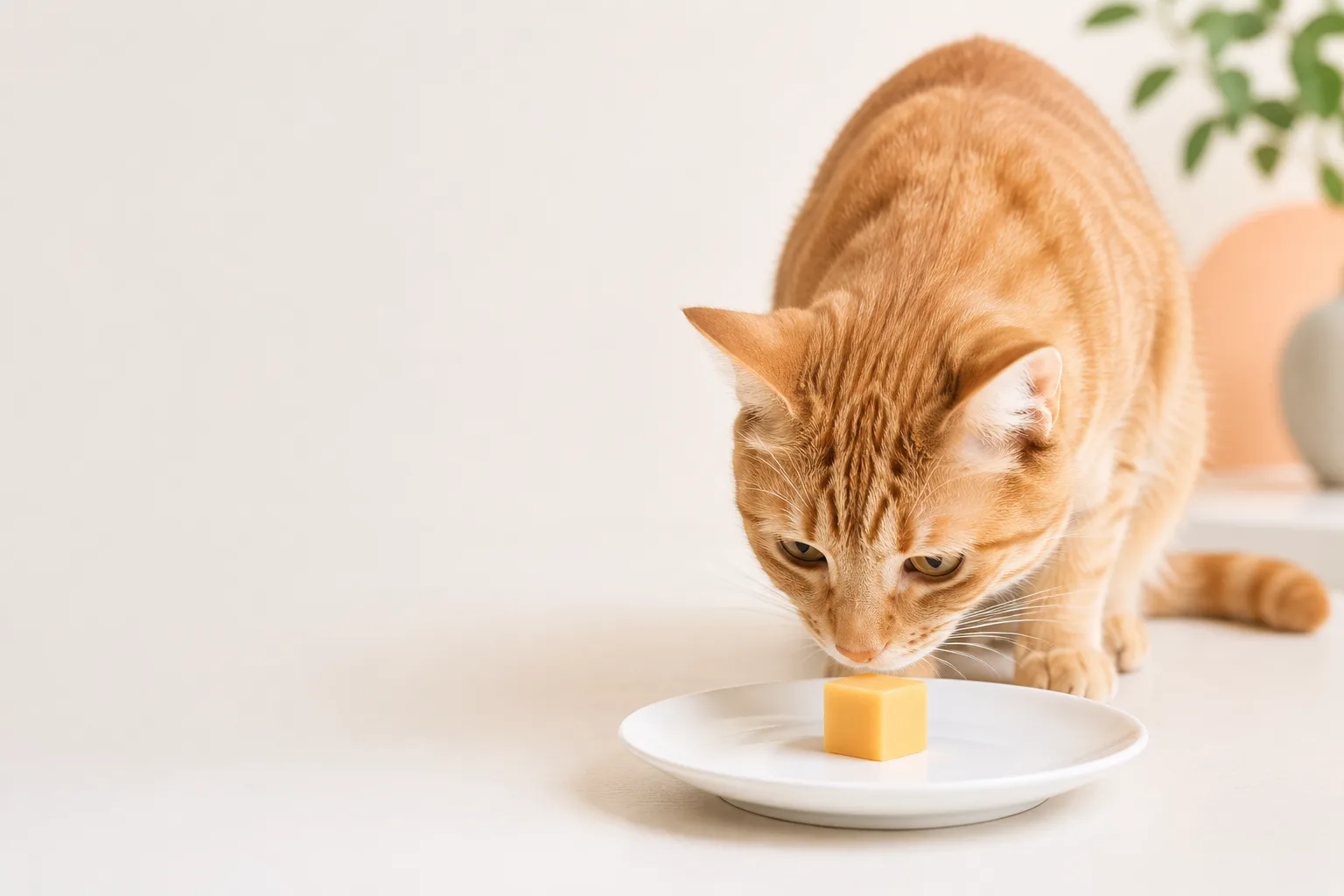
Yes. Hard, aged cheeses like cheddar or parmesan are generally better tolerated than milk or soft, fresh cheeses like cottage cheese or cream cheese. The fermenting and aging process that turns milk into a hard, sharp cheese also breaks down and removes much of the lactose along the way, so what is left on a cat's plate carries far less of the sugar that causes the trouble in the first place.
A soft, fresh cheese has barely been through that process and keeps much more of its original lactose intact, which is why cottage cheese and cream cheese tend to cause more upset stomachs than a sliver of aged cheddar or parmesan does. That said, tolerance genuinely varies from one cat to another and does not always follow the hard-versus-soft rule perfectly.
Some cats can eat a small piece of hard cheese with no issue at all, while others get diarrhea or gas from a piece just as small. There is no reliable way to know in advance which kind of cat you have, so the safest approach is to offer a very small amount first, on its own rather than mixed into a meal, and watch how the next day or so goes before treating cheese as a food that agrees with your cat.
Using cheese to hide a pill
Yes, and this is one of the most genuinely useful things cheese does for a cat. Vets and owners commonly press a pill into a small piece of soft cheese to get a cat that refuses medication any other way to swallow it without a fight, and it works often enough that it is a standard piece of advice rather than a fringe trick.
The cheese masks the taste and texture of the pill and gives a cat something it actually wants to eat quickly, which matters a lot with a cat that has already learned to spit tablets back out. This is a different use from offering cheese as a snack: it is a small, occasional, functional amount used to solve a real problem, not a treat given for its own sake, so it is worth judging separately from the general "how much cheese" question.
The same fat and lactose considerations still apply underneath it, so it is worth checking with a vet about alternatives if a cat needs regular medicating this way and reacts poorly to dairy. A pea-sized piece is usually plenty to wrap around a single pill, which keeps the amount of cheese itself well within the small, occasional range even for a cat on daily medication.
What about flavored or seasoned cheese?
No, plain cheese only. Cheese blended with garlic, onion or herbs, and spreadable cheeses with those add-ins mixed through them, should be avoided entirely rather than just offered in smaller portions. Onion and garlic are genuinely dangerous to cats, which the Merck Veterinary Manual calls the most susceptible species, in any form and any amount, including powdered, cooked, dried or blended into something else like a flavored cheese spread, because they damage a cat's red blood cells and can cause anemia.
That risk has nothing to do with how much lactose or fat is involved and applies even to a small smear of a garlic-and-herb cream cheese. A plain block of cheddar or a plain cream cheese with no seasoning is the only kind worth offering, and it is worth actually checking the ingredient list rather than assuming a cheese is plain just because it looks like a simple block or tub on the shelf.
Words like "onion powder," "garlic powder" or "herb blend" on the label are enough on their own to rule a cheese out, even in a tiny amount.
How much cheese is safe?
A small cube or a thin sliver, offered once in a while, is enough for most cats, and there is little reason to go beyond that given the fat and sodium cheese brings along even when the lactose is not a problem for a particular cat. Repeated fatty extras like cheese are a recognized contributor to weight gain over time, and a reliable way to upset a cat's stomach, on top of whatever a cat's individual lactose tolerance allows on any given day.
None of that shows up after one piece of cheese; it is the pattern of regular fatty extras over months that turns a harmless treat into a real problem. Treats and extras, cheese included, are generally kept under about ten percent of a cat's daily calories. Our feeding guide covers how to work out a cat's daily calorie total so extras like this stay in proportion.
Exactly how common is lactose intolerance in adult cats?
There is no single agreed figure. The Cornell Feline Health Center says simply that many cats are lactose intolerant, and the ASPCA notes that pets do not produce significant amounts of lactase at all. Severity varies a great deal from one cat to the next rather than being a simple yes-or-no trait. A kitten produces lactase, the enzyme that breaks down milk sugar, in order to digest its mother's milk, and most cats produce progressively less of it after weaning.
Some retain enough to tolerate a small amount of dairy without issue; others react to a lick of cheese the same way a severely lactose-intolerant person reacts to a glass of milk. There is no way to know which kind of cat is in front of you except by watching what happens after a small amount.
Does cheese's fat content matter beyond lactose?
It is worth being precise here rather than stacking every possible concern onto cheese. According to VCA Animal Hospitals, cats do not appear to develop pancreatitis as a direct result of a high-fat diet the way dogs do, so cheese is not the same kind of pancreatitis trigger in cats that a greasy table scrap is in a dog.
That said, cheese is genuinely fat-dense, running roughly 20 to 35 grams of fat per 100 grams depending on the variety, and vets still recommend caution around fatty extras for a cat that is overweight, already managing pancreatitis, or on a low-fat diet for another medical reason. The honest version: fat is not the primary danger lactose is, but it is not irrelevant either, particularly for a cat with an existing condition that a vet has already flagged.
This guide goes into more depth than Can Cats Eat Dairy and Eggs?, Can Cats Eat Junk Food or Fast Food? and Can Cats Eat Treats & Snacks?, which compare the whole group side by side.
Frequently asked questions
Can cats eat cheese?
In small amounts, sometimes. Plain, unflavored hard cheese is not toxic to cats, but most adult cats are lactose intolerant to some degree, so how well a cat handles it varies a lot from one cat to the next. It is best treated as an occasional small extra rather than a regular treat.
Why are cats lactose intolerant?
Kittens produce plenty of lactase, the enzyme that digests lactose, so they can nurse from their mother, but most cats lose much of that ability after weaning, the same way many adult humans do. Without enough lactase, lactose passes through the gut largely undigested, which is why dairy in general is a common cause of loose stools and stomach upset in adult cats.
Is hard cheese better for cats than soft cheese?
Yes, generally. Hard, aged cheeses like cheddar or parmesan go through a fermenting process that removes much of the lactose, so they are usually easier on a cat's stomach than milk or soft, fresh cheeses like cottage cheese or cream cheese. Tolerance still varies by cat, so a small amount tried first and watched is the safest approach either way.
Can you hide a cat's pill in cheese?
Yes, and it is a common, legitimate trick. A small piece of soft cheese pressed around a pill can get a cat that refuses medication any other way to swallow it without a fight. This is a small, functional, occasional amount used to solve a real problem, not a general snack, though the same fat and lactose considerations still apply underneath it.
Is flavored or seasoned cheese safe for cats?
No. Cheese blended with garlic, onion or herbs, and spreadable cheeses with those add-ins, should be avoided entirely. Onion and garlic are genuinely dangerous to cats in any form and any amount, since they damage red blood cells and can cause anemia, so only plain, unflavored cheese is worth offering.
How many cats are actually lactose intolerant?
Somewhere between 50 and 75 percent of adult cats, by most veterinary estimates, though severity varies a lot between individual cats. Kittens produce lactase to digest their mother's milk, and most cats make progressively less of it after weaning.
Sources
- Cornell Feline Health Center: Feeding Your Cat Why milk and dairy are not recommended as treats.
- ASPCA: People Foods to Avoid Feeding Your Pets Lactase, dairy, and onion and garlic.
- Merck Veterinary Manual: Garlic and Onion Toxicosis Why cats are the most susceptible species.
- VCA Animal Hospitals: Nutrition and Pancreatic Disease in Cats How dietary fat affects cats differently from dogs.
- VCA Animal Hospitals: Adverse Reactions to Food in Cats Food intolerances and reactions in cats.
General information, not veterinary advice. If your cat's behavior has changed suddenly, speak to a vet rather than an article.
How this guide was researched and checked is set out in how our guides are written.

Want an answer in seconds?
The calculators handle age, due dates and portions without an account.