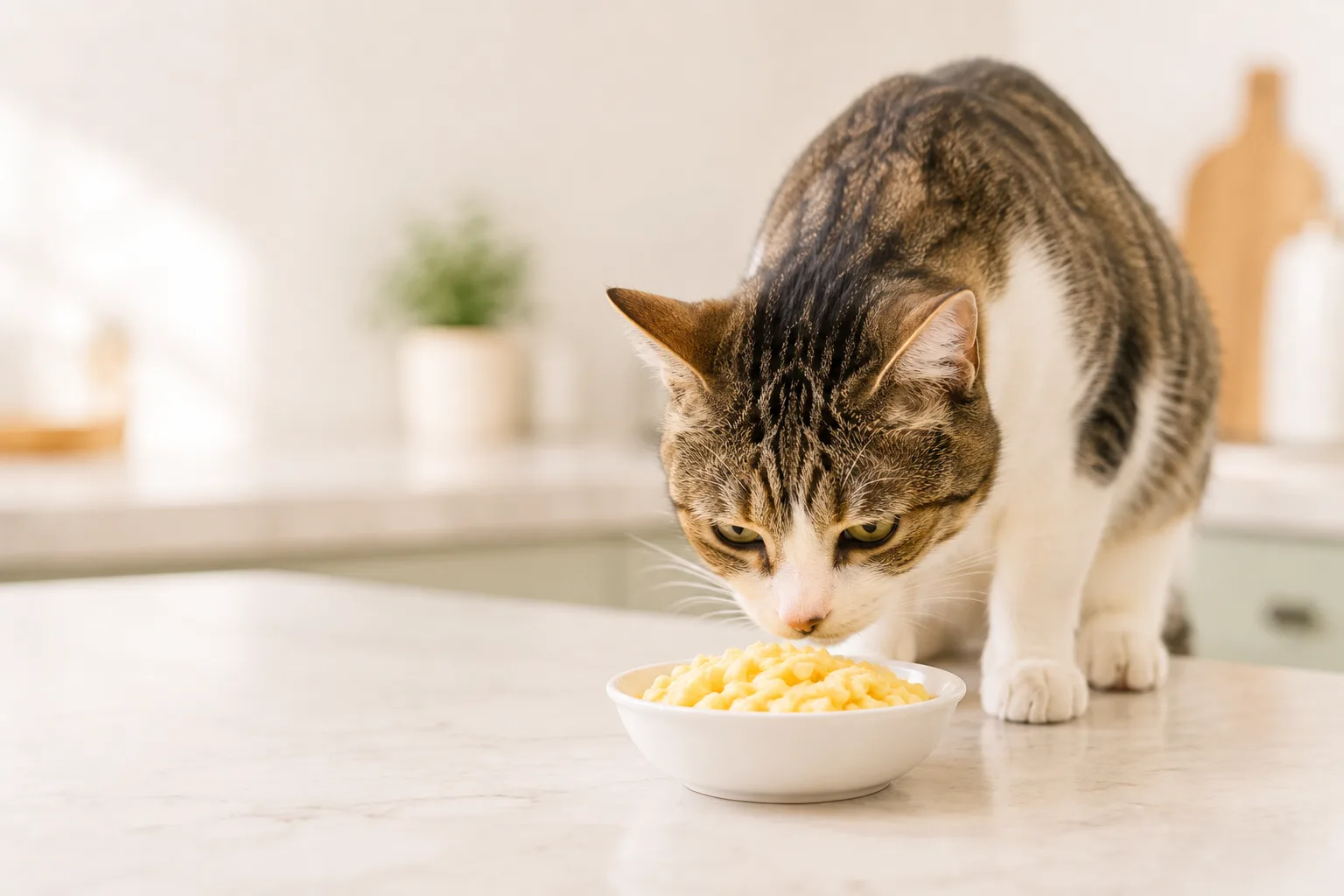
Can Cats Eat Bananas? A Safe Feeding Guide

On this page
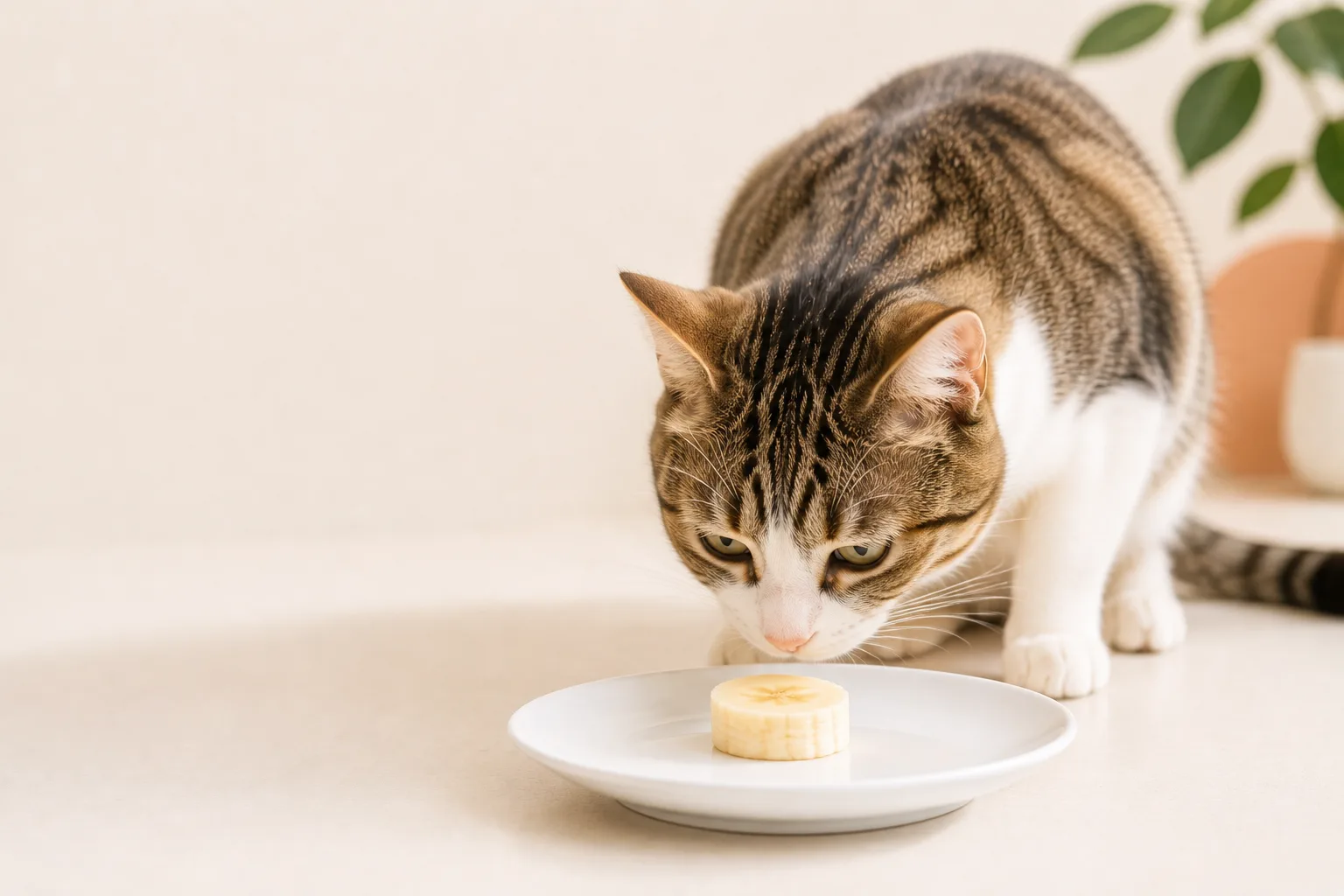
A small piece of ripe, plain banana flesh is safe for most cats to eat once in a while. Bananas are not toxic to cats, and the ASPCA lists the banana plant as non-toxic, so a bite here and there is not a reason to worry. There is more to get right about how much and how often than most people assume, and a cat's biology is different enough from a human's or a dog's that "safe" and "good for them" end up being two separate questions here. The short version is that banana is fine as an occasional bite of flesh, not as anything resembling a regular treat.
This guide is written from published veterinary sources, named and linked as they come up and listed again at the bottom.
Is banana safe for cats?
Yes, in small amounts. A small piece of plain, ripe banana flesh, with the peel removed, is safe for most cats as an occasional extra. Cats are obligate carnivores, which means their bodies are built to get protein and fat from meat, not carbohydrate from fruit, and a cat's diet has no biological need for carbohydrate the way a human's or even a dog's does.
Banana is high in natural sugar and carbohydrate relative to what a cat's diet is actually built around, so while it does offer some fiber, potassium and vitamins, none of that is something a complete cat food is missing. A cat has no nutritional need for banana at all, and a diet built around meat does not leave a gap that fruit needs to fill.
That does not make banana dangerous, it just means it belongs in the category of occasional extra rather than anything with a job to do in a cat's diet. Offered rarely and in a small piece, it is not a food worth worrying about, and there is no version of a cat's diet where banana needs to appear for the cat to be well fed. A complete, balanced cat food already covers protein, fat, vitamins and minerals in the proportions a cat actually needs, so banana's fiber and potassium are a nice-to-have at best, never a fix for anything missing.
Do cats actually like the taste of banana?
Probably not for the reason it looks like. Cats lack a functional sweet taste receptor gene, as a 2005 genetics study showed, so unlike people, dogs, or most other mammals, they cannot taste sweetness at all, even when the food in front of them is as sugary as banana. This is not a minor quirk, it is a real difference in feline biology, and it is the same reason cats generally show little interest in sugary foods and desserts more broadly.
A cat sniffing around a piece of banana or nosing at a peel on the counter is not responding to a "sweet tooth," since that sense doesn't functionally exist for cats. What is actually drawing a cat in is the fruit's soft texture or its smell, not its sugar content.
It is worth keeping this in mind before reading too much into a cat's interest in banana: a cat asking for a piece is not craving sugar the way a person might crave a sweet snack, it is reacting to texture and aroma doing the work that sweetness would do for a human. That distinction is also a useful reminder that a cat's curiosity about a food is not the same as that food being good for a cat, or needed by one.
It also explains why cats rarely beg at the table the way dogs do when something sweet is around: there is no flavor payoff waiting for them, only texture and smell, so the pull toward banana tends to be weaker and less consistent from one cat to the next than it is for a species that can actually taste sugar.
Can banana upset a cat's stomach?
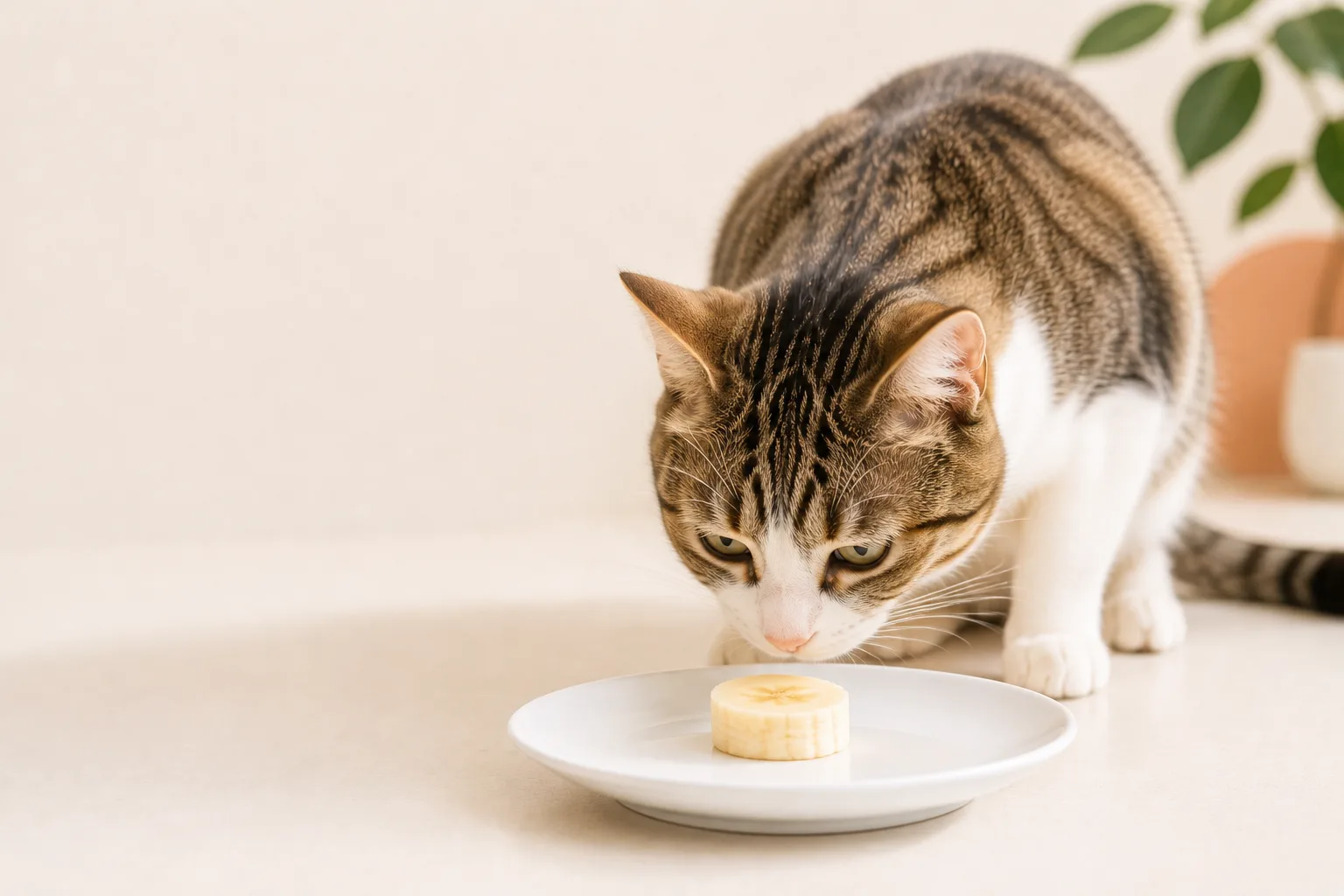
Yes, if too much is given at once. Banana's sugar and fiber content can cause digestive upset in a cat that eats more than a small piece, and this is especially true for a cat that isn't used to having banana at all. Soft stool, diarrhea, or a generally upset stomach are the most likely results of overfeeding banana, rather than anything more serious, but they are still worth avoiding by keeping portions small.
A cat that has never had banana before is more likely to react than one that has had a small piece occasionally, so the safest approach with a first try is to offer a very small amount and watch how a cat's stomach handles it over the following day before treating banana as something that cat can regularly have at all.
If soft stool or an upset stomach does show up after banana, that is a sign to scale the portion back further next time, or to leave banana out of that cat's occasional extras altogether. Keeping the portion small and infrequent is what keeps banana in the safe category rather than the risky one.
What about the peel?
Skip it. Banana peel is not toxic to cats, but it is fibrous and tough for a cat to digest, and it offers no nutritional benefit to make that trade-off worthwhile. It also carries a higher chance of causing stomach upset than the flesh does, since a cat's digestive system is not built to break down tough plant fiber in the first place.
For an animal as small as a cat, a tough, fibrous strip of peel is also a minor choking or blockage concern, particularly if a piece is swallowed rather than chewed properly, and that risk simply is not worth taking for zero benefit. There is no upside to letting a cat chew on or eat banana peel, only downside, so only the flesh should ever be offered.
Banana peel is best kept out of reach entirely, whether that means closing the kitchen bin, not leaving peels on a counter a cat can reach, or disposing of them somewhere a curious cat cannot get to. None of this makes peel an emergency if a cat manages a small lick or nibble of one left out by accident, but it is not something to offer on purpose, and it is not a substitute for the flesh in any way.
How much banana is safe?
A small piece, offered occasionally, is the standard to stick to. A cube or a thin slice of plain banana flesh, once in a while, is plenty for most cats, and there is no reason to make banana a regular part of a cat's diet since it has no nutritional job to do there.
Cats with diabetes or existing weight concerns should have banana, or any other sugary treat, avoided altogether or offered even more sparingly than usual, given how much sugar and how many calories it adds relative to its size. Even for a healthy cat, banana is not something to offer daily, and it should not be stacked on top of other treats on the same day, since the calories and sugar from multiple extras add up quickly for an animal as small as a cat.
For a healthy cat with no such concerns, the same general rule that applies to any extra still applies here: treats and extras are generally kept under about ten percent of a cat's daily calories. Our feeding guide covers how to work out a cat's daily calorie total so extras like this stay in proportion.
How does banana's sugar content compare to other fruit?
Banana runs around 12 grams of sugar per 100 grams, which puts it among the highest-sugar fruits a cat is likely to be offered. Cats cannot taste sweetness at all, since the gene that builds a sweet-taste receptor in most mammals exists in cats only as a broken, non-functional copy, but the absence of a sweet tooth does not change what the sugar does metabolically once it is eaten. A cat's body still has to process that sugar the same way regardless of whether it tasted sweet going down.
That matters most for a cat already managing weight or blood sugar. Veterinary guidance on feline diabetes, including VCA Animal Hospitals, often favors a high-protein, low-carbohydrate diet, on the reasoning that excess carbohydrate intake contributes to the hyperglycemia diabetic cats are already struggling to control. A single small piece of banana is not going to undo that management on its own, but a regular sweet-fruit habit works against the exact dietary pattern vets recommend for a cat at risk, which is the real reason "occasional, not routine" is the standing advice here rather than an arbitrary limit.
This guide goes into more depth than Can Cats Eat Fruit? and Can Cats Eat Treats & Snacks?, which compare the whole group side by side.
Frequently asked questions
Can cats eat bananas?
Yes, a small piece of plain, ripe banana flesh is safe for most cats in small amounts. Bananas are not toxic to cats. It is not a food a cat needs, so it should stay an occasional extra rather than a regular part of the diet.
Do cats like the taste of banana?
Not for the reason it might look like. Cats lack a functional sweet taste receptor gene, so they cannot taste sweetness at all, unlike people or dogs. A cat interested in banana is responding to its soft texture or smell, not a sweet taste, since that sense doesn't functionally exist for cats.
Can banana upset a cat's stomach?
Yes, if too much is given. Banana's sugar and fiber content can cause soft stool, diarrhea, or a generally upset stomach in a cat that eats more than a small piece, especially one that isn't used to it. Keeping the portion small and infrequent avoids this.
Can cats eat banana peel?
No, banana peel should not be offered to cats. It is not toxic, but it is fibrous and tough to digest, offers no nutritional benefit, and can be a minor choking or blockage concern for a small animal. Only the peeled flesh should ever be given.
How much banana can a cat have?
A small piece, offered occasionally, is plenty for most cats, since banana has no nutritional job to do in a cat's diet. Treats and extras are generally kept under about ten percent of a cat's daily calories, and cats with diabetes or weight concerns should have banana avoided or offered even more sparingly.
Is banana's sugar content a problem for cats?
Banana carries around 12 grams of sugar per 100 grams, among the highest of common fruits. Cats cannot taste sweetness, but their body still processes the sugar. An occasional small piece is not a concern for a healthy cat; a regular habit works against the low-carbohydrate diet vets recommend for cats managing weight or diabetes.
Sources
- ASPCA: Toxic and Non-Toxic Plants for Cats Lists the banana plant as non-toxic to cats.
- Cornell Feline Health Center: Feeding Your Cat Why cats are obligate carnivores.
- Li et al. (2005), PLoS Genetics: sweet-receptor gene in cats Why cats cannot taste sweetness.
- VCA Animal Hospitals: Nutrition for Cats with Diabetes Mellitus Carbohydrates and treats for diabetic cats.
- ASPCA: People Foods to Avoid Feeding Your Pets The foods that are genuinely dangerous, for comparison.
General information, not veterinary advice. If your cat's behavior has changed suddenly, speak to a vet rather than an article.
How this guide was researched and checked is set out in how our guides are written.

Want an answer in seconds?
The calculators handle age, due dates and portions without an account.