Can Cats Eat Chickpeas? What's Safe, What's Not (and Why Hummus Is Dangerous)

On this page
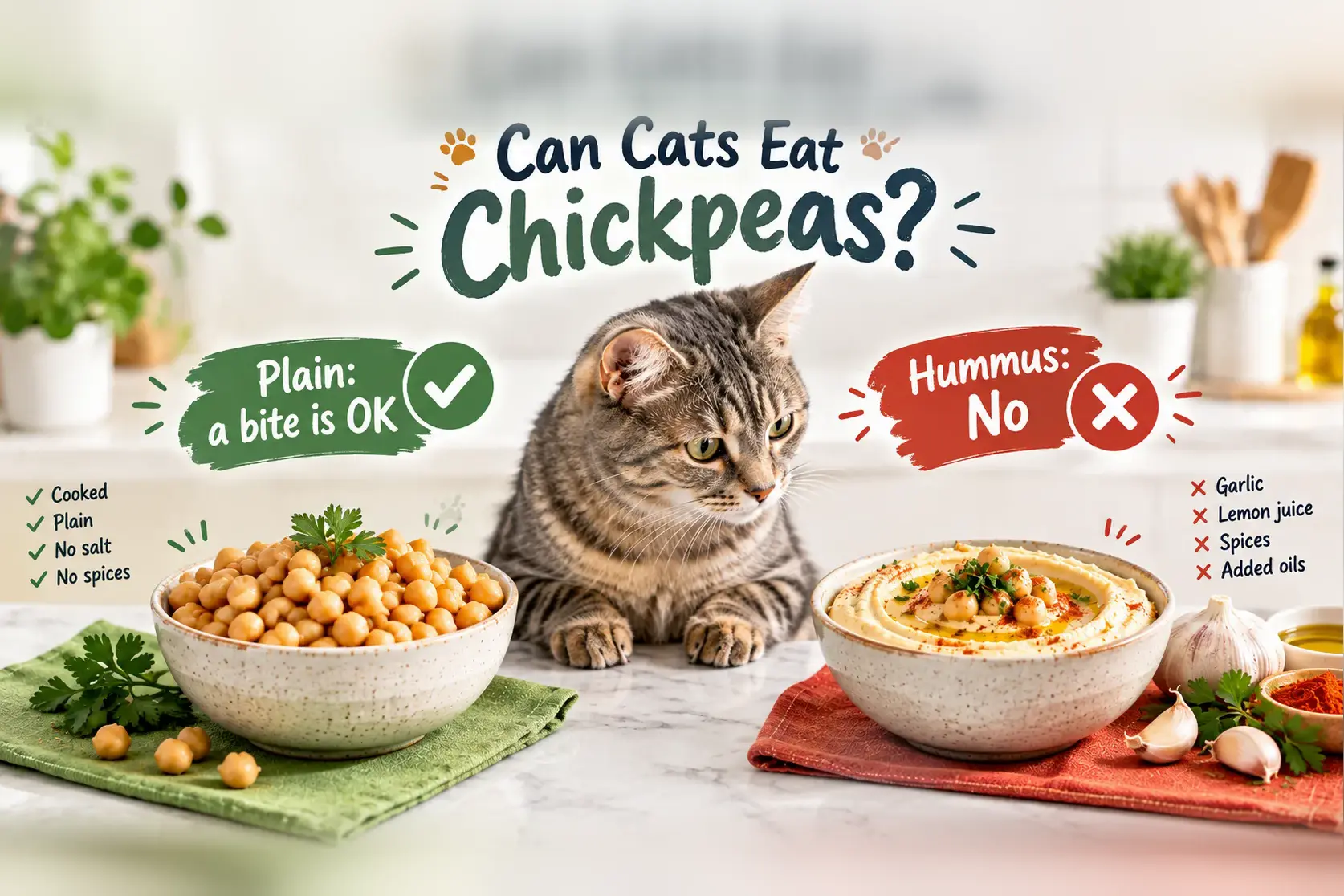
Yes, cats can eat chickpeas, but only a bite or two of plain, fully cooked, unsalted chickpeas, and only now and then. Chickpeas aren't toxic, but they give cats almost nothing they need. Hummus, falafel and chickpea curry are not safe, because they usually contain garlic or onion, which damage a cat's red blood cells. [Merck Veterinary Manual]
Chickpeas, also called garbanzo beans or chana, are in a lot of kitchens: a spoonful from a can, a bowl of hummus on the counter, a pan of chana masala on the stove. A curious cat will investigate sooner or later. Whether that is a problem depends almost entirely on which form of chickpea is in front of them. This guide covers every common form, explains the science in plain English, and tells you exactly what to do if your cat has eaten something it shouldn't.
Can cats have chickpeas safely? Every form at a glance
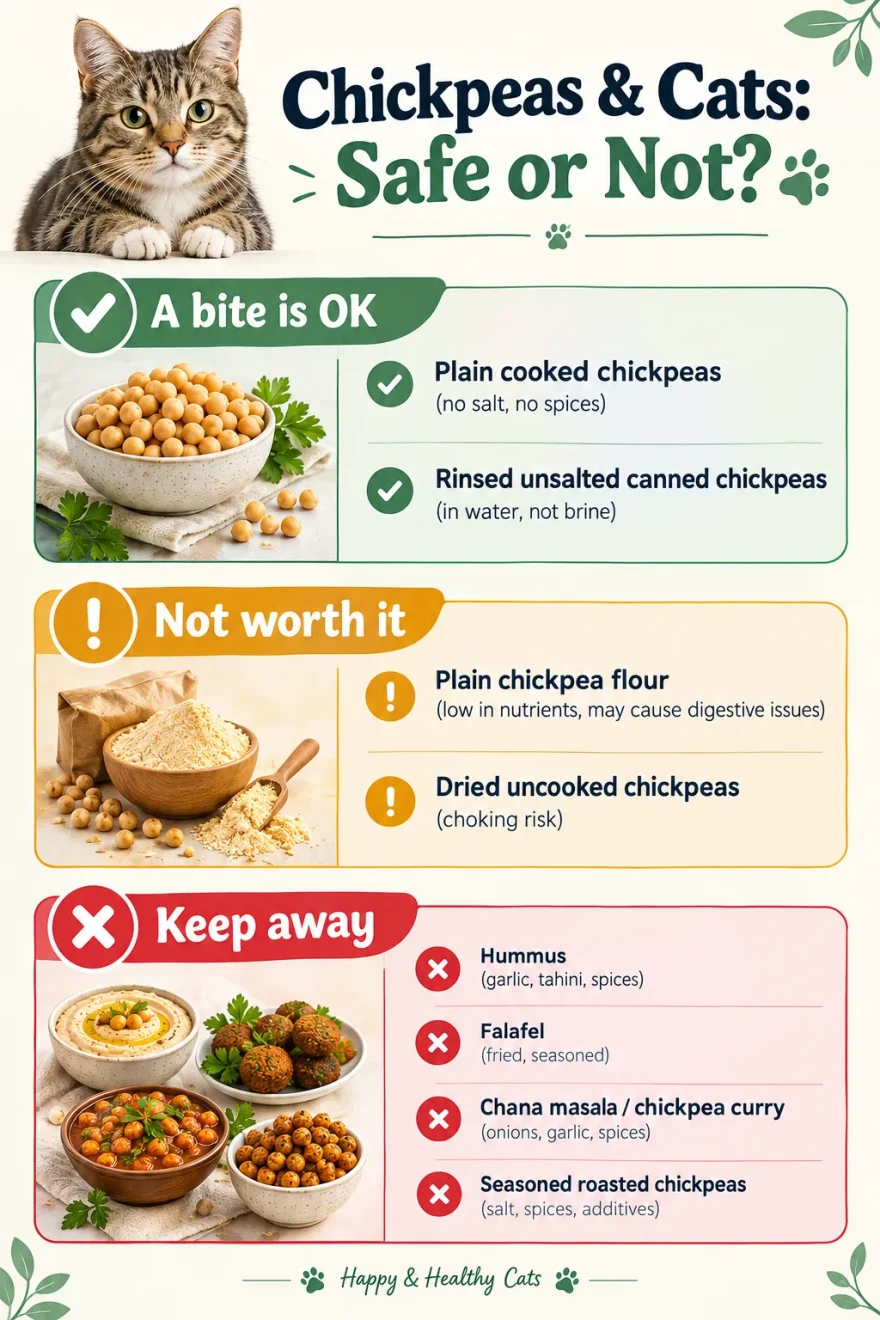
Are chickpeas safe for cats? It depends on the form. Here is how the common ones compare:
| Chickpea food | Safe for cats? | Why |
|---|---|---|
| Plain cooked chickpeas, no salt or seasoning | A bite or two is OK | Not toxic, but hard for cats to digest |
| No-salt-added canned chickpeas, drained | A bite or two is OK | Low in sodium; check the label says no salt added |
| Regular canned chickpeas | Avoid | Salty, and rinsing removes only a little of it |
| Chickpea flour (besan, gram flour), plain | Not worth it | Concentrated starch; batters are usually seasoned |
| Dried, uncooked chickpeas | Avoid | Hard to digest, and a choking or blockage risk |
| Roasted chickpea snacks | Avoid | Salt, spices that often include garlic or onion powder, and very hard |
| Hummus | No | Garlic, plus fatty tahini |
| Falafel | No | Onion and garlic, and deep-fried |
| Chana masala or chickpea curry | No | Onion, garlic, spices and oil |
Are chickpeas good or bad for cats?
Neither, really, in a bite or two, but they aren't good for cats either. Cats are obligate carnivores: they rely on nutrients found only in animal products. [Cornell Feline Health Center] They also need taurine, an amino acid that comes from animal protein. [Merck Veterinary Manual; VCA Animal Hospitals] Chickpeas are the opposite of what a cat is built for: a plant food that is mostly starch and fiber, with protein that doesn't supply what cats must get from meat.
None of this makes chickpeas poisonous. A cat that steals one off your plate is fine. It simply means chickpeas have no job to do in a cat's diet, and a complete cat food already provides everything a cat needs.
Are chickpeas and garbanzo beans the same?
Yes. Chickpea, garbanzo bean, chana and Bengal gram are all names for the same legume, so everything in this guide applies to all of them. Desi chana, the smaller, darker variety, and kabuli chana, the larger, pale one, are treated the same way too.
Can cats eat hummus?
No, and this is the most important warning in this guide. Hummus isn't plain chickpeas: it is chickpeas blended with garlic, tahini, olive oil and lemon juice. The garlic is the problem.
The Merck Veterinary Manual names cats as the species most susceptible to garlic and onion poisoning, and notes that garlic is 3 to 5 times more toxic than onion. Poisoning has been reported in cats after less than a teaspoon of cooked onion. [Merck Veterinary Manual] So there is no "small enough" amount of garlicky hummus to treat as safe.
Tahini adds a second, smaller problem. It is sesame paste, very high in fat, and a sudden rich, fatty food often causes vomiting or loose stool in cats. [ASPCA]
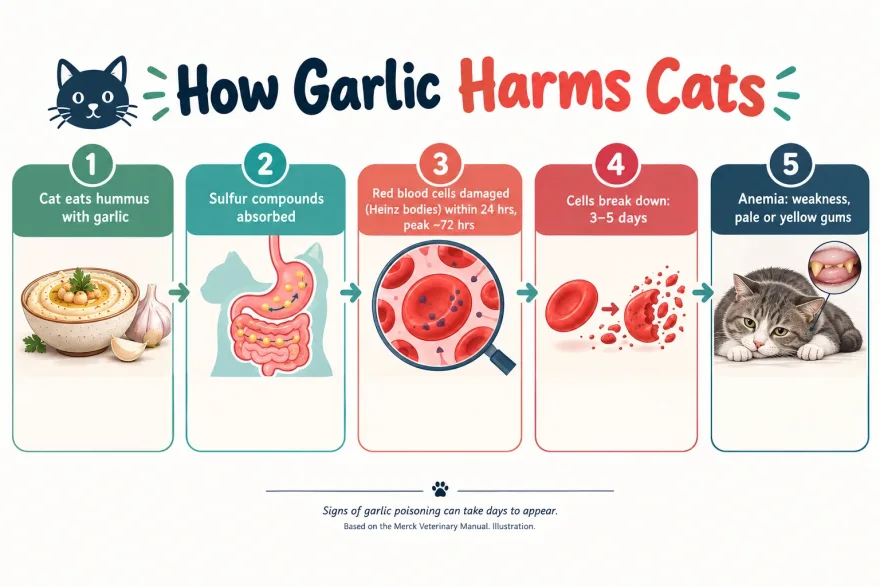
Why garlic is so dangerous for cats
According to Merck, the sulfur compounds in garlic and onion are released when the plant is chopped, cooked or chewed. Once absorbed, they damage red blood cells: Heinz bodies and methemoglobinemia begin within 24 hours and peak at about 72 hours, and the damaged cells typically break down 3 to 5 days after exposure. Most poisonings in cats and dogs involve concentrated forms, such as garlic or onion powder, flakes and dry soup mixes. [Merck Veterinary Manual]
That is why a cat can seem completely normal the day after eating hummus and still become seriously ill later: signs usually don't show until a few days after exposure. They include tiredness, loss of appetite, fast breathing, a fast heart rate, weakness, yellow gums, red or brown urine and collapse. [Merck Veterinary Manual] If your cat ate hummus, don't wait for signs: follow the steps in "What to do if your cat ate hummus" below.
Can cats eat falafel or chickpea curry?
No. Falafel is made from chickpeas mixed with onion, garlic and herbs, then deep-fried. Chana masala and other chickpea curries are built on onion, garlic, chili and oil. Both carry the same garlic and onion risk as hummus, plus fat and spice that upset a cat's stomach. Keep curry pans and leftovers covered and out of reach.
Canned chickpeas, roasted chickpeas and chickpea flour
Can cats eat canned chickpeas?
Only a bite or two, and only from a no-salt-added can, drained. Regular canned chickpeas are salty, and rinsing helps less than most people think: USDA data lists canned chickpeas, drained and rinsed, at about 212 mg of sodium per 100 g, [USDA FoodData Central] compared with about 7 mg for chickpeas cooked without salt. [USDA FoodData Central] Excess salt can make cats thirsty and, in large amounts, cause vomiting, diarrhea and tremors. [ASPCA] Don't give your cat the canning liquid, either.
Can cats eat roasted chickpeas?
Not the snack kind. Store-bought roasted chickpeas are usually salted and spiced, and many seasonings include garlic or onion powder, the most concentrated forms. They are also very hard and crunchy, which makes them a choking risk for a cat that swallows them whole.
Can cats eat chickpea flour?
Chickpea flour, also called besan or gram flour, is just ground chickpeas, so a lick of plain flour from the counter isn't toxic. But it is concentrated starch, and it is rarely plain by the time a cat finds it. Batters for pakoras, fritters and flatbreads usually contain salt, onion, garlic or spices, so check what's in the batter, not just the flour.
My cat ate dried, uncooked chickpeas. What now?
Dried chickpeas are hard, dense and close to pebble-sized, so they are difficult to chew and could cause choking or a blockage if swallowed whole. Raw legumes are also harder to digest than cooked ones.
- One or two dried chickpeas: usually not serious. Watch your cat over the next day or two for vomiting, straining, loss of appetite or a swollen belly, and call your vet if you see any of these.
- A handful, or a torn bag: call your vet straight away, even if your cat seems fine. This is a possible blockage risk, not just a food-safety question.
Store dried beans in sealed jars in a closed cupboard.
Can chickpeas upset a cat's stomach?
Yes, and this is the most likely problem even with plain cooked chickpeas. A cat's gut is short and built to digest meat, not the dense fiber and starch in legumes. More than a bite or two can cause gas, bloating, loose stool or diarrhea. That isn't poisoning; it's a carnivore's stomach meeting a plant food it wasn't built for. Cats trying chickpeas for the first time are the most likely to react, so watch closely, and if an upset stomach lasts more than a day, check our guide to the signs your cat is sick.
How many chickpeas can a cat eat?
One or two plain, fully cooked, unsalted chickpeas, now and then, is the sensible limit. Mash or halve them so they can't be swallowed whole. Vets recommend keeping all treats under 10% of a cat's daily calories. [WSAVA] For a 4 kg (9 lb) cat, WSAVA puts that allowance at about 22 kcal a day, which is roughly 13 g of cooked chickpeas, the whole day's treat budget. Since chickpeas offer a cat so little, that allowance is better spent on a meat-based treat. Our cat calorie calculator shows your own cat's daily total.
Chickpea nutrition vs what cats need
| Per 100 g, cooked without salt | Amount |
|---|---|
| Calories | 164 kcal |
| Protein | 8.9 g |
| Carbohydrate (including fiber) | 27.4 g |
| Fiber | 7.6 g |
| Fat | 2.6 g |
| Sodium | 7 mg (about 243 mg if cooked with salt) |
| Water | 60.2 g |
Figures from USDA FoodData Central. [USDA FoodData Central; USDA FoodData Central] Take the water out and compare the dry matter: cooked chickpeas are roughly two-thirds carbohydrate and only about a fifth protein. AAFCO, which sets US pet food standards, requires an adult cat food to contain at least 26% protein on a dry-matter basis, and 30% for growth. [PetMD] Chickpeas fall short on the amount of protein, and on the type cats need.
Can cats eat lentils and other legumes?
The same rule applies to the whole legume family: plain and cooked is low-risk in a tiny amount, and seasoned dishes are where the danger is.
| Legume | Plain and cooked | Dishes to avoid |
|---|---|---|
| Lentils (red, green, brown) | A bite is OK | Lentil soup, or dal and tarka dal made with onion and garlic |
| Green peas | A few are OK; peas are not toxic to cats [PetMD] | Peas cooked with butter, salt or onion |
| Edamame (soybeans) | A shelled bean or two, plain | Salted edamame; the tough pods are a choking risk |
| Black-eyed peas | A bite is OK | Dishes cooked with pork, onion or heavy seasoning |
| Kidney beans | Only if fully cooked | Never raw or undercooked: raw kidney beans contain a lectin that causes severe vomiting and diarrhea in people and makes dogs sick [US FDA; PetMD] |
| Baked or refried beans | No | Sugar, salt, onion, garlic, lard |
Are lentils toxic to cats? No, but like chickpeas they offer cats little and can upset their stomach. Lentil soup and dal are the bigger risk because of the onion, garlic and salt. For more vegetables cats can and can't have, see our vegetables guide.
Why are chickpeas in cat food?
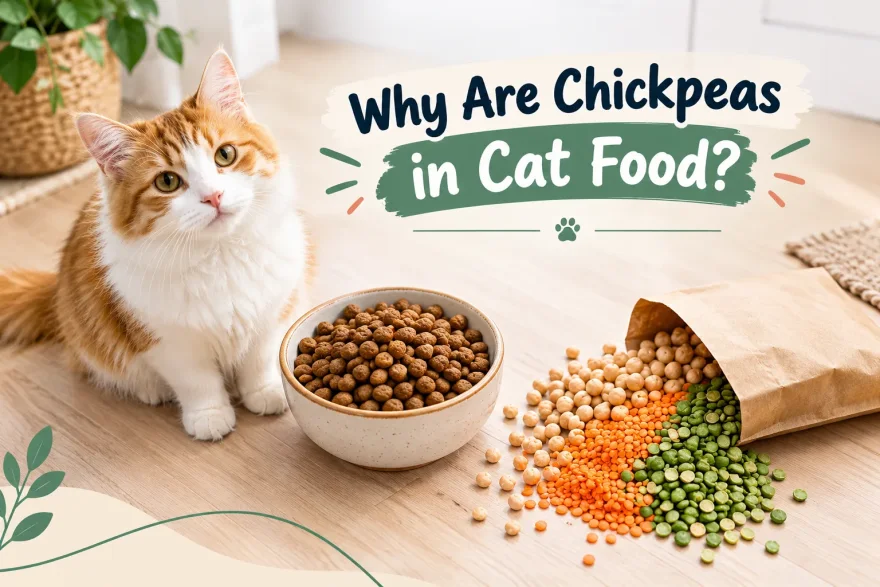
If you read cat food labels, you'll often see chickpeas, peas or lentils, especially in "grain-free" recipes. Pet food makers use these pulses as a starch source instead of grains, since dry kibble needs some starch to hold its shape, and to raise the protein percentage on the label.
There is a reason to pay attention. In 2018 the US Food and Drug Administration began investigating reports of dilated cardiomyopathy (DCM), a serious heart disease, in pets eating diets high in pulses. Between January 2014 and April 2019, it received 524 reports involving 560 dogs and 14 cats. Most of the foods had peas, lentils or other legumes, including chickpeas and beans, or potatoes as main ingredients. The FDA says the reports do not establish that these diets cause DCM, calls it a complex issue that may involve multiple factors, and has said it will not release further public updates until there is meaningful new science to share. [US FDA]
For cat owners, the practical takeaway is simple:
- Chickpeas in a food labeled "complete and balanced" for cats are not a problem in themselves.
- Look for named animal proteins, such as chicken, fish or turkey, as the first ingredients, rather than pulses.
- If you choose a grain-free food, ask your vet whether it suits your cat, especially if your cat has a heart condition.
Can kittens eat chickpeas or lentils?
It's best not to. Kittens have sensitive stomachs and very high nutrient needs for growth, so every bite should come from a complete kitten food. A kitten that grabs a chickpea will be fine; just don't offer them.
What to do if your cat ate hummus
- Remove the food and check the label or recipe for garlic, onion, chives or leeks. Note how much your cat ate and when.
- Call your vet or a pet poison line straight away, even if your cat seems normal. In the US: ASPCA Animal Poison Control Center, (888) 426-4435, [ASPCA] or Pet Poison Helpline, (855) 764-7661. Consultation fees apply to both. [Wayne State Poison Control]
- Don't make your cat vomit at home. Hydrogen peroxide, sometimes used for dogs, should not be used in cats; vets use a prescription drug instead. [Merck Veterinary Manual]
- Expect your vet to act early. Treatment involves early decontamination and management of any anemia, with blood checks over the following days. [Merck Veterinary Manual]
- Watch your cat for up to a week for tiredness, poor appetite, fast breathing, pale or yellow gums and red or brown urine.
Garlic and onion are only two of the foods that are dangerous for cats. Our list of foods toxic to cats covers the rest.
The bottom line
A plain, cooked chickpea won't hurt your cat, but it won't help either. The real risks are in what chickpeas get turned into: hummus, falafel and chickpea curry contain garlic and onion, which cats are more sensitive to than any other species. Keep those dishes out of reach, and if your cat eats some, call your vet straight away rather than waiting for symptoms.
Related reading: can cats eat grains and seeds? · safe treats and snacks for cats · how much to feed your cat
This article is general information and does not replace advice from a veterinarian. If your cat has eaten something that worries you, or its behavior changes suddenly, contact your vet.
This guide goes into more depth than Can Cats Eat Grains and Seeds? and Can Cats Eat Treats & Snacks?, which compare the whole group side by side.
Frequently asked questions
Can cats have chickpeas?
Yes, in very small amounts. One or two plain, fully cooked, unsalted chickpeas now and then won't harm a healthy adult cat. They offer cats little nutrition and can upset their stomach, so they shouldn't be a regular treat.
Are chickpeas toxic to cats?
No. Plain chickpeas aren't toxic. The danger comes from what is added to them, especially garlic and onion in hummus, falafel and curries, and salt in canned or snack chickpeas.
Are chickpeas bad for cats?
Not in a bite or two, but they aren't good for cats either. Cats are obligate carnivores, and chickpeas are mostly starch and fiber, with plant protein that lacks nutrients cats need from meat.
Can cats eat hummus?
No. Hummus contains garlic, which damages cats' red blood cells, and cats are the species most sensitive to it. If your cat ate hummus, call your vet even if it seems fine, because signs can take days to appear.
Is chickpea flour safe for cats?
Plain chickpea flour isn't toxic, but it isn't useful for cats. Batters made with it usually contain salt, onion, garlic or spices, which are not safe.
Can cats eat canned chickpeas?
Only a bite or two from a no-salt-added can, drained. Regular canned chickpeas stay salty even after rinsing, so avoid them and the canning liquid.
Can cats eat lentils?
A bite of plain cooked lentils is fine. Lentil soup and dal usually contain onion, garlic and salt, so keep those away from cats.
Why are chickpeas in my cat's food?
They are used as a starch source, especially in grain-free kibble, and to add protein. They are fine in a complete and balanced food, but animal proteins should come first on the label. The FDA has investigated a possible link between pulse-heavy diets and heart disease, mainly in dogs, without establishing a cause.
Sources
- Merck Veterinary Manual: Garlic and onion (Allium spp) toxicosis in animals Why cats are most at risk, how much it takes, the timeline and treatment.
- Merck Veterinary Manual: Principles of toxicosis treatment in animals Why hydrogen peroxide must not be used to make cats vomit.
- Merck Veterinary Manual: Nutritional requirements of small animals Cats' need for taurine.
- ASPCA: People foods to avoid feeding your pets Onion, garlic and salt.
- ASPCA Animal Poison Control Center Emergency phone line.
- Wayne State University Poison Control: Veterinary resources Pet poison line numbers and fees.
- Cornell Feline Health Center: Feeding your cat Cats as obligate carnivores.
- VCA Animal Hospitals: Taurine in cats Taurine comes only from animal protein.
- USDA FoodData Central: Chickpeas, cooked, boiled, without salt Nutrition per 100 g.
- USDA FoodData Central: Chickpeas, cooked, boiled, with salt Sodium in salted chickpeas.
- USDA FoodData Central: Chickpeas, canned, drained, rinsed Sodium in canned chickpeas after rinsing.
- PetMD: What makes a nutritional cat food (AAFCO protein minimums) Minimum protein for adult and growing cats.
- WSAVA: Feeding treats to your cat The 10% treat rule and calorie allowances by weight.
- US FDA: Investigation into a potential link between certain diets and canine DCM Reports involving dogs and cats, and the status of the investigation.
- US FDA: Natural toxins in food The lectin in raw kidney beans.
- PetMD: Can dogs eat beans? Kidney bean lectin in dogs.
- PetMD: Can cats eat peas? Peas are not toxic to cats.
General information, not veterinary advice. If your cat's behavior has changed suddenly, speak to a vet rather than an article.
How this guide was researched and checked is set out in how our guides are written.

Want an answer in seconds?
The calculators handle age, due dates and portions without an account.