Can Cats Eat Broccoli? A Safe Feeding Guide

On this page
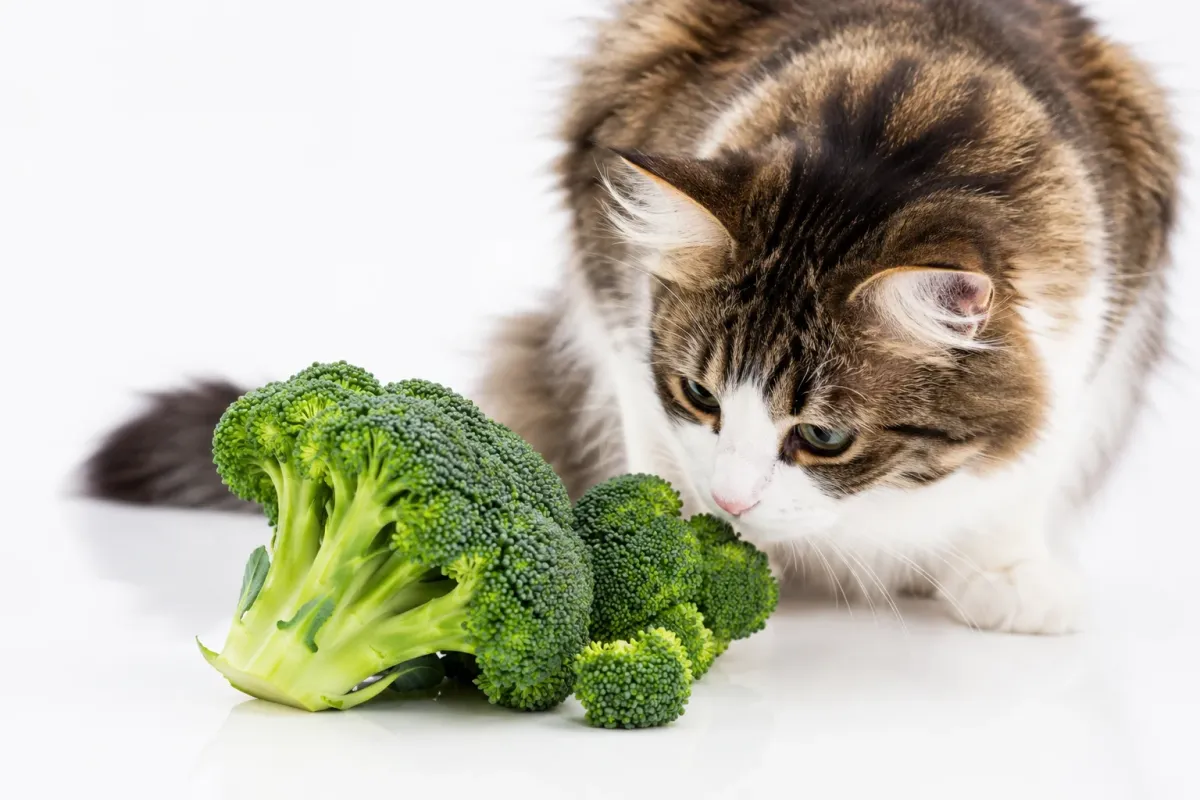
Broccoli is one of the small number of vegetables that is actually fine for a cat to eat, which makes it worth a proper answer rather than a reflexive no. The short version: plain, cooked, in small amounts, and never a replacement for anything in a normal diet.
Is broccoli actually good for a cat, nutritionally?
Not in any way that matters. Broccoli carries vitamin C, vitamin K, potassium and a fair amount of fiber, which is why it gets called healthy on every human nutrition list. None of that transfers cleanly to a cat. Vitamin C is the clearest example: as the Merck Veterinary Manual explains, cats synthesize their own ascorbic acid in the liver, from glucose, the same way most mammals do, so it is not a nutrient they need to get from food at all, unlike a person, who has to eat it.
The rest of broccoli's profile runs into the same wall. Cats are obligate carnivores, meaning their bodies are built to extract what they need from animal protein and fat, not plant matter, and a complete cat food is already formulated to cover every vitamin, mineral and amino acid on that list. Broccoli does not fill a gap, because there is no gap for it to fill.
Fiber is the one piece worth separating out, since it is not useless, just misunderstood. Cats lack the enzymes needed to break fiber down for energy, so broccoli never contributes calories or nutrients through that route. A small amount can still help move things along in the gut, a digestive-comfort effect rather than a nutritional one, and it disappears entirely once the amount goes past small.
Why cooked and plain beats raw broccoli
Raw broccoli is not toxic, but it is a genuinely harder food for a cat to eat than the cooked version, and the reason is structural rather than chemical. Plant cell walls are built mostly from cellulose, a fiber that cats, like most carnivores, have no enzyme to break down.
Raw, that cellulose scaffolding stays rigid, which is exactly what makes a raw floret tough to chew through and slow to move through a short carnivore gut built for meat, not roughage. Cooking, by contrast, uses heat and moisture to soften that rigid structure. It does not turn cellulose into something a cat can digest for calories, that still is not happening, but it does break the material down physically into something soft enough to chew, swallow and pass without friction.
That distinction is the same one that shows up across most vegetables that are fine for cats in small amounts: raw is where the digestive strain sits, cooked is where it mostly disappears. Steaming or boiling a small piece until soft all the way through, with nothing added, no oil, butter, salt, garlic or seasoning, is the version worth offering. Seasoning matters beyond taste, too: garlic and onion are genuinely toxic to cats, so plain preparation is doing two jobs at once, easier digestion and avoiding a real hazard.
How much broccoli is a safe serving?
A floret or two of plain, cooked broccoli, cut small, is a sensible ceiling, not a starting point to build up from. There is no dosing logic that makes more broccoli better for a cat, because broccoli is not solving a nutritional problem for them the way it would for a person.
Treats and extras in general are best kept under about 10 to 15 percent of a cat's total daily calories, the Cornell Feline Health Center's rule of thumb, and given how little nutritional work broccoli is doing inside that allowance, there is no reason to spend much of it there. Offering broccoli once in a while, rather than folding it into a daily routine, keeps it in the category it actually belongs in: an occasional, low-stakes extra.
Do broccoli stems need different handling than florets?
Yes, and this is where most of the real risk in broccoli actually sits. The floret head is made of loosely packed flower buds, which cook through quickly and shred apart easily once they are soft. The stalk is the opposite: dense, woody tissue built to support the plant, with a tougher outer layer and thicker cellulose structure than the florets have. Raw, a piece of stalk is both harder to chew and more likely to be swallowed as an oversized chunk, which is a real choking and digestive blockage risk rather than a theoretical one.
A stem that is offered at all needs more preparation than a floret does, not the same amount: peeling the tough outer skin, cutting it small, and cooking it fully soft, specifically because the raw version is denser and less forgiving. Sticking to florets only and skipping the stalk removes the question entirely, and loses nothing, since the stem was never adding anything a cat's diet needed in the first place.
Why too much broccoli causes gas and stomach upset
Broccoli and other cruciferous vegetables, including cauliflower, cabbage and Brussels sprouts, contain compounds called glucosinolates. When the plant's cells are broken down, by chewing, chopping or digestion, those glucosinolates convert into a group of compounds called isothiocyanates. This is the same chemistry responsible for broccoli's sharp, slightly bitter edge, and in larger amounts than a cat's digestive system is used to processing, it is also what drives the gas, bloating and loose stool that show up after too much cruciferous vegetable, in cats as in other animals.
This is not a reason to avoid broccoli altogether, and it is not the same category of risk as a genuinely toxic food. It is a dose problem: a floret or two occasionally does not deliver enough of these compounds to matter, while a larger amount, or broccoli offered often enough that a cat's gut never gets a break from it, is where the stomach upset actually shows up. Keeping the serving small and occasional is not caution for its own sake, it is what keeps this mechanism from ever becoming a practical problem.
Why does my cat ignore the broccoli entirely?
That is normal, and not a fussiness problem to fix. Cats cannot taste sweetness at all, a gene loss documented in a 2005 study in PLoS Genetics, and many plant flavors that appeal to other animals do little for them, so a cat sniffing a floret once and walking away is simply behaving like a cat, not rejecting something it should want. There is nothing to coax a cat into liking here, and no reason to keep offering broccoli more insistently if the first one or two attempts go nowhere.
Frequently asked questions
Can cats eat raw broccoli?
In small, soft pieces, usually without a problem, but it is not the better choice. Raw broccoli is not toxic, but its rigid, cellulose-heavy structure is genuinely harder for a cat to chew and digest than the cooked version, and the raw stalk in particular is dense enough to pose a real choking risk in a piece that is too large. Cooking it plain, until soft, removes that problem without adding any downside.
How much broccoli can a cat eat?
A floret or two of plain, cooked broccoli, offered occasionally rather than daily, is the amount worth sticking to. Broccoli is not contributing anything a cat's diet needs, so there is no nutritional case for a larger or more frequent serving, and pushing past a small amount is exactly where gas and stomach upset tend to start.
Is broccoli good for cats?
Not nutritionally, no. Cats are obligate carnivores whose vitamin, mineral and amino acid needs are met by animal protein and a complete cat food, and broccoli's nutrients, including vitamin C, which cats already produce internally, do not fill any gap in that. It is accurately described as harmless in small amounts, not as healthy or beneficial.
Can broccoli make a cat sick?
In the amounts described here, it is unlikely to. The real risk sits at the extremes: a large amount at once, which can trigger gas, bloating or loose stool through the same compounds that give broccoli its sharp flavor, or a raw piece of stalk large enough to be swallowed without being chewed through, which is a choking and blockage risk rather than a digestive one. Staying with small, cooked, occasional servings avoids both.
What are isothiocyanates, and is the goitrogen concern real for cats?
Broccoli belongs to the Brassica family, along with cabbage, cauliflower and kale, and these vegetables contain glucosinolates that break down into compounds called isothiocyanates when the plant is chewed or cut. In some species, eaten in large quantities over time, compounds in this family are documented goitrogens, meaning they can interfere with the thyroid's ability to take up iodine. It is a real mechanism, and it is fair to ask about it.
It is also, honestly, not a realistic concern at the serving size recommended here. A quarter-teaspoon portion once or twice a week is nowhere near the sustained, large-quantity exposure the goitrogen research is actually about, and there is no specific feline research tying broccoli to a thyroid problem at treat-level amounts. Where the evidence is thin, it is worth saying so rather than either dismissing the compound entirely or inflating it into a reason to avoid broccoli outright. The practical risk with broccoli remains what the rest of this guide already covers: mild digestive upset from too much at once, and a raw stalk piece large enough to be a choking hazard.
This guide goes into more depth than Can Cats Eat Vegetables?, which compares the whole group side by side.
Frequently asked questions
Can cats eat broccoli?
Yes, in small amounts. Plain, cooked broccoli is not toxic to cats and most tolerate a floret or two without any problem. It offers cats little nutritionally, since they are obligate carnivores and get what they need from meat, so it is worth thinking of as an occasional extra rather than a healthy addition.
Is it okay to give my cat broccoli every day?
Better as an occasional thing than a daily habit. Cruciferous vegetables like broccoli contain compounds that can cause gas or an upset stomach in larger or more frequent amounts, and there is no nutritional reason a cat needs it regularly.
Can cats eat raw broccoli?
Small, soft pieces of raw floret are usually fine, but the stalk is fibrous and much harder to chew and digest raw. Cooking it plain, until soft, is the safer choice, particularly for the stalk, which is also the part most likely to be swallowed in a piece too large to pass easily.
Can kittens eat broccoli?
There is no specific reason kittens cannot have a very small taste of plain cooked broccoli, but their growing bodies need calorie-dense, complete kitten food far more than an adult cat does, so it makes even less sense as a regular addition for a kitten than for an adult.
What vegetables are toxic to cats?
Onion, garlic, chives and leeks are the ones that actually matter, and they are genuinely dangerous even in small, cooked amounts. Broccoli is not in that category. Our full breakdown of what is safe, what needs care and what to avoid entirely covers all of them by category.
Why does my cat ignore the broccoli I offer?
Completely normal. Cats lack the taste receptors for sweetness that make plant matter appealing to many other animals, and most show little to no interest in vegetables at all. A cat walking away from broccoli is not doing anything wrong.
My cat ate a whole piece of broccoli stalk. Should I worry?
Watch for coughing, gagging, drooling or repeated swallowing in the minutes after, which can signal something caught in the throat, and for vomiting or reduced appetite over the following day, which can signal a partial blockage. Either warrants a call to your vet rather than waiting it out.
Do the isothiocyanates in broccoli affect a cat's thyroid?
The compounds are real, and in large sustained amounts they are documented goitrogens in some species. At the small, occasional serving recommended for cats, there is no specific feline research showing a thyroid effect, so it is not treated as a realistic risk here. The actual concerns with broccoli remain digestive upset and choking on a raw piece.
Sources
- Cornell Feline Health Center: Feeding Your Cat Why cats are obligate carnivores, and the rule of thumb for treats.
- Merck Veterinary Manual: Nutritional Requirements of Small Animals Why cats have no dietary requirement for vitamin C.
- Li et al. (2005), PLoS Genetics: sweet-receptor gene in cats Why cats cannot taste sweetness.
- ASPCA: People Foods to Avoid Feeding Your Pets The foods that are genuinely dangerous, for comparison.
General information, not veterinary advice. If your cat's behavior has changed suddenly, speak to a vet rather than an article.
How this guide was researched and checked is set out in how our guides are written.

Want an answer in seconds?
The calculators handle age, due dates and portions without an account.