
What Foods Are Toxic to Cats?
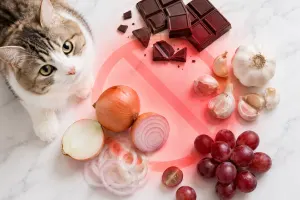
Why cats react differently to toxic foods
Most of this site's food guides are about excess: an amount that is fine occasionally and only becomes a problem as a habit. This page is different. Everything below is dangerous in a genuinely small amount, sometimes a single bite, a lapped spill, or a lick off a countertop, not a bowlful, and several items have no dose small enough to call safe. That changes how to respond, too. The normal instinct with food is to wait and see how a cat reacts.
With everything on this page, waiting is the wrong instinct, because by the time a cat visibly looks sick from grapes, chocolate, or alcohol, real damage can already be underway. A cat's size and biology make this worse than the same warning would be for a larger animal. An average cat weighs somewhere around 8 to 10 pounds, a fraction of an average adult dog or person, so the same absolute amount of a toxic compound lands as a much larger dose per pound of body weight.
A quantity of chocolate or caffeine that would barely register in a 150 pound person can reach a genuinely toxic dose in a 9 pound cat. Cats are also metabolically different from dogs and people in specific, checkable ways, not just smaller versions of either. Their liver produces less of the enzyme needed to clear theobromine and caffeine, so both linger and act longer than they would elsewhere, and grape and raisin toxicity, though its exact mechanism is still not fully understood by researchers, has been documented in cats as well as dogs, not only the species most poisoning reports involve.
Every item here has a specific, checkable mechanism behind it, a compound a cat's body genuinely cannot process safely, and that mechanism, not how much a cat seems to want the food, is what determines the danger.
No safe amount. Call a vet now
Which toxic foods are most dangerous to cats?
The verdict above covers toxic foods as a whole. For the specific one in front of you, this is the breakdown.
| Item | Verdict | Note |
|---|---|---|
| Onion, garlic, leek, chives & shallots |
Never
Damages a cat's red blood cells and can cause serious anemia in any form, raw, cooked, or powdered, with no safe amount established. Our vegetables guide covers the full mechanism and threshold in depth. |
Damages a cat's red blood cells and can cause serious anemia in any form, raw, cooked, or powdered, with no safe amount established. Our vegetables guide covers the full mechanism and threshold in depth. |
| Dark or baking chocolate |
Never
Theobromine concentration is highest in dark and baking chocolate, and a single ounce can already reach a toxic dose in an average cat. Full theobromine-by-type numbers are in our sweets guide. |
Theobromine concentration is highest in dark and baking chocolate, and a single ounce can already reach a toxic dose in an average cat. Full theobromine-by-type numbers are in our sweets guide. |
| Milk chocolate |
Never
Lower theobromine than dark chocolate, but still genuinely dangerous in real quantity, especially for a kitten or a smaller cat. Our sweets guide has the exact per-ounce concentrations and thresholds. |
Lower theobromine than dark chocolate, but still genuinely dangerous in real quantity, especially for a kitten or a smaller cat. Our sweets guide has the exact per-ounce concentrations and thresholds. |
| Xylitol |
Never
Confirmed to trigger a dangerous insulin surge in dogs; a small feline study found no blood sugar drop, but liver-injury risk in cats remains unstudied, so any exposure still gets the same urgent response. Full nuance in our sweets guide. |
Confirmed to trigger a dangerous insulin surge in dogs; a small feline study found no blood sugar drop, but liver-injury risk in cats remains unstudied, so any exposure still gets the same urgent response. Full nuance in our sweets guide. |
| Grapes & raisins |
Never
Linked to acute kidney injury in cats and dogs through a mechanism researchers still don't fully understand, though tartaric acid is now considered the likely toxic compound. No safe amount is known, even a single grape. |
Linked to acute kidney injury in cats and dogs through a mechanism researchers still don't fully understand, though tartaric acid is now considered the likely toxic compound. No safe amount is known, even a single grape. |
| Alcohol (beer, wine, spirits & rum-soaked food) |
Never
A cat's small body and reduced alcohol-dehydrogenase enzyme mean a drink that barely affects a person can depress a cat's nervous system within 15 to 90 minutes. Hand sanitizer and mouthwash carry the same ethanol risk. |
A cat's small body and reduced alcohol-dehydrogenase enzyme mean a drink that barely affects a person can depress a cat's nervous system within 15 to 90 minutes. Hand sanitizer and mouthwash carry the same ethanol risk. |
| Raw yeast bread & pizza dough |
Never
Yeast keeps fermenting in a cat's warm stomach after swallowing, producing carbon dioxide that can bloat and painfully expand the stomach, plus ethanol that causes genuine alcohol poisoning from the inside. |
Yeast keeps fermenting in a cat's warm stomach after swallowing, producing carbon dioxide that can bloat and painfully expand the stomach, plus ethanol that causes genuine alcohol poisoning from the inside. |
| Caffeine (coffee, tea, energy drinks & soda) |
Never
A cat's liver clears caffeine far more slowly than a person's does, and toxic effects can begin around 80 to 150 mg per kilogram of body weight, a dose coffee grounds, tea bags, or an energy drink reach faster than a diluted cup. |
A cat's liver clears caffeine far more slowly than a person's does, and toxic effects can begin around 80 to 150 mg per kilogram of body weight, a dose coffee grounds, tea bags, or an energy drink reach faster than a diluted cup. |
| Macadamia nuts |
Never
Toxicity is confirmed only in dogs, where a handful of nuts causes weakness and tremors through an unknown mechanism. No feline case is confirmed, but with no data clearing cats and a real pancreatitis risk from the fat, treat any amount as a vet call. |
Toxicity is confirmed only in dogs, where a handful of nuts causes weakness and tremors through an unknown mechanism. No feline case is confirmed, but with no data clearing cats and a real pancreatitis risk from the fat, treat any amount as a vet call. |
| Fatty, greasy or heavily salted fast food |
Never
A sudden greasy meal is a real pancreatitis trigger, and salt alone can cause symptoms around half a gram per kilogram of body weight. Our junk food guide breaks down the fries-to-burger risk item by item. |
A sudden greasy meal is a real pancreatitis trigger, and salt alone can cause symptoms around half a gram per kilogram of body weight. Our junk food guide breaks down the fries-to-burger risk item by item. |
| Moldy or spoiled food & garbage |
Never
Certain molds that grow on spoiled bread, cheese, nuts, or compost produce tremorgenic mycotoxins, compounds that cause vomiting, tremors, and seizures. A knocked-over trash can is a genuine poisoning risk, not just a mess. |
Certain molds that grow on spoiled bread, cheese, nuts, or compost produce tremorgenic mycotoxins, compounds that cause vomiting, tremors, and seizures. A knocked-over trash can is a genuine poisoning risk, not just a mess. |
| Concentrated salt (rock salt, salt dough & seawater) |
Never
A large dose of straight sodium, not the seasoning kind, from ice-melt, a homemade salt dough craft, or seawater reaches the same toxic threshold our junk food guide covers, only faster, with no food diluting it. |
A large dose of straight sodium, not the seasoning kind, from ice-melt, a homemade salt dough craft, or seawater reaches the same toxic threshold our junk food guide covers, only faster, with no food diluting it. |
| Raw or undercooked meat, poultry, fish & eggs |
Never
Carries a real salmonella and E. coli risk, and raw egg white contains avidin, which blocks biotin absorption over repeated exposure. Certain raw fish also contain thiaminase, an enzyme that destroys thiamine and can cause neurological signs if fed regularly. |
Carries a real salmonella and E. coli risk, and raw egg white contains avidin, which blocks biotin absorption over repeated exposure. Certain raw fish also contain thiaminase, an enzyme that destroys thiamine and can cause neurological signs if fed regularly. |
Safe means fine as described here. Caution means keep it small, plain and occasional. Never means no safe amount, keep it out of reach.
What to do if your cat ate something toxic
There is no safe serving size to give for anything on this page, and that is the one rule worth carrying into every scenario below: a taste, a lick, or a dropped piece is treated exactly the same as a larger amount, because for most of these items no dose has ever been shown to be safe. That is also why waiting to see if a cat seems fine is the wrong response here, unlike a food that is merely unhealthy in excess.
Onion, garlic and chocolate get fuller item-by-item treatment in our vegetables guide and sweets guide, and the salt and fat overlap with takeout gets its own breakdown in our junk food guide, but all of them share the same rule here: hemolytic anemia from onion or garlic can take three to five days to peak, while alcohol and raw dough act within 15 to 90 minutes. A cat that looks completely normal an hour after eating any of these has not necessarily avoided harm, it may simply be too early to tell.
The practical rule is to call a vet or an animal poison control line the moment an ingestion is known or strongly suspected, not after symptoms appear, for every item on this page, not just the ones that sound most dramatic. Grapes and raisins are the clearest example of why this matters: there is no reliable way to predict which cat will develop kidney injury and which will not, and by the time reduced urination or lethargy shows up, the window for the most effective treatment may already be narrowing.
Do not try home remedies. Inducing vomiting without specific vet guidance can cause more harm than the original ingestion in some cases, and a vet or poison control line is the one who should make that call, not a guess made alone based on how a cat looks in the first few minutes.
If your cat already ate some
If a cat has already eaten something on this page, the first step is figuring out exactly what, and roughly how much, not just that something happened. Check packaging, a recipe, or what is missing from a counter or plate: chocolate type and darkness, whether xylitol is listed as an ingredient or as birch sugar, how many grapes or raisins were within reach, or whether alcohol or raw dough was involved.
That detail changes how a vet responds, so it is worth the extra minute before making the call. For everything on this page, the right response is the same regardless of which item it was: call a veterinarian or an animal poison control line immediately, rather than watching and waiting. Have ready what was eaten, an estimated amount, your cat's approximate weight, and how long ago it happened, all of which shape the guidance given. Do not induce vomiting on your own.
It is not safe for every substance, in every timeframe, or for every cat, and can cause additional harm, like aspiration, if done incorrectly or at the wrong stage. A vet or poison control line will tell you whether it is appropriate for what your specific cat ate, and that decision genuinely needs their input, not a guess made at home. Acting within the first hour, before symptoms even start, gives treatment the best chance of working before a toxin is fully absorbed.
Which toxic foods should cats never eat?
- Grapes and raisins in any form, fresh, dried, or baked into something else like a cookie or trail mix: linked to acute kidney injury in cats with no known safe dose, and no reliable way to predict which cat will be affected.
- Xylitol-sweetened items: sugar-free gum, some peanut butter, and diet baked goods. Confirmed dangerous in dogs, feline data is thin, but with nothing ruling cats out, every exposure gets treated as an emergency.
- Raw bread or pizza dough left rising on a counter: fermenting yeast produces ethanol inside a cat's stomach, causing real alcohol poisoning on top of a genuine bloating and gas expansion risk.
- Any alcoholic drink, including a splash left in a glass: a cat's small body and slow alcohol metabolism mean a taste-sized amount can cause real central nervous system depression within minutes.
- Chocolate in any form, especially dark, baking, or unsweetened baker's chocolate, where theobromine concentration is highest and a small amount goes furthest.
- Onion and garlic in every form, raw, cooked, or powdered, hidden in broth, gravy, or a seasoning blend where the label rarely says either word plainly.
- Coffee grounds, tea bags, or energy drink concentrate left within reach, a far more concentrated caffeine dose than a diluted cup ever delivers.
Full guides: Can Cats Eat Chocolate?, Can Cats Eat Grapes or Raisins?, Can Cats Eat Ham?, Toxic Plants for Cats
Signs of a bad reaction to watch for
- Vomiting, diarrhea, weakness, or pale gums, the earliest sign across nearly everything on this page
- Lethargy or reduced urination in the day or two after grapes or raisins, an early sign of developing kidney injury
- Stumbling, disorientation, or a noticeable drop in body temperature within 15 to 90 minutes of any alcohol or raw dough exposure
- Tremors, agitation, or seizures after chocolate, caffeine, or moldy food, each through a different mechanism but the same urgency
- A swollen, tense, or painful abdomen after raw dough, a sign of the gas bloat that forms alongside the alcohol risk
- Any known or suspected ingestion, even with no symptoms yet, is worth an immediate call, not a wait-and-see
Any of these, or anything that seems off beyond what is listed here, is worth a call to your vet. Our guide to the early signs a cat is sick covers the wider list of what to watch for at any time, not just after eating something new.
Frequently asked questions
What foods are toxic to cats?
Onion, garlic, chocolate, xylitol, grapes, raisins, alcohol, caffeine, raw yeast dough, and macadamia nuts are the foods with a genuine, checkable poisoning mechanism in cats. Each is dangerous in a small amount, not just in excess, and none has a safe dose to build a habit around. Call a vet immediately for any known or suspected ingestion.
What human foods can kill a cat?
Chocolate, grapes and raisins, alcohol, and raw yeast dough carry the most serious, fastest-acting risks, each documented in real feline or canine poisoning cases. Xylitol gets the same urgency because of its confirmed danger in dogs, even though feline-specific poisoning data is thinner. Onion and garlic act slower but are just as serious, causing anemia over several days.
Is there a safe amount of any food on this page?
No, and that is what separates this page from the other food guides. Grapes and raisins have no known safe dose and no reliable way to predict which cat will develop kidney injury. Onion and garlic damage red blood cells in every form, including powdered into a broth, gravy or seasoning blend. Where a threshold exists at all, as with chocolate, it scales down with a cat's small body weight rather than up.
Is caffeine bad for cats?
Yes. A cat's liver clears caffeine far more slowly than a person's does, and toxic effects can begin around 80 to 150 mg per kilogram of body weight. Coffee grounds, tea bags, energy drinks, and soda are all sources, with concentrated grounds or supplements far riskier than a diluted cup.
Can cats have alcohol?
No. Cats have less of the enzyme that breaks down alcohol than people do, so a small, taste-sized amount can depress a cat's nervous system within 15 to 90 minutes. This applies to any drink, rum-soaked food, and even non-beverage sources like hand sanitizer or mouthwash.
Is raw dough toxic to cats?
Yes. Yeast keeps fermenting inside a cat's warm stomach after it's swallowed, producing carbon dioxide that can painfully expand the stomach and ethanol that causes genuine alcohol poisoning. Both risks come from the same piece of raw bread or pizza dough, so keep rising dough covered and out of reach.
What can't cats eat?
Onion, garlic, chocolate, xylitol, grapes, raisins, alcohol, caffeine, raw yeast dough, and macadamia nuts are never safe in any amount. Beyond this page, many other human foods are fine occasionally in small amounts; this list is specifically the genuinely toxic exceptions, not general dietary advice.
What should I do if my cat eats something toxic?
Call a veterinarian or an animal poison control line immediately, don't wait to see if symptoms appear. Have ready what was eaten, roughly how much, and your cat's weight. Don't induce vomiting on your own, since it isn't safe for every substance and a vet needs to guide that decision.
Sources for this guide
- ASPCA Animal Poison Control Center The reference list behind which human foods are genuinely toxic to cats.
- Cornell Feline Health Center Background on feline nutrition and why cats need a meat-based diet.
- WSAVA Global Nutrition Guidelines The nutritional framework behind why extras cannot replace a complete diet.
 By Ahsan Nawaz
Published Updated
