Toxic Plants for Cats: What Actually Kills and What Just Hurts

On this page
Most plants a cat chews will cause a bad afternoon: some drooling, a couple of episodes of vomiting, and a cat that is fine by morning. One group will kill a cat's kidneys inside a day, and the difference between the two is not something you can judge by looking at the plant, or by how much of it went missing.
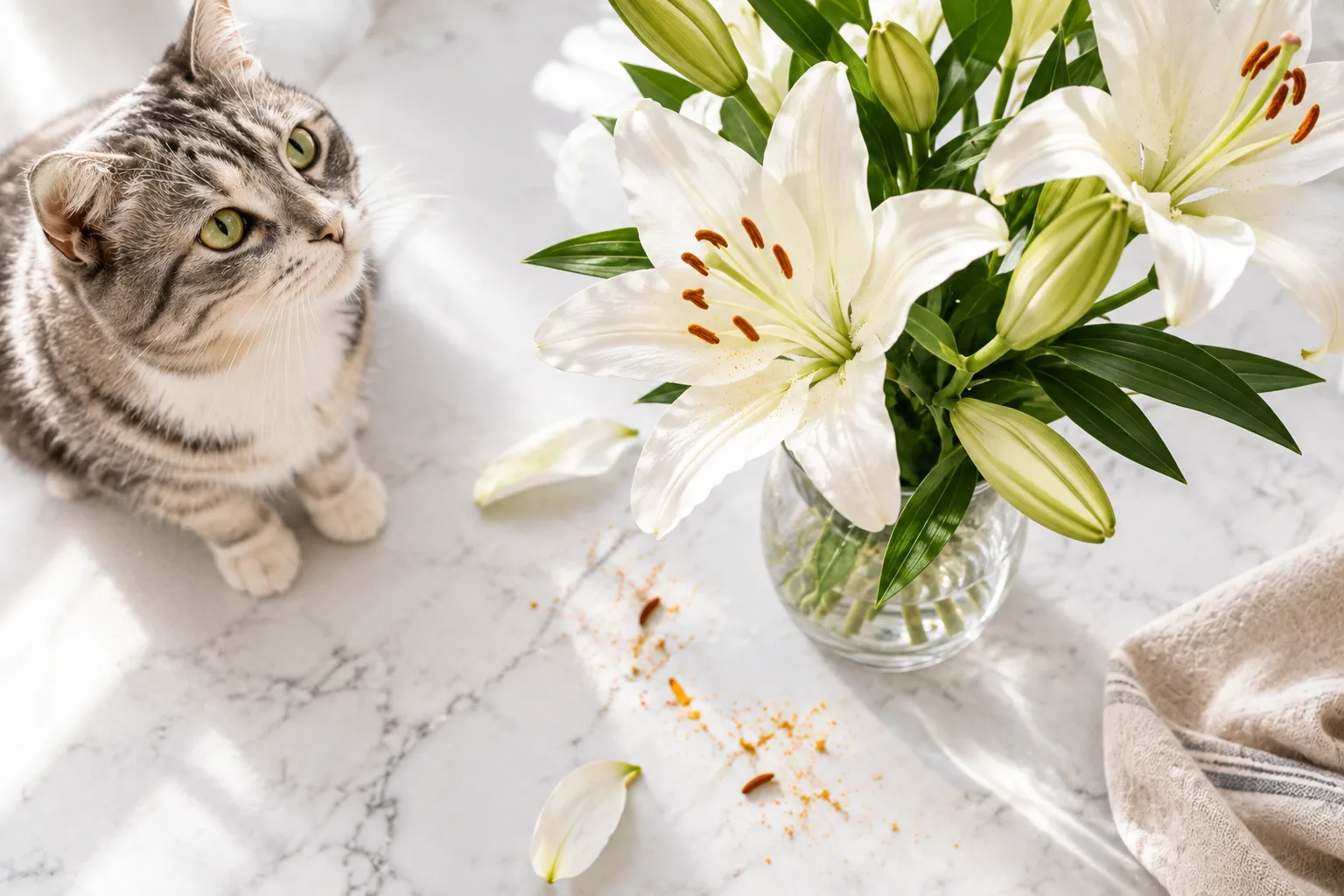
Lilies are the emergency. If a cat has had any contact at all with a true lily or a daylily, including licking pollen off its own fur, stop reading and call: your own vet, an emergency clinic, the ASPCA Animal Poison Control Center on (888) 426-4435, or Pet Poison Helpline on (855) 764-7661. Both hotlines charge a per-case fee, so have a card ready. The treatment window is roughly 18 hours, and it closes quietly, because a poisoned cat looks mildly unwell for the first half of it.
Everything below sorts the plants people actually keep into what they actually do, with the parts that are genuinely dangerous separated from the parts that merely sound alarming. Two of the plants most often searched as dangerous, roses and poinsettia, are not the problems their reputation suggests, and saying so plainly is more useful than adding them to a list of 200 names.
Which plants can actually kill a cat, and which just cause a bad afternoon?
It is worth being blunt about the tiers, because a list that treats a snake plant and a sago palm as equally toxic is not a safety list, it is a shopping ban.
Four plants cause organ failure or death in cats at realistic household exposures: true lilies and daylilies, which destroy the kidneys; sago palm, which destroys the liver; autumn crocus, which causes multi-organ failure; and azalea or rhododendron, which affects the heart and nervous system. Lily of the valley belongs alongside them for its effect on heart rhythm, and gloriosa lily for multi-organ failure.
Almost everything else in a normal home, the pothos on the shelf, the philodendron, the monstera, the snake plant, the tulips in a vase, produces mouth pain, drooling, vomiting or diarrhoea, and resolves with supportive care. That is genuinely unpleasant and worth a phone call, but it is a different category from kidney failure, and treating them as the same thing is how people end up ignoring the warning that mattered.
Why are lilies so much worse than everything else?
Because the toxic dose is smaller than any realistic precaution, and because the plant does not need to be eaten. The FDA's own guidance is explicit that the entire lily plant is toxic: the stem, leaves, flowers, pollen, and even the water in the vase. It lists the exposures that have killed cats as eating a small amount of a leaf or flower petal, licking a few pollen grains off its fur while grooming, or drinking the water from the vase.
Read that again in terms of a normal room. A bouquet on a table sheds pollen. A cat walks past, gets it on its coat, and grooms. That is a documented fatal exposure, and no amount of "the plant is out of reach" prevents it, because the pollen was not out of reach and neither was the water in the vase.
The plants that do this are the true lilies, genus Lilium, which covers Asiatic, Easter, Oriental, Tiger and Stargazer lilies, and the daylilies, genus Hemerocallis. The ASPCA states that all parts of the plant are toxic and small amounts can cause severe injury to the kidneys. What makes this specifically a cat problem is that dogs eating the same plant get an upset stomach; the kidney injury is a feline phenomenon.
How long does a cat have after eating a lily?
About 18 hours, and the cruelty of the timeline is that the cat looks least alarming during the hours that matter most.
The FDA gives the progression in three stages. In the first 12 hours: decreased activity, drooling, vomiting, and loss of appetite. Between 12 and 24 hours: increased urination and dehydration, which is the kidney injury announcing itself. Between 24 and 72 hours: kidney failure.
The number to hold on to is the treatment window. The FDA states that if treatment is delayed by 18 hours or more after ingestion, the cat will generally have irreversible kidney failure. The ASPCA puts the same point more bluntly, calling delay beyond 18 hours often fatal. Against that, early treatment has a genuinely good prognosis: catch it inside the window and a full recovery with no long-term kidney damage is the expected outcome.
So the decision at hour two is not "does my cat seem sick." At hour two a poisoned cat may only be a bit quiet and off its food, which is exactly what a cat looks like on an ordinary bad day. The decision is "was there a lily in this house," and if there was, that is the phone call. Our guide to the signs a cat is sick covers what off-colour looks like generally, but this is the one situation where waiting to see if the signs develop is the mistake.
Which "lilies" are not actually lilies?
Several of the most common plants sold as lilies are not in the kidney-toxic group at all, and knowing which is which changes whether you are facing an emergency or an upset stomach.
Peace lily (Spathiphyllum) and calla lily are not true lilies. Both contain insoluble calcium oxalate crystals, which the ASPCA describes as causing oral pain, drooling, vomiting or diarrhoea. Unpleasant, occasionally dramatic if the mouth swells, but not a kidney event. Peruvian lily (Alstroemeria), the one in most supermarket bouquets, may cause some stomach upset and is not expected to cause organ damage.
Two other "lilies" are serious for different reasons. Lily of the valley (Convallaria) contains cardiac glycosides, and causes stomach upset alongside an irregular heartbeat, which puts it in emergency territory on the heart rather than the kidneys. Gloriosa lily causes multi-system organ failure and is genuinely dangerous.
The practical version: if the flower came from a florist and the label says lily, assume true lily and act accordingly. Sorting out the genus afterwards is free; sorting it out at hour 19 is not.
Are tulips toxic to cats?
Yes, and the important detail is that the danger is concentrated in the part most people never think about, the bulb.
Tulips contain tulipalin A and tulipalin B. The compounds are present throughout the plant but the highest concentration is in the bulb, which is why the risk profile changes completely depending on whether the tulip is in a vase or in a bag on the potting bench. A cat chewing a petal from an arrangement is looking at vomiting, drooling, diarrhoea and general depression. A cat that gets into a bag of bulbs is a different problem: on top of the higher toxin load, large bulbs carry a real risk of intestinal obstruction.
So tulips belong in the "call the vet, expect a rough day" tier rather than the lily tier, with the caveat that bulbs move it up. Autumn planting season, when bulbs are sitting in open bags in a garage or utility room, is the exposure most owners never anticipate.
Are roses toxic to cats?
No. True roses, genus Rosa, are on the ASPCA's non-toxic list for cats, and this is worth stating clearly because the question is asked constantly and a lot of pages hedge it into sounding like a yes.
The hazards a rose does present are mechanical rather than chemical: thorns, which can injure a mouth or a paw, so strip them before the flowers go in a vase where a cat can reach. Eating rose petals or leaves may still cause mild stomach upset simply because it is plant matter a cat is not built to digest, the same way grass does, but that is not toxicity.
Two cautions keep this honest. Plants sold under "rose" in the common name are often not roses at all: Christmas rose, desert rose and rose of Sharon are unrelated plants with their own toxicity, and the desert rose in particular is genuinely dangerous. And a florist's rose may have been treated with something that was never meant to be chewed, or arrive in a bouquet where the actual problem is the lily sitting next to it.
Are snake plants toxic to cats?
Mildly, and this is one where the honest answer is more reassuring than the search results suggest.
Snake plant (Sansevieria, now often reclassified as Dracaena trifasciata) contains saponins. The ASPCA lists it as toxic to cats, with clinical signs of nausea, vomiting and diarrhoea. Reported feline signs also include drooling, swelling of the mouth, lips or tongue, and in some cases dilated pupils and an unsteady gait.
What keeps it in the mild tier is the plant's own defence: saponins are bitter, and most cats that take one experimental bite do not take a second. The realistic outcome from a chewed leaf is vomiting and a cat that has learned its lesson, not organ damage. It is still worth moving out of reach, particularly for a young cat that chews everything, but a snake plant in the house is not the emergency a lily is.
Is lavender safe for cats?
The plant is a minor problem. The essential oil is a serious one, and conflating the two is where most advice on this goes wrong.
The lavender plant contains linalool and linalyl acetate, and the ASPCA lists it as toxic to cats, with signs of nausea, vomiting and loss of appetite. A cat that nibbles a lavender stem in the garden is very unlikely to come to harm.
Lavender essential oil is a different substance entirely, because it concentrates those same compounds by orders of magnitude and removes the bitter, bulky plant matter that limits how much a cat can take in. The underlying reason cats fare worse than people here is metabolic: cats lack the liver enzyme pathways needed to clear these compounds efficiently, so a dose a person clears without noticing accumulates in a cat. That applies to diffusers as well as direct contact, since oil dispersed into the air settles on a cat's coat and is then groomed off and swallowed.
The practical line: a lavender plant on a windowsill is a low-level concern. A lavender oil diffuser running in a room a cat cannot leave is not, and neither is anything applied to a cat's skin or fur.
Which other plants are genuinely dangerous?
Three deserve to be named alongside lilies rather than buried in a long list.
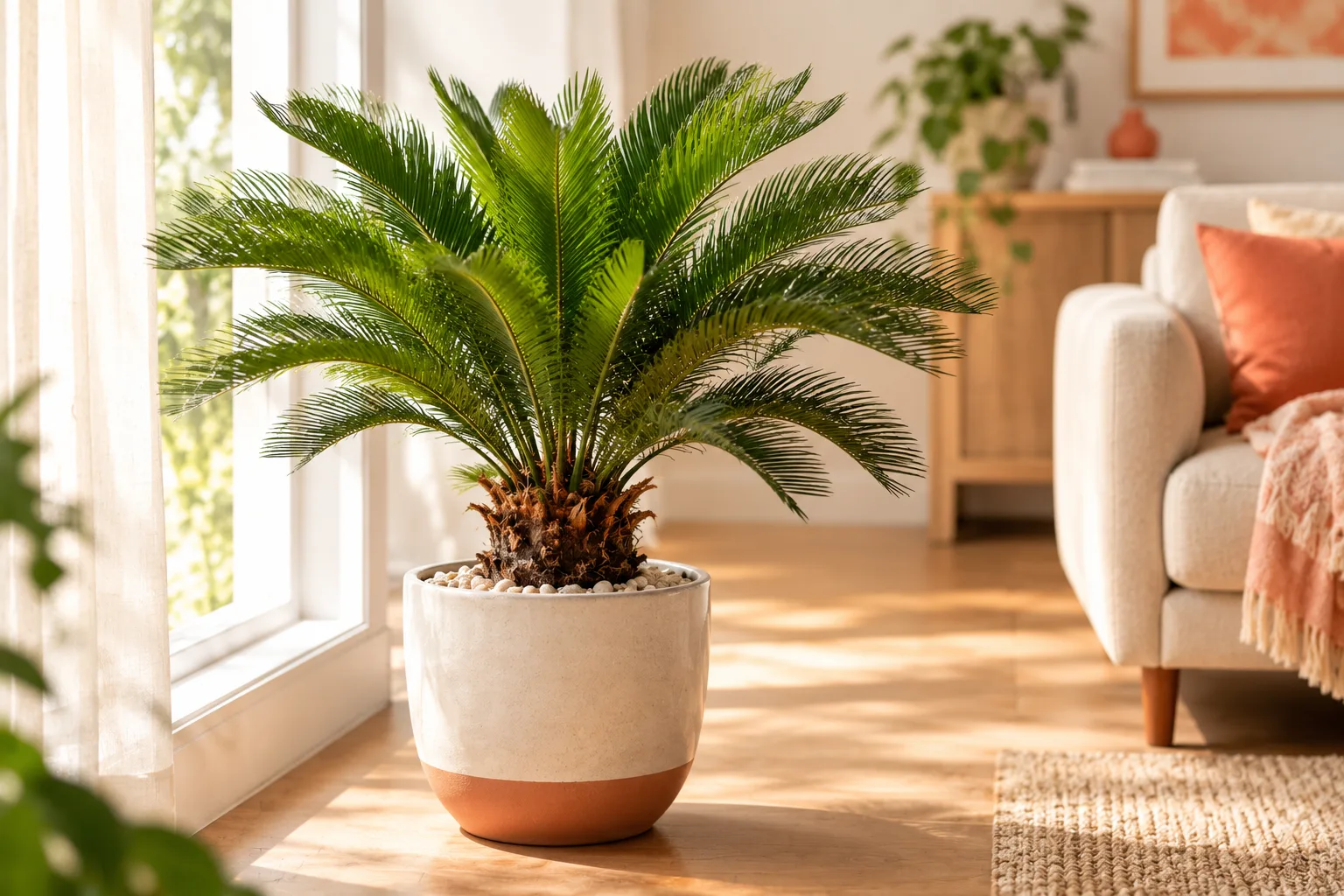
Sago palm is the worst thing most people will ever put in a living room. It contains cycasin, which the liver converts into a compound that destroys liver tissue, producing vomiting, black tarry stools, jaundice, bruising and clotting failure, with liver failure developing over roughly two to three days. Reported fatality rates in ingestion cases run to about 50 percent even with treatment. Every part is toxic and the seeds are the worst of it.
Autumn crocus (Colchicum autumnale) contains colchicine, and it is one of the few plants where a published feline lethal dose exists: around 0.125 mg of colchicine per kilogram of body weight, which corresponds to roughly one to two flowers or a single small leaf. Signs include drooling, vomiting, bloody diarrhoea, difficulty breathing, seizures and death. Note that this is not the spring crocus, which is a much milder plant.
Azalea and rhododendron contain grayanotoxins, which interfere with nerve and muscle function including the heart. The quantity required is very small, and signs run from drooling, vomiting and diarrhoea through weakness and tremors to seizures, coma and death.
What about pothos, philodendron and monstera?
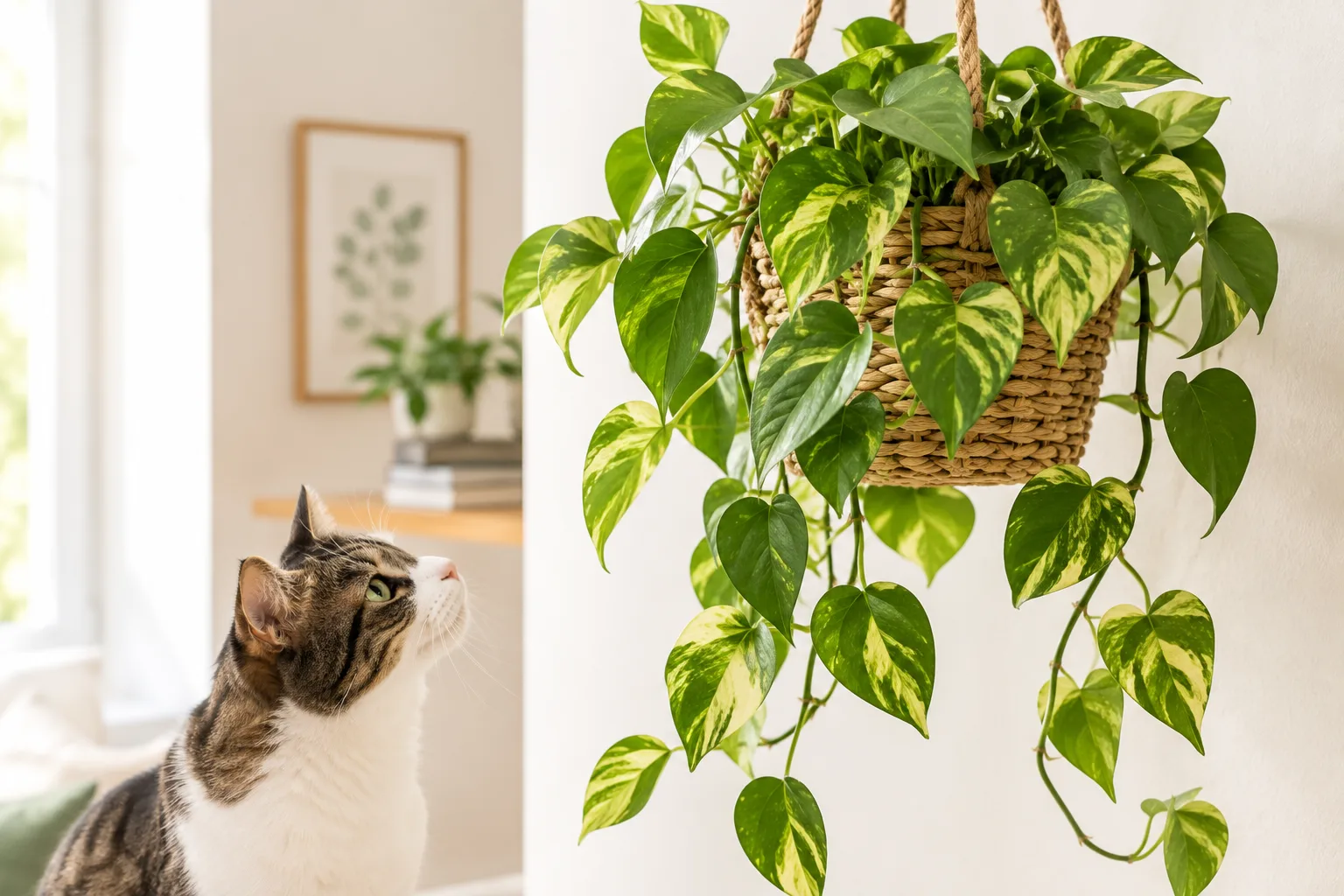
These are the plants cats actually get into, and the good news is that the most common exposure is also one of the least dangerous.
Pothos, philodendron, monstera, dieffenbachia and peace lily all belong to the same family and share the same mechanism: insoluble calcium oxalate crystals. The ASPCA Animal Poison Control Center reports this family as its most common plant exposure category. The crystals are needle-shaped and physically embed in the mouth and throat on chewing, which is why the reaction is immediate and dramatic: intense oral burning, drooling, pawing at the mouth, and sometimes swelling of the lips or tongue.
That immediacy is protective. A cat that bites a pothos leaf usually stops instantly, which limits how much is swallowed. Serious cases involve swelling significant enough to affect breathing or swallowing, which is a vet visit, and dieffenbachia is the one most associated with that. But the usual outcome is a miserable half hour and a cat that avoids the plant thereafter.
Is poinsettia actually dangerous?
Far less than its reputation, and this is the clearest case on the page of a myth outliving the evidence.
Poinsettia's milky sap is irritating, and a cat that chews a leaf may drool, vomit or develop mild skin irritation around the mouth. That is the extent of it in the overwhelming majority of cases. It is mildly toxic rather than the household killer it is remembered as, and the annual warnings tend to be recycled rather than checked.
What deserves the attention poinsettia gets is the rest of the winter décor. Holly causes significant gastrointestinal upset from its spiny leaves and toxic compounds, mistletoe is genuinely serious in quantity, and lilies appear in a great many Christmas and Easter arrangements, which is the real seasonal risk in the room. Our guide to foods that are toxic to cats covers the other half of the holiday problem, since chocolate and a lily bouquet often arrive in the same week.
My cat ate a plant. What should I do right now?
Work out what the plant was before you work out how worried to be, because the answer changes completely between tiers.
Call immediately, without waiting for symptoms, if there is any chance of a lily, daylily, sago palm, autumn crocus, azalea, rhododendron or lily of the valley. For the milder plants, a call is still the right move, but it is a call about managing an upset stomach rather than a race against organ damage.
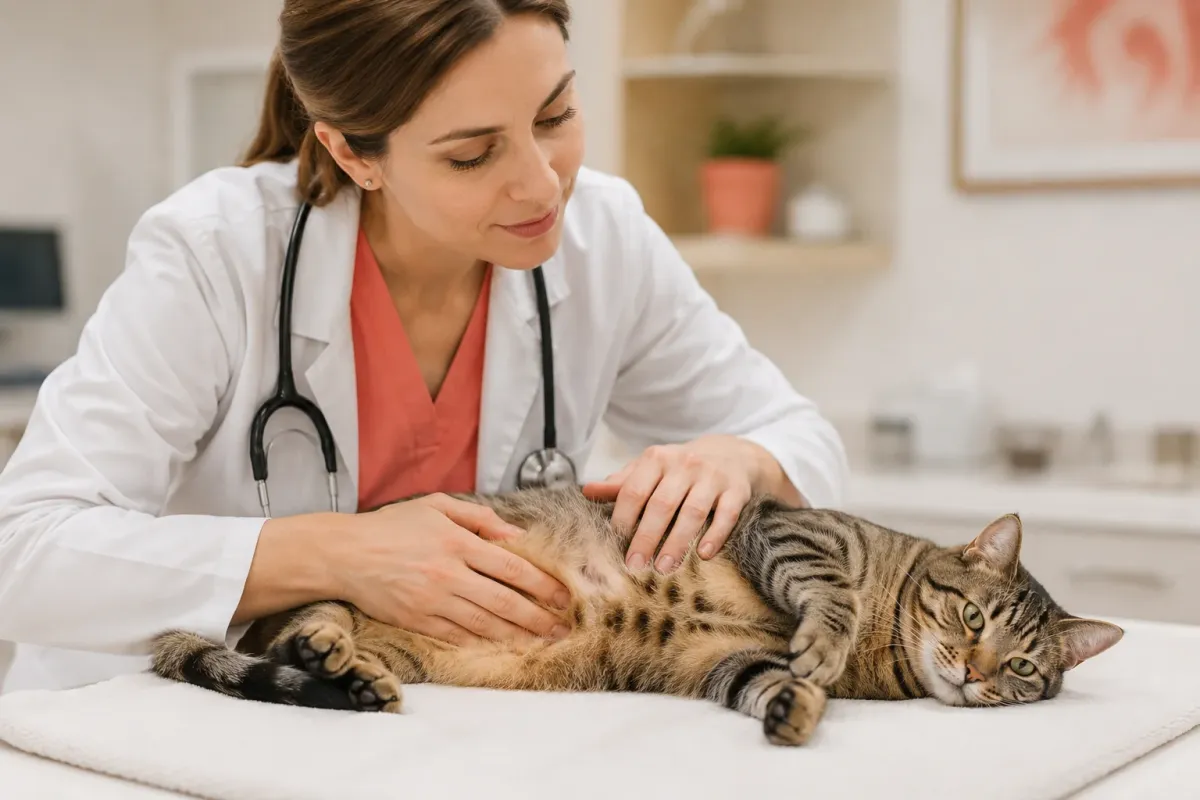
Bring five things to the conversation: what the plant was, ideally with a photo or the plant tag or a piece of the actual plant; which part and roughly how much; when it happened, or the earliest it could have; your cat's weight; and whether there were symptoms and when they started. If the plant came in a bouquet, take a photo of the whole arrangement, because the dangerous stem is often not the one that was chewed.
Do not try to make your cat vomit at home. This is worth stating firmly because the advice circulating online is almost entirely written for dogs. Hydrogen peroxide, the standard dog remedy, works poorly in cats and causes gastritis and in documented cases severe haemorrhagic gastritis. Vets use injectable agents that are not available to you. Do not offer milk, oil or salt either. If plant material is still in the mouth, you can gently rinse it with water, and then you call.
Useful numbers: ASPCA Animal Poison Control Center on (888) 426-4435 and Pet Poison Helpline on (855) 764-7661, both of which charge a consultation fee, plus your own vet or the nearest emergency clinic. For a lily exposure, go to the clinic rather than waiting for a call back.
Which plants are actually safe to keep with a cat?
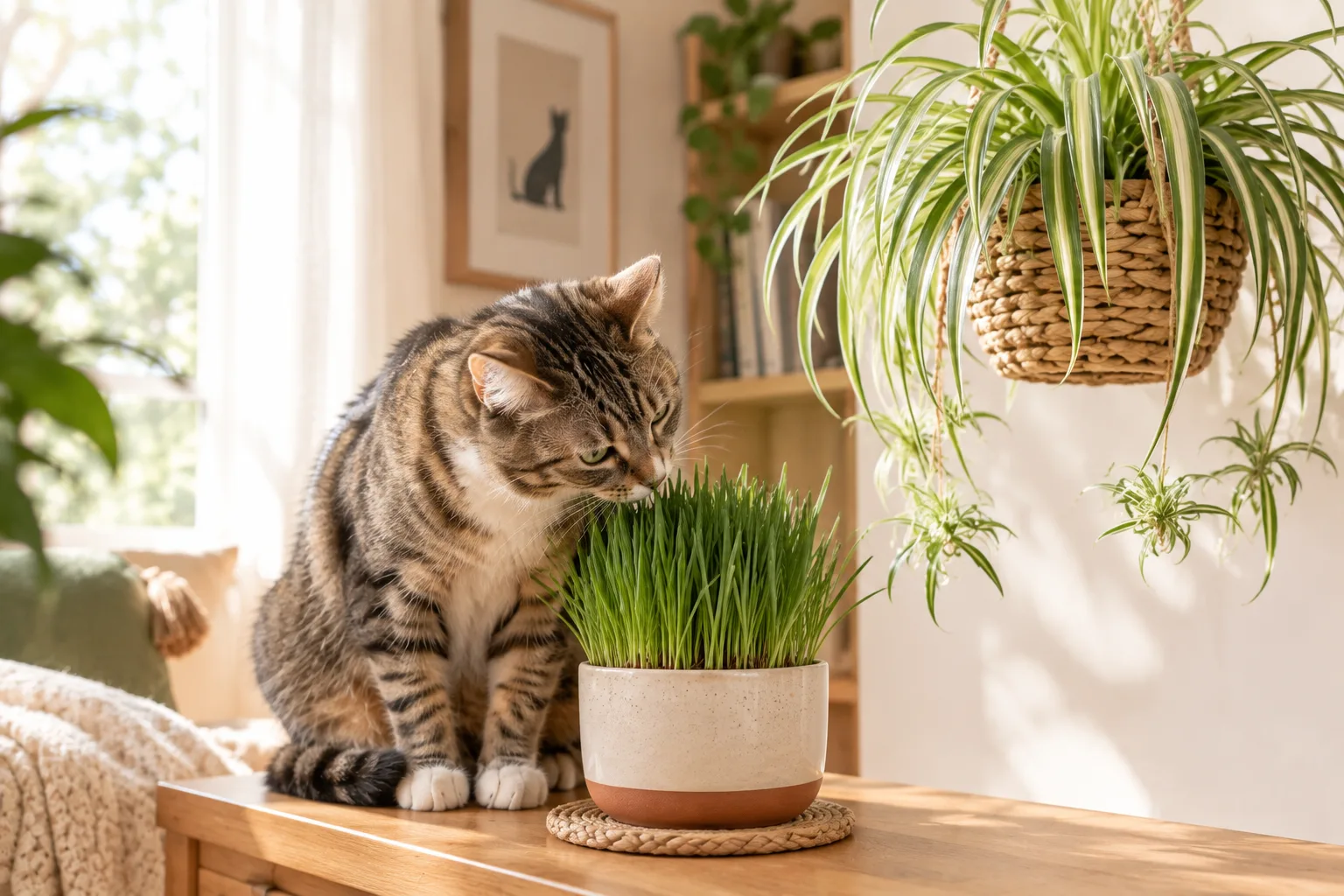
The ASPCA maintains a non-toxic list running to hundreds of species, so a cat household does not have to be a plant-free household.
Reliable choices include spider plant, Boston fern, calathea in its various forms including rattlesnake and orbifolia, parlor palm and areca palm. Cat grass, usually oat, wheat or barley grass, is the one plant worth adding deliberately rather than merely tolerating: it gives a cat that wants to chew something green a target that is not the pothos.
One caveat on the spider plant, since it is the most recommended cat-safe plant there is. It is genuinely non-toxic, but it contains compounds that appear mildly attractive to cats in a similar way to catnip, so cats chew it enthusiastically, and enough of it will still cause vomiting. Non-toxic means it will not poison your cat; it does not mean an entire plant is a good idea.
The general principle worth more than any list: check a plant against the ASPCA database before it enters the house, rather than after. And in a house with a cat, treat cut-flower bouquets as the higher risk, not the houseplants, because a bouquet arrives unannounced, already in water, and nobody chose its contents with a cat in mind.
This guide goes into more depth than What Foods Are Toxic to Cats?, which compares the whole group side by side.
Frequently asked questions
What is the most toxic plant for cats?
Lilies, by a wide margin. True lilies (Lilium) and daylilies (Hemerocallis) cause acute kidney failure in cats, and the FDA states the entire plant is toxic including the stem, leaves, flowers, pollen and the vase water. Licking a few pollen grains off their fur while grooming has been enough to kill cats.
How long does a cat have after eating a lily?
About 18 hours. The FDA states that if treatment is delayed 18 hours or more after ingestion, the cat will generally have irreversible kidney failure. Signs run in stages: drooling, vomiting and lethargy in the first 12 hours, increased urination and dehydration at 12 to 24 hours, and kidney failure at 24 to 72 hours. Treated inside the window, a full recovery is the expected outcome.
Are roses toxic to cats?
No. True roses (genus Rosa) are on the ASPCA's non-toxic list for cats. The only real hazards are the thorns, so strip them before the flowers go anywhere a cat can reach. Note that plants named 'rose' are often not roses at all: Christmas rose, desert rose and rose of Sharon are unrelated and do carry toxicity.
Are tulips toxic to cats?
Yes, mildly, with one important exception. Tulips contain tulipalin A and B throughout the plant, causing vomiting, drooling, diarrhoea and depression. The bulb holds by far the highest concentration, so a cat that gets into a bag of bulbs faces both a bigger toxin dose and a genuine risk of intestinal obstruction.
Are snake plants toxic to cats?
Mildly. Snake plant contains saponins, and the ASPCA lists signs of nausea, vomiting and diarrhoea, sometimes with drooling, mouth swelling, dilated pupils or an unsteady gait. Saponins are bitter, so most cats stop after one experimental bite. Worth moving out of reach, but not in the same category as a lily.
Is lavender safe for cats?
The plant is a minor concern; the essential oil is not. Lavender contains linalool and linalyl acetate, and the ASPCA lists the plant as toxic with signs of nausea, vomiting and appetite loss. The oil concentrates those compounds enormously, and cats lack the liver enzyme pathways to clear them efficiently, which makes diffusers and anything applied to fur a real risk.
Is poinsettia poisonous to cats?
Far less than its reputation suggests. The milky sap is irritating and may cause drooling, vomiting or mild skin irritation around the mouth, and that is usually the extent of it. The genuinely dangerous winter plants are lilies in holiday bouquets, holly and mistletoe.
What should I do if my cat ate a toxic plant?
Call without waiting for symptoms if a lily, daylily, sago palm, autumn crocus, azalea, rhododendron or lily of the valley is involved. Have the plant identity, the part and amount, the time, and your cat's weight ready. Never induce vomiting at home: hydrogen peroxide works poorly in cats and can cause severe haemorrhagic gastritis. ASPCA Animal Poison Control is (888) 426-4435; Pet Poison Helpline is (855) 764-7661.
Which houseplants are safe for cats?
Spider plant, Boston fern, calathea, parlor palm and areca palm are all on the ASPCA non-toxic list, which runs to hundreds of species. Cat grass is worth adding deliberately, since it gives a chewer a safe target. One caveat: spider plants attract cats in a catnip-like way, so while non-toxic, eating a lot still causes vomiting.
Sources
- FDA, Lovely Lilies and Curious Cats: A Dangerous Combination The entire lily plant is toxic including stem, leaves, flowers, pollen and vase water; fatal exposures include grooming pollen off fur. Symptom staging at 0 to 12, 12 to 24 and 24 to 72 hours, and the finding that treatment delayed 18 hours or more generally results in irreversible kidney failure.
- ASPCA, Which Lilies Are Toxic to Pets? Lilium and Hemerocallis cause severe kidney injury from small amounts. Lily of the valley (Convallaria) contains cardiac glycosides causing irregular heartbeat. Peace lily and calla are insoluble calcium oxalate plants, not true lilies; Peruvian lily causes stomach upset without organ damage.
- ASPCA, Toxic and Non-Toxic Plant List for Cats The reference database behind every verdict on this page, including roses (Rosa) listed non-toxic, and the non-toxic entries for spider plant, Boston fern, calathea, parlor palm and areca palm.
- ASPCA, Toxic and Non-toxic Plants: Tulip Tulipalin A and B present throughout the plant with the highest concentration in the bulb. Clinical signs of vomiting, depression, diarrhoea and hypersalivation, with intestinal obstruction possible from large bulbs.
- ASPCA, Toxic and Non-toxic Plants: Snake Plant Saponins as the toxic principle, with nausea, vomiting and diarrhoea as the listed clinical signs in cats.
- ASPCA, Toxic and Non-toxic Plants: Lavender Linalool and linalyl acetate as the toxic principles, with nausea, vomiting and inappetence in cats. The basis for separating the plant (mild) from the essential oil (serious).
- ASPCA, The Dangers of the Sago Palm Cycasin as the toxic principle, converted in the liver to a compound causing severe hepatic damage; vomiting, melena, icterus, coagulopathy and liver failure over roughly two to three days, with reported fatality around 50 percent of ingestion cases.
- Pet Poison Helpline, Sansevieria Corroborates the saponin mechanism and adds the feline-specific reports of dilated pupils and unsteady gait alongside the usual gastrointestinal signs.
- ASPCApro, Proper Use of Emetics in Dogs and Cats Hydrogen peroxide is not advised in cats: it works poorly and causes gastritis or haemorrhagic gastritis. Vets use injectable agents instead, which is why home-induced vomiting is ruled out on this page.
- ASPCA Animal Poison Control Center Emergency line (888) 426-4435, consultation fee applies. Also the source for the Araceae/Dieffenbachia/Philodendron family being the most commonly reported plant exposure category.
General information, not veterinary advice. If your cat's behavior has changed suddenly, speak to a vet rather than an article.
How this guide was researched and checked is set out in how our guides are written.

Want an answer in seconds?
The calculators handle age, due dates and portions without an account.