Fleas and Ticks on Cats: Prevention and Treatment


On this page
"My cat never goes outside" is the most common reason owners give for skipping flea and tick prevention, and it is also one of the least reliable. Fleas travel in on shoes, on other pets, and through window screens, and an indoor-only cat can end up with an infestation without ever setting a paw outside.
Signs your cat has fleas
- Scratching or biting at the skin more than usual, especially around the neck, base of the tail and back legs
- Small black specks in the fur that look like ground pepper: this is flea dirt, which is actually flea feces, and turns reddish-brown if wiped on a wet paper towel
- Visible fleas, small and fast-moving, most easily seen at the base of the tail or belly during a coat part
- Hair loss or scabbing, often from the cat's own scratching and over-grooming rather than the fleas directly
- Restlessness or difficulty settling, particularly in a heavy infestation
Fleas cause more damage after they bite than while they bite. Most of what you are actually looking at is a cat's reaction to them.

Why one treatment is rarely enough
Fleas go through four life stages: egg, larva, pupa and adult, a cycle that the Cornell Feline Health Center says typically lasts about a month but can run longer depending on temperature and humidity. The adults biting your cat are usually a small fraction of the total population at any given time.
Eggs fall off the cat into carpets, bedding and furniture within hours of being laid, and larvae and pupae develop there, hidden, for anywhere from a couple of weeks to several months depending on temperature and humidity. The pupal stage in particular can lie dormant and resistant to many treatments until triggered to hatch by vibration or warmth, which is part of why a single treatment on the cat alone often does not fully solve an infestation, and why the environment needs treating too.
Why fleas are more than an itch
Beyond the discomfort, fleas carry two real risks. Some cats develop flea allergy dermatitis, an allergic reaction to flea saliva that causes intense itching and skin damage from a single bite, far out of proportion to the number of fleas actually present; Cornell describes reddish, crusty bumps even in areas the cat has not scratched. And because cats groom themselves so thoroughly, they frequently swallow fleas while biting at itchy spots, which is the most common way cats pick up tapeworms: the flea can carry tapeworm larvae, and swallowing an infected flea completes the cycle.
Cornell also notes that fleas can carry the organism behind feline infectious anemia. The clearest sign of tapeworms is small, rice-grain-like segments visible around the base of the tail or in bedding, which are shed tapeworm segments rather than worms themselves, and are usually straightforward for a vet to confirm and treat with a single dose of medication.
In kittens, or in a heavy, untreated infestation, fleas can drain enough blood to cause anemia, which is a genuine medical risk rather than just a nuisance.
What about ticks?
Ticks are less common on cats than on dogs, largely because grooming tends to remove them before they attach, but outdoor and indoor-outdoor cats are still at real risk. A tick usually shows up as a small, firm bump on the skin that was not there before, most often around the head, ears or neck, and will feel harder and more embedded than a normal skin lump.
Tick-borne disease is less common in cats than in dogs, but it is not nothing. Cytauxzoonosis, spread by the Lone Star tick and most often reported in the south-central and southeastern United States, is a serious and often fatal infection in cats, listed by Cornell as bobcat fever, which is one reason tick prevention matters even where flea prevention alone might otherwise feel like enough. Other tick-borne diseases, such as anaplasmosis and ehrlichiosis, are well documented in dogs and occur far less often in cats, but are not impossible, which is one more reason a tick found on a cat is worth removing carefully and watching afterward rather than dismissed as a dog-only concern.
Are fleas and ticks a year-round risk?
In warmer climates, both are a genuine year-round concern. In areas with real winters, flea and tick activity typically drops off in cold weather but does not disappear entirely, especially for pets that spend any time outdoors or in homes with consistent indoor heating, which fleas can survive in regardless of the season outside. Vets in most regions recommend keeping preventives going year-round rather than starting and stopping with the weather, since a gap in coverage is exactly when a new infestation tends to take hold.
How to remove a tick safely
Put on gloves, then, as the Cornell Feline Health Center advises, use fine-tipped tweezers or a dedicated tick-removal tool, grasp the tick as close to the skin as possible, and pull straight up with slow, steady pressure rather than twisting or jerking. The goal is to remove the whole tick, mouthparts included, without squeezing its body, which can push more of its contents into the bite.
Avoid folk remedies like petroleum jelly, a lit match or nail polish, none of which are recommended and some of which can cause the tick to release more saliva into the bite before detaching. Clean the area afterward and keep an eye on it for a few days for any redness or swelling that does not settle.
Prevention that actually works
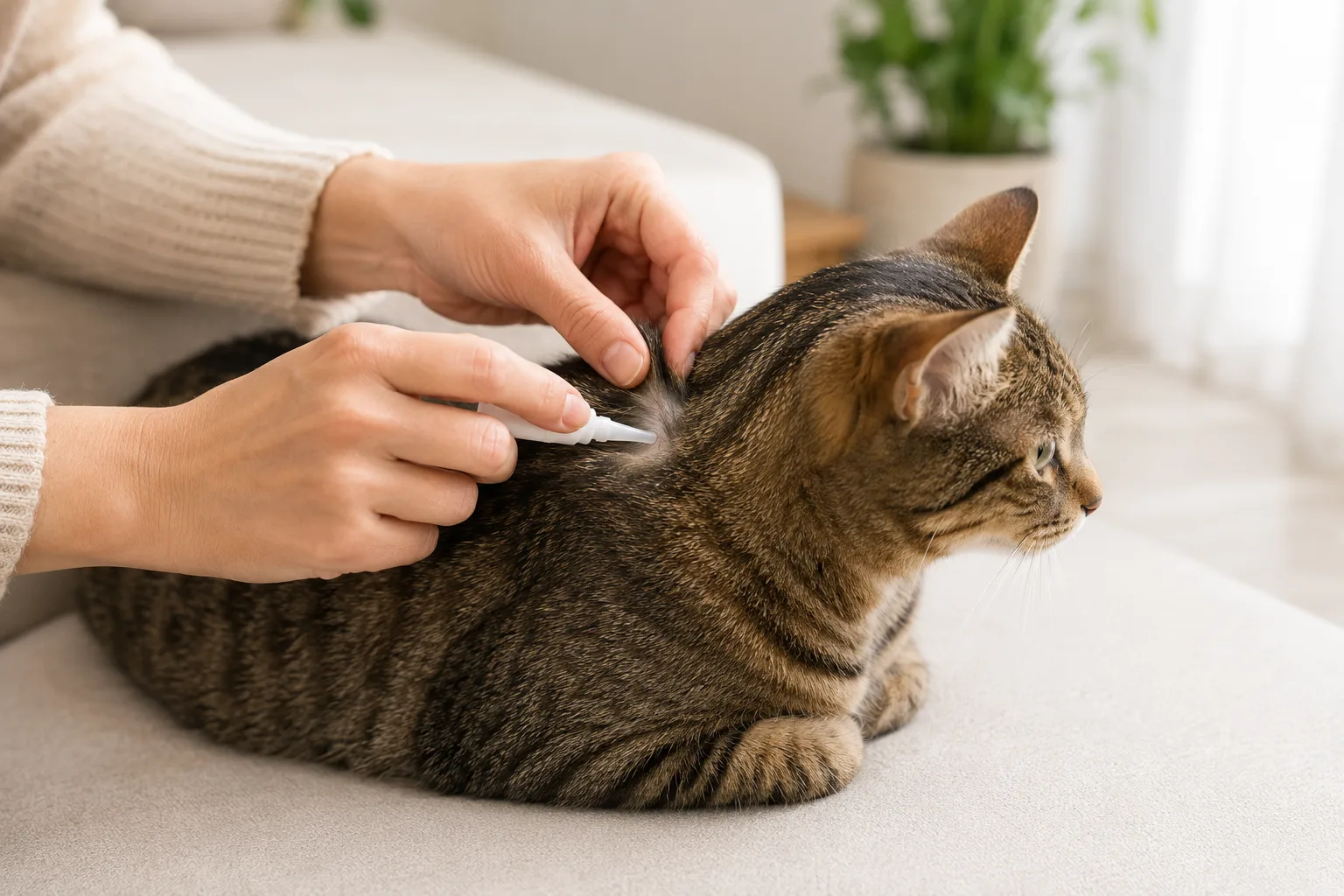
- Use a vet-recommended, cat-specific preventive. Monthly topical or oral products, prescribed or recommended by a vet, are the most reliable protection, for indoor and outdoor cats alike. Topical spot-on treatments are applied to the skin and spread through the coat's natural oils; oral preventives work systemically through the bloodstream instead. Both are effective when used correctly and consistently; the right choice usually comes down to a cat's temperament and a vet's recommendation.
- Treat every pet in the house, not just the cat with visible symptoms. Fleas move between animals easily, and treating one pet while another stays untreated rarely solves the problem.
- Wash bedding and vacuum regularly. Flea eggs and larvae live in carpets, bedding and furniture, not just on the cat, so treating the environment matters as much as treating the animal. Wash pet bedding on the hottest setting the fabric allows, and vacuum carpets, rugs and furniture crevices thoroughly, disposing of the vacuum bag or emptying the canister outside afterward so anything collected cannot simply climb back out.
- Expect a few weeks, not a few days. Because of the life cycle described above, a full flea infestation typically takes several weeks of consistent treatment, on the cat and in the home together, before it is fully resolved. A flea seen a week into treatment does not necessarily mean the product has failed.
- Check after outdoor time, running your hands through the coat, especially around the ears, neck and armpits, where ticks most often attach.
One warning worth repeating
Never use a flea or tick product made for dogs on a cat. The ASPCA is explicit about this. Many dog products contain permethrin, an ingredient that is highly toxic to cats and can cause severe, sometimes fatal, reactions even in small amounts. Always check that any product is explicitly labeled safe for cats, and when in doubt, ask a vet before applying anything.
When to see a vet
- Scratching or hair loss that does not improve after starting an over-the-counter treatment
- Any sign of a tick you cannot remove completely, or a bite site that looks infected
- Pale gums, weakness or lethargy in a cat with a known heavy flea burden, which can point at anemia
- Any accidental exposure to a dog-only flea product
If you have just brought a new cat home and are still working through the basics of preventive care, our complete guide for new cat owners covers what else to put in place in the first few weeks.
Frequently asked questions
Can indoor cats get fleas?
Yes. Fleas travel in on shoes, clothing, other pets, and through window screens, so an indoor-only cat can pick up an infestation without ever going outside.
What are the signs my cat has fleas?
Scratching or biting at the skin more than usual, small black specks in the fur (flea dirt) that turn reddish-brown when wiped on a wet paper towel, visible fast-moving fleas at the base of the tail, and hair loss from over-grooming are the main signs.
Can fleas make my cat sick?
Yes. Beyond the itching, some cats develop flea allergy dermatitis, an intense reaction to flea saliva. Cats can also swallow infected fleas while grooming, which is the most common way they pick up tapeworms, and heavy infestations can cause anemia, especially in kittens.
Are ticks dangerous for cats?
Ticks are less common on cats than dogs but do occur, especially with outdoor access. Cytauxzoonosis, spread by the Lone Star tick and most reported in the south-central and southeastern United States, is a serious and often fatal tick-borne infection in cats.
Can I use dog flea treatment on my cat?
No. Many dog flea and tick products contain permethrin, which is highly toxic to cats and can cause severe, sometimes fatal, reactions even in small amounts. Always use a product explicitly labeled safe for cats.
How do I get rid of fleas on my cat and in my home?
Use a vet-recommended, cat-specific preventive on every pet in the household, not just the one with visible symptoms, and wash bedding and vacuum regularly, since flea eggs and larvae live in the environment, not only on the cat.
How do I safely remove a tick from my cat?
Use fine-tipped tweezers or a tick-removal tool, grasp it as close to the skin as possible, and pull straight up with steady pressure rather than twisting. Avoid folk remedies like petroleum jelly or a lit match, and watch the site for redness over the following days.
Why does it take weeks to get rid of a flea infestation?
Fleas go through egg, larva, pupa and adult stages, and most of that population lives in carpets and bedding rather than on the cat. The pupal stage can lie dormant for weeks, which is why a single treatment on the cat alone often is not enough.
Sources
- Cornell Feline Health Center: Fleas The flea life cycle, flea allergy, tapeworms and infectious anemia.
- Cornell Feline Health Center: Ticks and Your Cat FAQ Tick-borne diseases in cats and how to remove an embedded tick.
- ASPCA: Fleas and Ticks Treating the home, prevention, and never using dog products on cats.
- VCA Animal Hospitals: Flea Control in Cats Clinical overview of flea biology, health risks and treatment.
General information, not veterinary advice. If your cat's behavior has changed suddenly, speak to a vet rather than an article.
How this guide was researched and checked is set out in how our guides are written.

Want an answer in seconds?
The calculators handle age, due dates and portions without an account.