Cat UTI Symptoms: What to Watch For and When to See a Vet

On this page
Most people say "UTI" for any urinary problem in a cat, but true bacterial urinary tract infections are actually the less common cause. Most cats straining in the litter box have a different, related condition, and telling them apart matters, because one version of this can turn into a genuine emergency within a day.
Is it really a UTI?
A bacterial UTI happens when bacteria get into the bladder and multiply there. It is a real and treatable condition, but in cats it is more common in older cats, cats with diabetes or kidney disease, and cats with a weakened immune system, than it is in an otherwise healthy young cat.
In healthy adult cats, especially younger ones, the same symptoms far more often come from feline idiopathic cystitis (FIC), inflammation of the bladder with no infection present at all, frequently tied to stress. The Cornell Feline Health Center calls FIC the most common diagnosis in cats with lower urinary tract signs. Vets group both under the broader term feline lower urinary tract disease (FLUTD), because from the outside, at home, they look identical.
You cannot tell a bladder infection from bladder inflammation by watching your cat. A vet has to test the urine either way.
Cat UTI and FLUTD symptoms to watch for
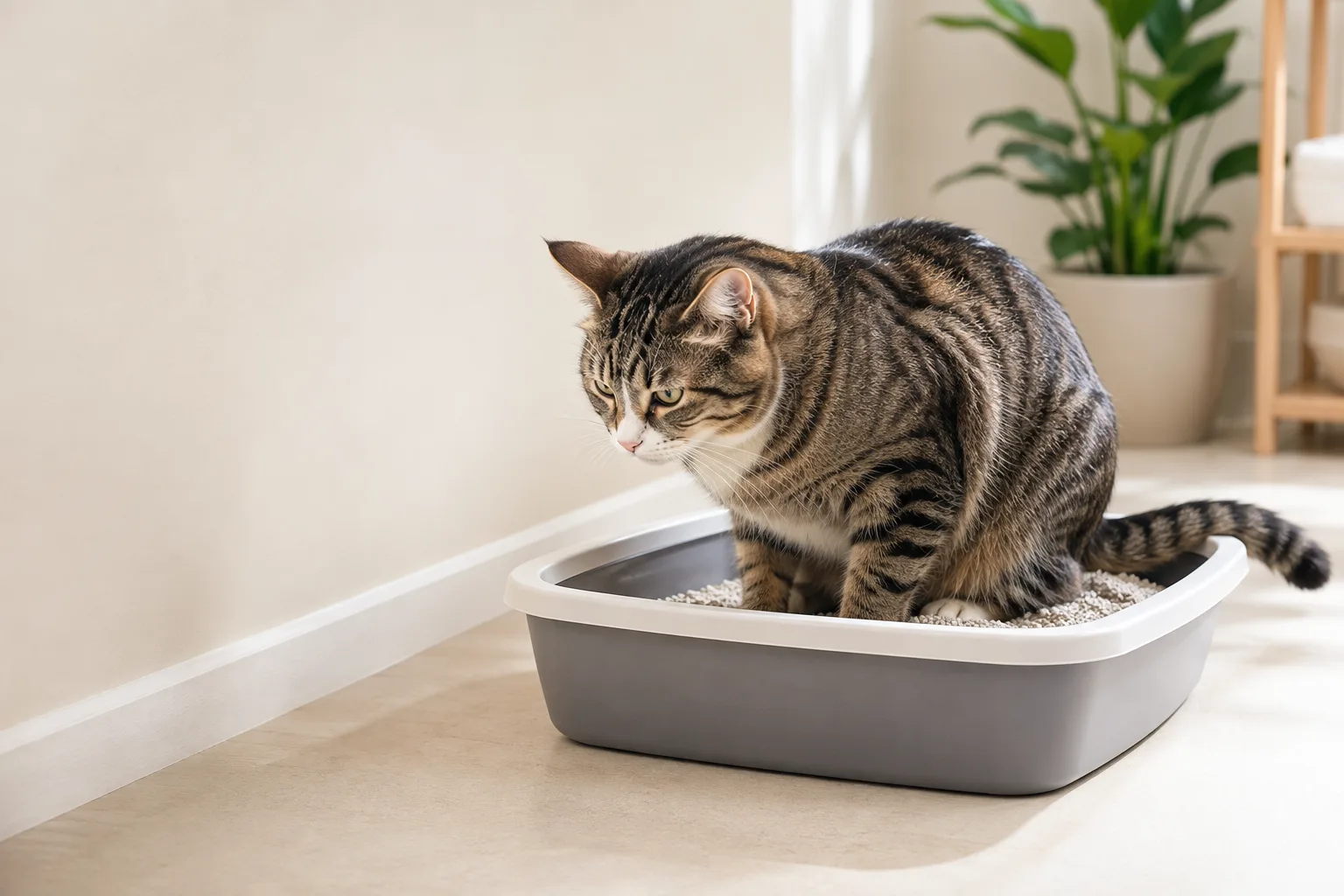
- Straining to urinate, often producing only a small amount or nothing at all
- Frequent trips to the litter box, more often than usual, each producing little urine
- Blood in the urine, which can look pink, red, or simply darker than normal
- Urinating outside the litter box, especially on cool, smooth surfaces like tile or a bathtub
- Crying out or vocalizing while urinating, which usually means it is painful
- Excessive licking of the genital area between trips to the litter box
Any one of these on its own is worth a vet visit. A cat straining repeatedly with little to show for it is not "just going a lot," it is trying and struggling, and that distinction matters.
How a vet actually diagnoses it
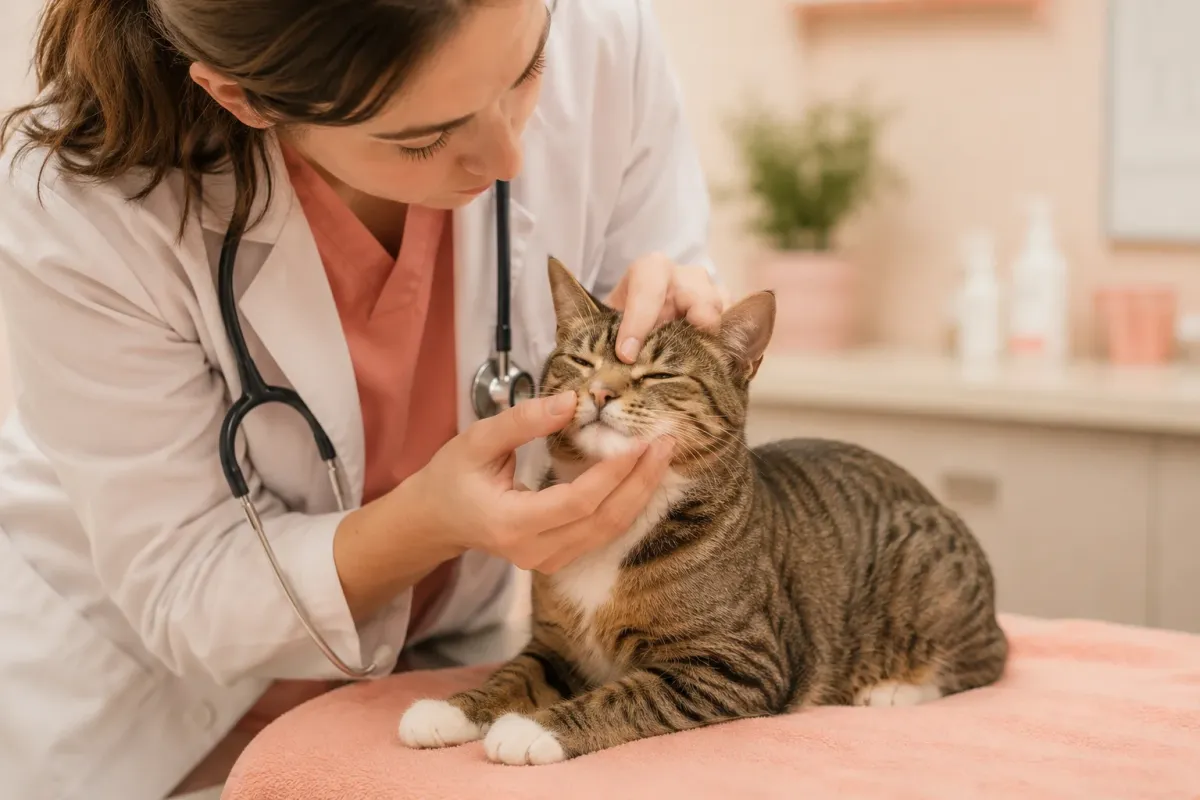
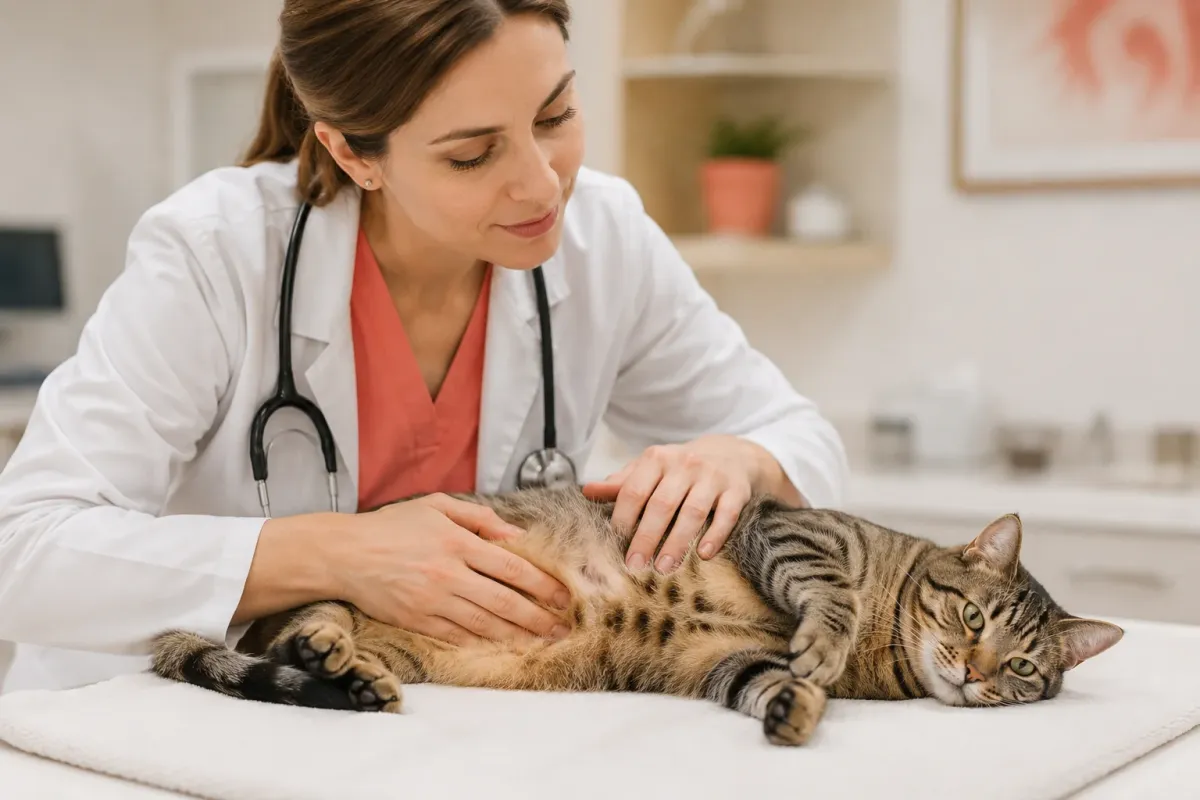
None of the symptoms above tell a vet, or you, which underlying cause is at work. Diagnosis usually starts with a urinalysis, checking the urine for blood, crystals, bacteria and its overall concentration. If bacteria are present, a urine culture identifies the specific organism and which antibiotic will actually treat it, rather than guessing.
Urine is often collected by cystocentesis, a needle inserted directly into the bladder through the abdomen, which sounds more alarming than it is: it is quick, well tolerated, and gives a cleaner sample than one caught from the litter box, since it avoids contamination from the tray itself. Bloodwork and imaging, an X-ray or ultrasound, are added when a vet suspects crystals, stones, or wants to rule out kidney involvement.
Why treatment depends on the cause
This is the detail most home guides skip, and it matters: antibiotics only work on a true bacterial infection. Feline idiopathic cystitis has no bacteria to treat, so antibiotics do nothing for it, and prescribing them anyway, without a confirmed infection, is a recognized problem in veterinary medicine that contributes to antibiotic resistance without helping the cat.
FIC is instead managed by addressing the two things known to drive flare-ups: stress and hydration. That usually means pain relief for the acute episode, environmental changes to reduce stress, and a push to increase water intake through wet food or a fountain, covered in more detail below. Crystals or stones, when present, are managed through a prescription diet formulated to dissolve or prevent the specific type found, since struvite and calcium oxalate crystals, the two most common types according to Cornell, respond to different dietary approaches and are not interchangeable.
Why male cats are at higher risk of a true emergency
This is the single most important thing to know about cat urinary symptoms. Male cats have a longer, narrower urethra than females, as Cornell explains, which makes them far more prone to a complete urethral blockage, often from small crystals or a plug of mucus and debris. A blocked cat cannot urinate at all, and that is a medical emergency, not an inconvenience.
A blocked bladder that cannot empty allows toxins to build up in the blood within hours, and Cornell puts the time from complete blockage to death at less than 24 to 48 hours without treatment. If a male cat is straining repeatedly in the litter box and you are not sure any urine is actually coming out, treat it as an emergency and call a vet immediately, even outside normal hours.
Female cats can develop crystals or stones too, and can occasionally block, but their wider urethra makes a complete blockage much less common. That difference is worth knowing, not as a reason to relax about a female cat's symptoms, but as context for why the emergency warning is specifically emphasized for males.
A cat that has blocked once is also at meaningfully higher risk of blocking again. If your cat has had a urethral blockage before, treat any repeat straining as an emergency immediately rather than waiting to see whether it resolves on its own the way a first-time mild case might.
What increases the risk
- Stress. Changes at home, conflict with another cat, or a disrupted routine are strongly linked to flare-ups of feline idiopathic cystitis.
- Being overweight. Extra weight is associated with a higher risk of urinary problems generally. Our cat calorie calculator can help you check whether your cat's portions match their size.
- Low water intake. Cats that drink little and eat mostly dry food produce more concentrated urine, which can contribute to crystal formation.
- Multi-cat households with too few litter boxes or resources, which raises background stress even without obvious conflict.
Why environment matters as much as diet
Because stress is such a strong trigger for feline idiopathic cystitis, vets increasingly treat the cat's environment as part of the medical plan, not just a lifestyle suggestion. The Cornell Feline Health Center notes that enrichment and modification can reduce both the severity and frequency of FIC episodes. This approach is sometimes called environmental enrichment or multimodal environmental modification, and it focuses on the everyday things that add up to background stress for an indoor cat: not enough separate resources in a multi-cat home, unpredictable routines, limited vertical space, or too little opportunity to express normal behaviors like scratching, climbing and hiding.
For a cat with recurring flare-ups, changes as simple as adding a second feeding station, a few more places to perch and observe the room, or a more predictable daily routine have been shown to reduce how often symptoms come back, in some cases as effectively as medication alone.
Lowering the risk day to day
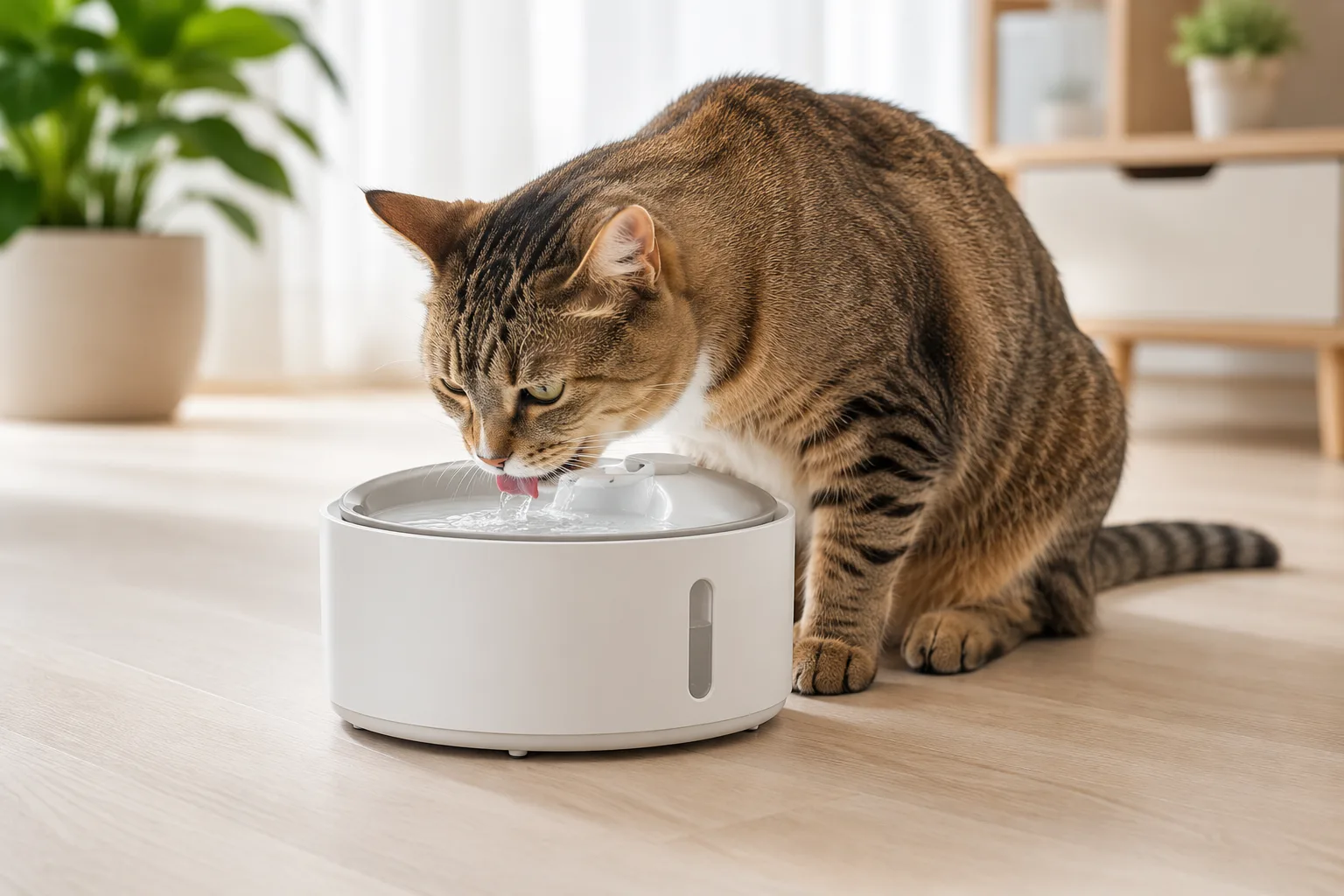
- Add wet food, or a water fountain, to increase how much your cat drinks and how dilute their urine stays.
- Keep the litter box clean and provide one box per cat plus one extra, the number Cornell recommends, in different locations, so no cat avoids using one out of stress or competition.
- Reduce stress where you can: consistent routines, enough vertical space and hiding spots, and a slow introduction process for any new pet.
- Watch weight over time rather than only reacting once a cat is already overweight.
Keeping an eye on things at home
For a cat with a history of FIC flare-ups, a few simple habits make changes easier to catch early:
- Litter that shows blood. Some litters are made to change color when they contact blood in urine, which can make an early flare-up easier to notice than scanning the box by eye.
- Watching water intake, not just food, especially after switching foods or during hot weather, since dehydration is one of the more controllable risk factors.
- Counting litter box visits in a multi-cat home, which is easier with boxes in separate, visible locations, so an increase in one cat's frequency does not go unnoticed among several.
When to see a vet
Any urinary symptom is worth a same-day or next-day vet visit for diagnosis, since a urinalysis is the only reliable way to tell an infection, inflammation, crystals, or a blockage apart. Treat it as an emergency, not a next-available-appointment situation, if:
- A cat, especially a male, is straining repeatedly with little or no urine produced
- There is visible blood in the urine
- Your cat is crying out in pain, hiding, or unusually lethargic
- Vomiting or a loss of appetite comes with the urinary symptoms
If your cat is showing other signs of being unwell alongside anything urinary, our guide to how to tell if your cat is sick covers the wider list of what to watch for.
Frequently asked questions
What are the signs of a UTI in cats?
Straining to urinate, frequent trips to the litter box with little produced each time, blood in the urine, urinating outside the box, crying out while urinating, and excessive licking of the genital area are the main signs, whether the cause is infection or inflammation.
Is a cat UTI an emergency?
It can be, particularly in male cats. A male cat straining repeatedly with little or no urine coming out may have a complete urethral blockage, which can become life-threatening within one to two days and needs immediate veterinary care.
Why are male cats more at risk with urinary symptoms?
Male cats have a narrower urethra than females, which makes them far more prone to a complete blockage from crystals or a mucus plug. The same symptoms in a female cat are less likely to mean a blockage, but still need a vet visit to diagnose.
What causes UTIs and urinary problems in cats?
Stress is the strongest known trigger for feline idiopathic cystitis, the most common cause in younger cats. True bacterial infections are more common in older cats or those with diabetes or kidney disease. Being overweight and low water intake both raise the overall risk.
How can I prevent urinary problems in my cat?
Add wet food or a water fountain to increase water intake, keep litter boxes clean with one per cat plus one extra, reduce household stress where possible, and keep an eye on weight over time rather than reacting once a cat is already overweight.
When should I take my cat to the vet for urinary symptoms?
Any urinary symptom is worth a same-day or next-day visit, since a urinalysis is the only reliable way to tell infection, inflammation, crystals or a blockage apart. Treat repeated straining with no urine, especially in a male cat, as an emergency.
Will antibiotics fix my cat's urinary symptoms?
Only if a bacterial infection is actually confirmed by a urine culture. Most urinary symptoms in younger cats come from feline idiopathic cystitis, which has no bacteria to treat, so antibiotics do nothing for it and are not the default treatment without confirmed infection.
Can environment really affect a cat's urinary health?
Yes. Because stress is a strong trigger for feline idiopathic cystitis, vets increasingly treat environmental changes, more resources in multi-cat homes, more vertical space, a predictable routine, as part of the medical plan, not just a lifestyle suggestion.
Sources
- Cornell Feline Health Center: Feline Lower Urinary Tract Disease Idiopathic cystitis, stones, why males block, the 24 to 48 hour window, and prevention.
- Cornell Feline Health Center: Hydration Why water intake matters for cats and how to increase it.
- VCA Animal Hospitals: Cystitis and Lower Urinary Tract Disease Clinical overview of diagnosis and treatment.
- AAFP: Feline Life Stage Guidelines Urinary health screening across life stages.
General information, not veterinary advice. If your cat's behavior has changed suddenly, speak to a vet rather than an article.
How this guide was researched and checked is set out in how our guides are written.

Want an answer in seconds?
The calculators handle age, due dates and portions without an account.