Senior Cat Care: What Changes After Age 10

On this page
Most cats are considered senior starting around age ten, though the change rarely arrives all at once. It shows up as a handful of small shifts, easy to write off individually, that together mean an older cat needs a slightly different kind of attention than they did at five.
What actually changes after ten
- Mobility. Arthritis is extremely common in senior cats and badly underdiagnosed, because, as the Cornell Feline Health Center notes, most arthritic cats never become obviously lame. The more common sign is a cat that quietly stops jumping onto the counter or windowsill it used to live on.
- Weight, in either direction. Some senior cats gain weight as they slow down. Others lose it, which is more often the early sign of a real problem, such as kidney disease or an overactive thyroid, than a normal part of aging.
- Coat and grooming. A coat that looks duller, more matted, or less cared for than before is usually a sign a cat is grooming less, often because bending and stretching have become uncomfortable.
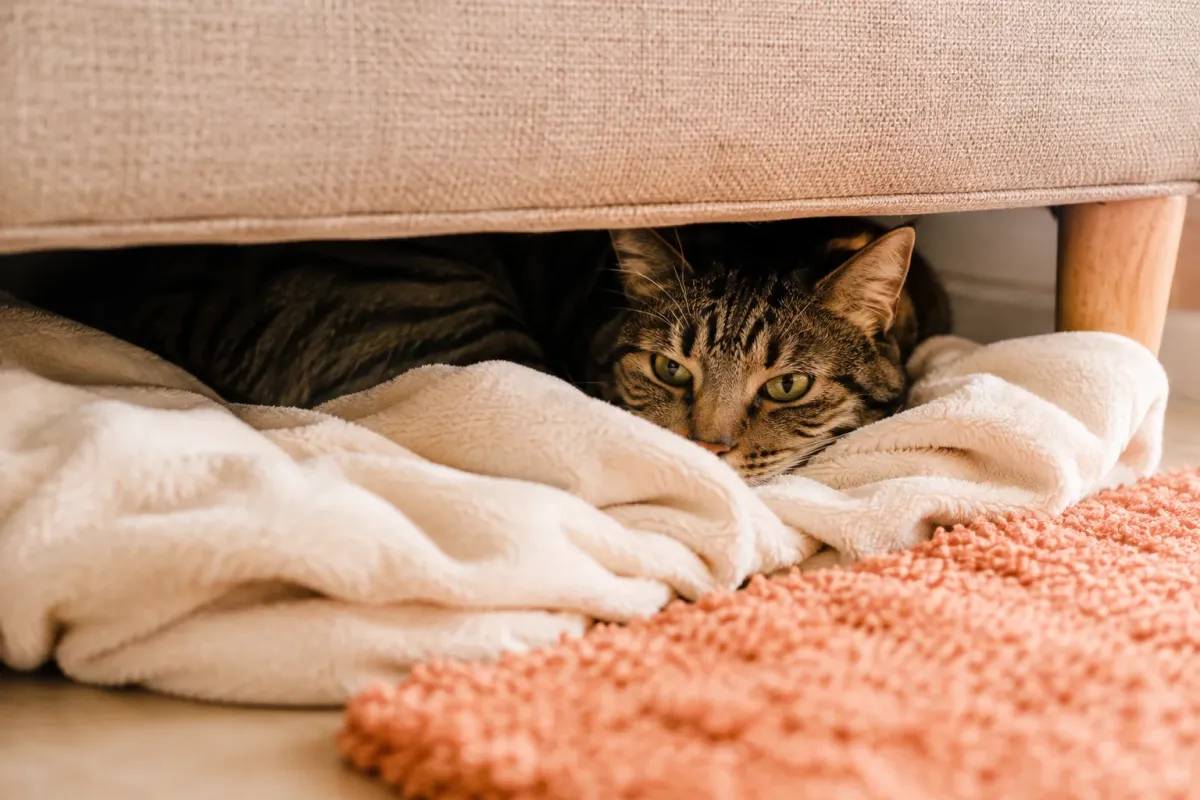
- Sleep and activity. More sleep is normal with age. A sudden, sharp increase, rather than a gradual one, is worth mentioning at a checkup.
- Litter box habits. Difficulty climbing into a high-sided box, or accidents just outside it, are frequently a mobility problem, not a behavioral one.
A senior cat rarely announces that something is wrong. It just quietly stops doing the things that used to be easy.
Health conditions more common in senior cats
A handful of conditions become significantly more common with age, and all of them are far easier to manage when caught early through routine bloodwork rather than once symptoms are obvious:
- Chronic kidney disease, one of the most common conditions in older cats, affecting up to 40% of cats over 10 and 80% of those over 15 according to Cornell, often with no visible symptoms until it is fairly advanced
- Hyperthyroidism, an overactive thyroid gland that typically causes weight loss despite a normal or increased appetite, along with increased thirst, as Cornell describes
- Diabetes, which can present as increased thirst, urination and appetite alongside weight loss (Cornell)
- High blood pressure, frequently secondary to kidney disease or hyperthyroidism, and a risk factor for vision loss if untreated; Cornell names the eyes as the organ it damages most often
- Osteoarthritis, degeneration of the joints that causes chronic pain and reduced mobility
- Cognitive dysfunction, a real, recognized condition sometimes described as feline dementia, covered in more detail below
None of these are reliably caught by watching a cat at home. They are caught by bloodwork and a physical exam, which is why the checkup schedule below matters as much as anything else on this page.
Managing arthritis in a cat that will not show it plainly
Because cats rarely limp the way dogs do, arthritis is thought to be significantly underdiagnosed in senior cats. Instead of favoring one leg, an arthritic cat is more likely to simply do less: fewer jumps, lower jumps, more time resting, and less enthusiasm for play. A vet can check joint range of motion and pain response directly during an exam, which is more reliable than watching for a limp that may never appear.
Management usually combines a few approaches: vet-prescribed pain relief, since many common human pain medications are unsafe for cats and should never be given without veterinary guidance; joint supplements containing glucosamine, chondroitin or omega-3 fatty acids, which have reasonable evidence for supporting joint comfort over time; and the environmental changes covered below, which reduce how much jumping and climbing a stiff cat needs to do in the first place.
Does a senior cat need a special diet?
Older advice often recommended lower-protein diets for senior cats, on the assumption that aging kidneys needed less work. Current veterinary guidance has largely moved away from that by default: unless a cat has been diagnosed with kidney disease requiring a specific therapeutic diet, healthy senior cats generally need adequate to high-quality protein to help prevent age-related muscle loss, a condition called sarcopenia that is common in older cats and works against mobility and recovery from illness. Diet changes for a senior cat are best made with a vet's input based on actual bloodwork, not a generic "senior formula" assumption.
How often a senior cat should see the vet
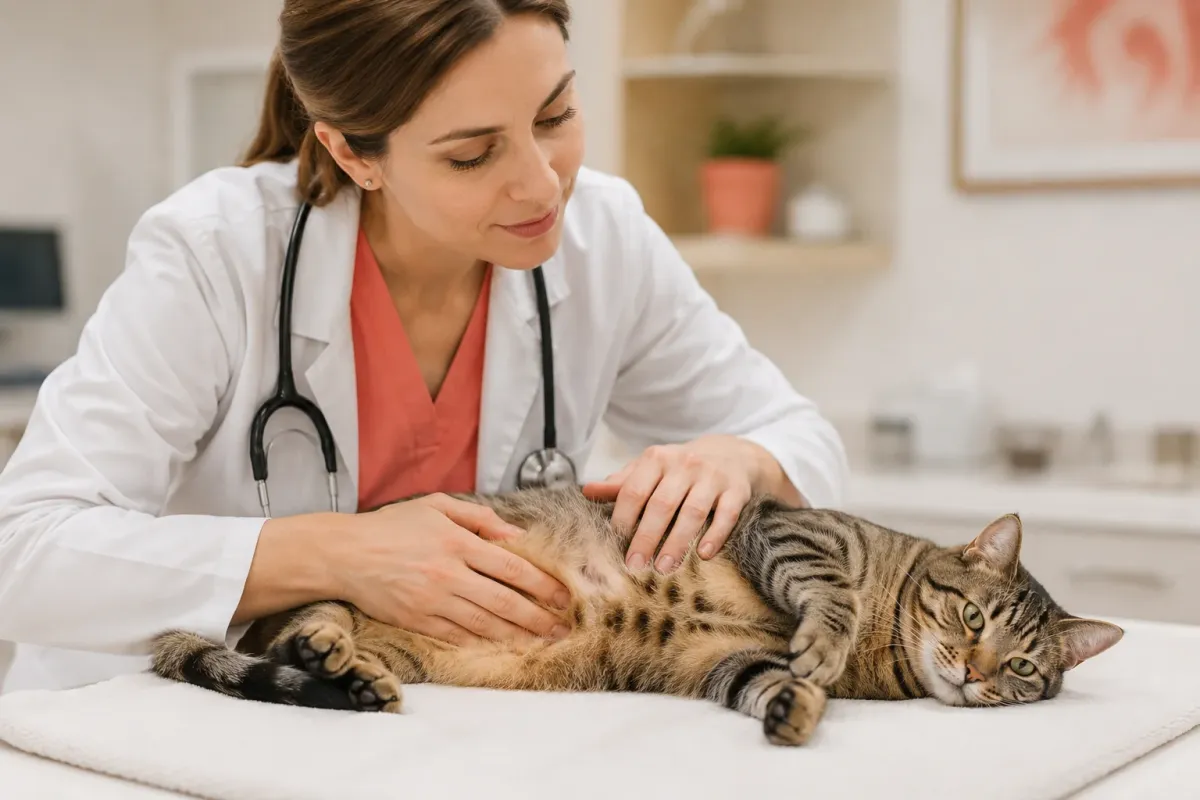
Veterinary guidelines generally recommend moving from an annual checkup to a twice-yearly visit once a cat reaches senior age, typically including bloodwork and a urinalysis rather than a physical exam alone. Because cats hide illness so effectively, lab work is often the only thing that catches a developing problem, such as early kidney disease, months before it would otherwise become obvious at home.
A typical senior bloodwork panel checks kidney values (including creatinine and SDMA, a marker that can flag reduced kidney function earlier than creatinine alone), thyroid hormone levels, blood glucose, and a general blood count, alongside a urinalysis to check concentration and look for protein or blood that should not be there. Blood pressure measurement is increasingly included as standard for senior cats too, since hypertension is both common and easy to miss without directly checking for it.
Cognitive dysfunction: the change owners miss most
Feline cognitive dysfunction is a real, age-related decline in brain function, broadly similar in effect to dementia in people. It is easy to miss because the signs look like ordinary aging at first:
- Increased vocalizing, especially yowling at night for no clear reason
- Disorientation, such as staring blankly or seeming lost in a familiar room
- Changes to the sleep-wake cycle, including more restlessness overnight
- House soiling in a cat with previously reliable litter box habits
- Reduced interest in interaction, or the reverse: increased clinginess
None of these should be assumed. Several of them, particularly increased thirst, vocalizing and house soiling, overlap with kidney disease, hyperthyroidism and arthritis, which is exactly why a vet visit, not a guess, is the right next step.
Making home life easier
- Lower-sided litter boxes, or an extra one on each level of the home, so a stiff or achy cat never has to travel far or climb high to reach one. Cornell points out that arthritic cats often struggle to reach boxes and bowls they have to jump or climb stairs for.
- Ramps or steps to favorite elevated spots, rather than removing access to them altogether.
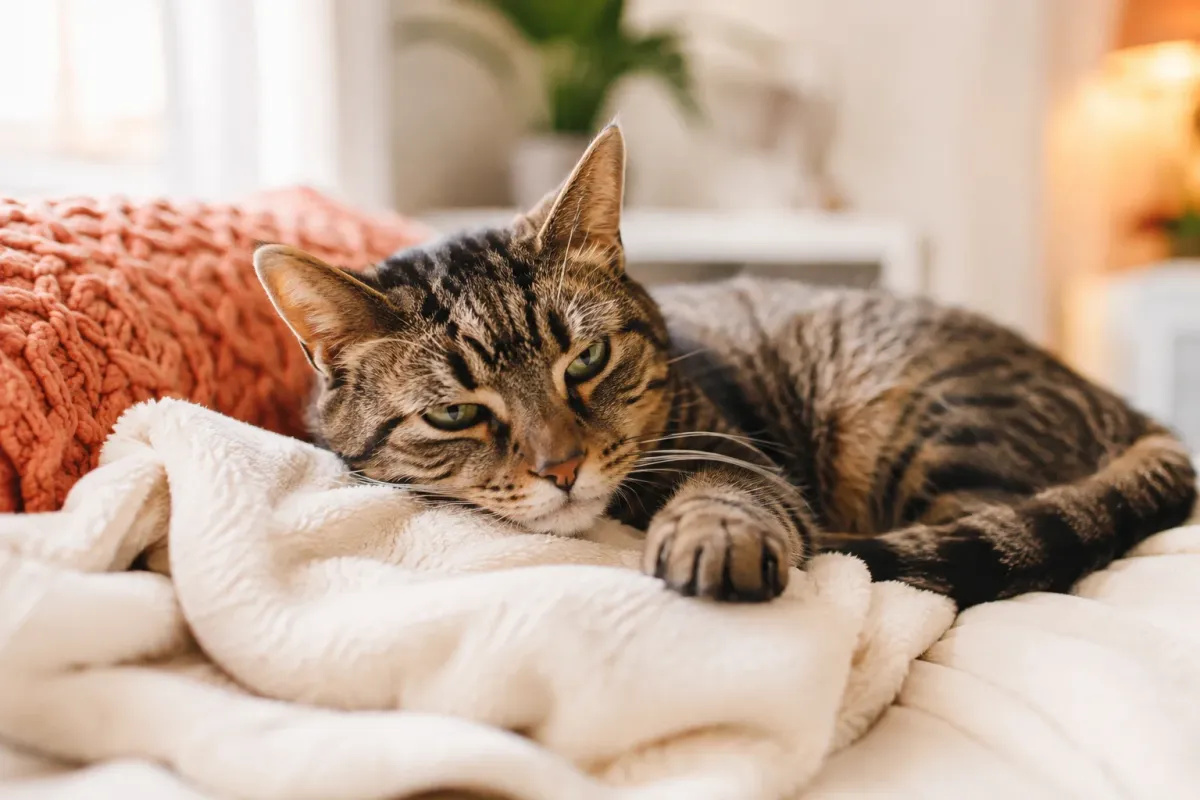
- Soft, supportive bedding in warm, easy-to-reach spots, which matters more for a cat with joint pain.
- Food and water within easy reach, without requiring stairs or a jump, especially for a cat whose mobility has declined.
- A consistent routine, since senior cats, especially those with early cognitive changes, tend to do better with predictability.
- Extra grooming help, since a stiff or arthritic cat often cannot reach the same spots it used to. Gentle brushing a few times a week catches mats before they form, particularly around the hips and lower back.
Senior cats in a multi-cat household
An aging cat's needs can quietly change the dynamic of a home with several cats. A senior cat may start avoiding a litter box or feeding station it has to compete for, particularly if a younger, more confident cat has claimed the easiest routes through the house. Placing resources, litter boxes, food, water and resting spots, in enough separate locations that a slower cat is never forced to compete for access matters more once age or mobility differences appear between cats living together.
Diet often needs a second look too, since activity and metabolism both change with age. Our cat age calculator can help place your cat's real age in context, and our calorie calculator can help check whether their current portions still make sense for their weight and activity level. Our cat weight checker goes a step further: score body condition alongside weight, and it will estimate an ideal range and flag whether a food adjustment is worth discussing at their next checkup.
When to call sooner than the next routine visit
- Weight loss, even with a normal or increased appetite
- A sudden change in mobility, rather than a gradual one
- Increased thirst or urination
- New vocalizing, disorientation, or a change in litter box reliability
If anything about your cat feels off beyond what is covered here, our wider guide to how to tell if your cat is sick walks through the signs worth acting on at any age.
Frequently asked questions
At what age is a cat considered a senior?
Most veterinary guidelines place the start of the senior life stage around age ten, with cats over roughly fifteen sometimes described as geriatric. The change in care needs is usually gradual rather than tied to a single birthday.
What are the first signs of aging in cats?
A senior cat rarely announces a problem outright. Common early signs include no longer jumping onto favorite high spots, sleeping more, a duller or more matted coat from reduced grooming, and changes in weight in either direction.
How often should a senior cat see the vet?
Twice a year is the general recommendation, typically including bloodwork and a urinalysis rather than a physical exam alone, since lab work often catches developing conditions months before they become obvious at home.
What health problems are common in older cats?
Chronic kidney disease, hyperthyroidism, diabetes, high blood pressure, osteoarthritis and cognitive dysfunction are all significantly more common in senior cats, and most are far easier to manage when caught early.
What is cognitive dysfunction in cats?
It is a real, recognized age-related decline in brain function, sometimes described as feline dementia. Signs include increased nighttime vocalizing, disorientation, changes to the sleep-wake cycle, and house soiling in a cat with previously reliable litter box habits.
How can I make home life easier for a senior cat?
Lower-sided litter boxes on every level of the home, ramps or steps to favorite spots, soft bedding in warm and easy-to-reach places, and keeping food and water within easy reach all help a cat with reduced mobility.
Should I change my senior cat's diet?
Activity and metabolism both change with age, so it is worth rechecking portions rather than assuming an old routine still fits. A vet can also advise on diet changes if kidney disease, diabetes or another condition is diagnosed.
Do senior cats need a low-protein diet?
Not by default. Older guidance favored lower protein for aging kidneys, but current thinking has largely moved away from that: healthy senior cats generally need adequate to high-quality protein to help prevent age-related muscle loss. Lower-protein diets are reserved for cats with diagnosed kidney disease.
What bloodwork does a senior cat need?
A typical panel checks kidney values including SDMA, thyroid hormone, blood glucose, a general blood count, and a urinalysis, with blood pressure increasingly checked as standard too. Together they catch the conditions, kidney disease, hyperthyroidism, diabetes and hypertension, that rarely show obvious symptoms early on.
Sources
- Cornell Feline Health Center: The Special Needs of the Senior Cat Arthritis, litter box access and behavior changes in older cats.
- Cornell Feline Health Center: Chronic Kidney Disease How common kidney disease is after 10 and 15, and the SDMA and creatinine blood tests.
- Cornell Feline Health Center: Hyperthyroidism Weight loss with a good appetite, thirst and other signs.
- Cornell Feline Health Center: Hypertension Why high blood pressure is usually secondary, and its effect on the eyes.
- Cornell Feline Health Center: Cognitive Dysfunction Night-time vocalizing, disorientation and other signs.
- AAFP Senior Care Guidelines Clinical guidelines on senior checkup frequency and screening.
General information, not veterinary advice. If your cat's behavior has changed suddenly, speak to a vet rather than an article.
How this guide was researched and checked is set out in how our guides are written.

Want an answer in seconds?
The calculators handle age, due dates and portions without an account.