Hairballs in Cats: Why They Happen and When to Worry

On this page
An occasional hairball is one of the more normal, if unglamorous, parts of owning a cat. But "occasional" is doing a lot of work in that sentence. Hairballs that show up every week, or that turn into repeated retching with nothing coming up, are not just a grooming side effect anymore. They are a sign worth paying attention to.
Why do cats get hairballs in the first place?
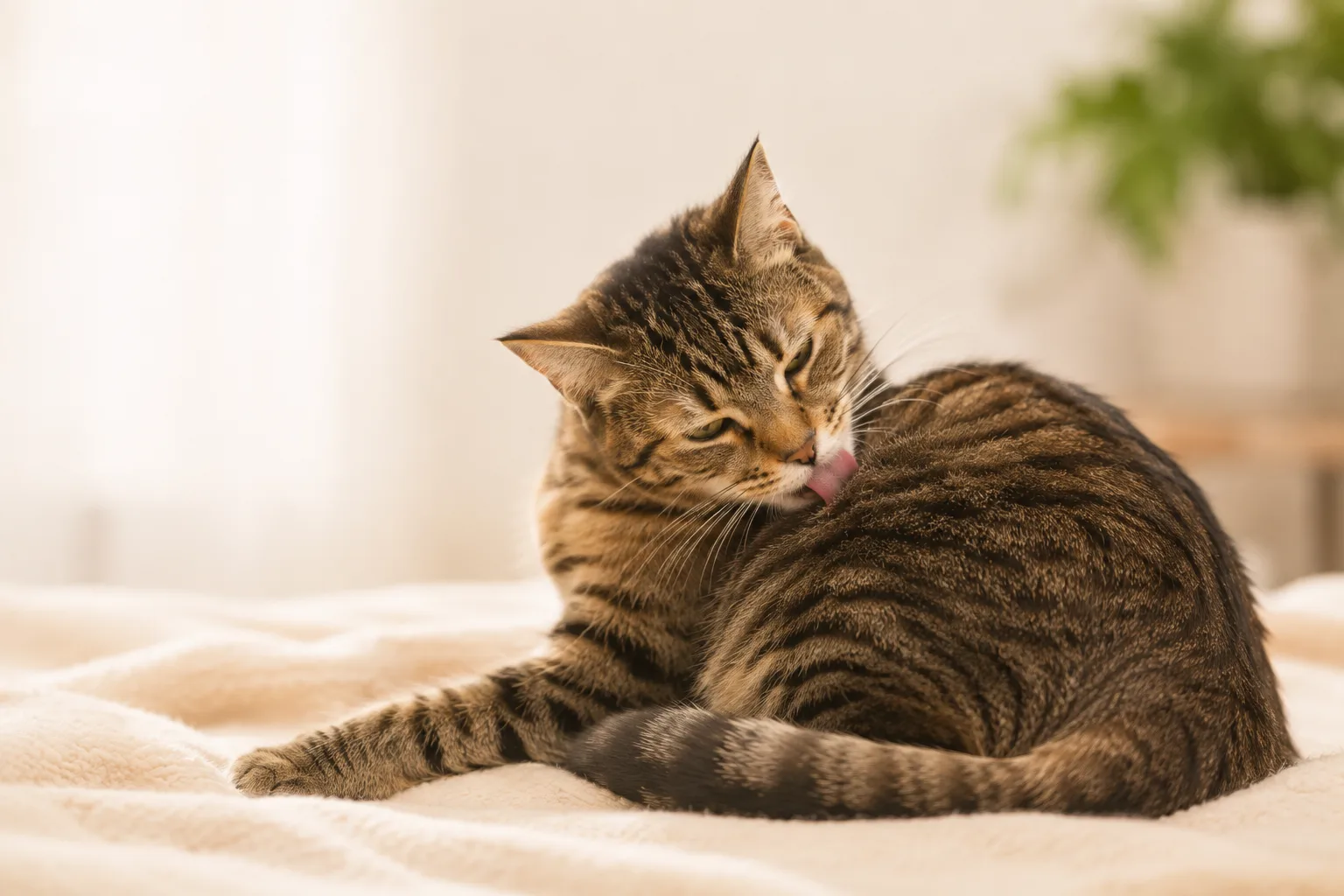
A cat's tongue is covered in small, backward-facing hooks called papillae, which work as a built-in comb every time they groom, as the Cornell Feline Health Center explains. Most of the loose fur that comb picks up gets swallowed, and most of that fur passes straight through the digestive tract and out in the litter box without anyone noticing.
Some of it does not. Fur that lingers in the stomach instead of moving on can clump together into a compact, usually cylindrical mass, a trichobezoar, which is the technical name for what everyone just calls a hairball. When the stomach cannot move it along, the cat's body does the only other thing it can: bring it back up.
A hairball is not a failure of grooming. It is what grooming looks like when it works exactly as designed, most of the time.
Vomiting a hairball versus regurgitating one
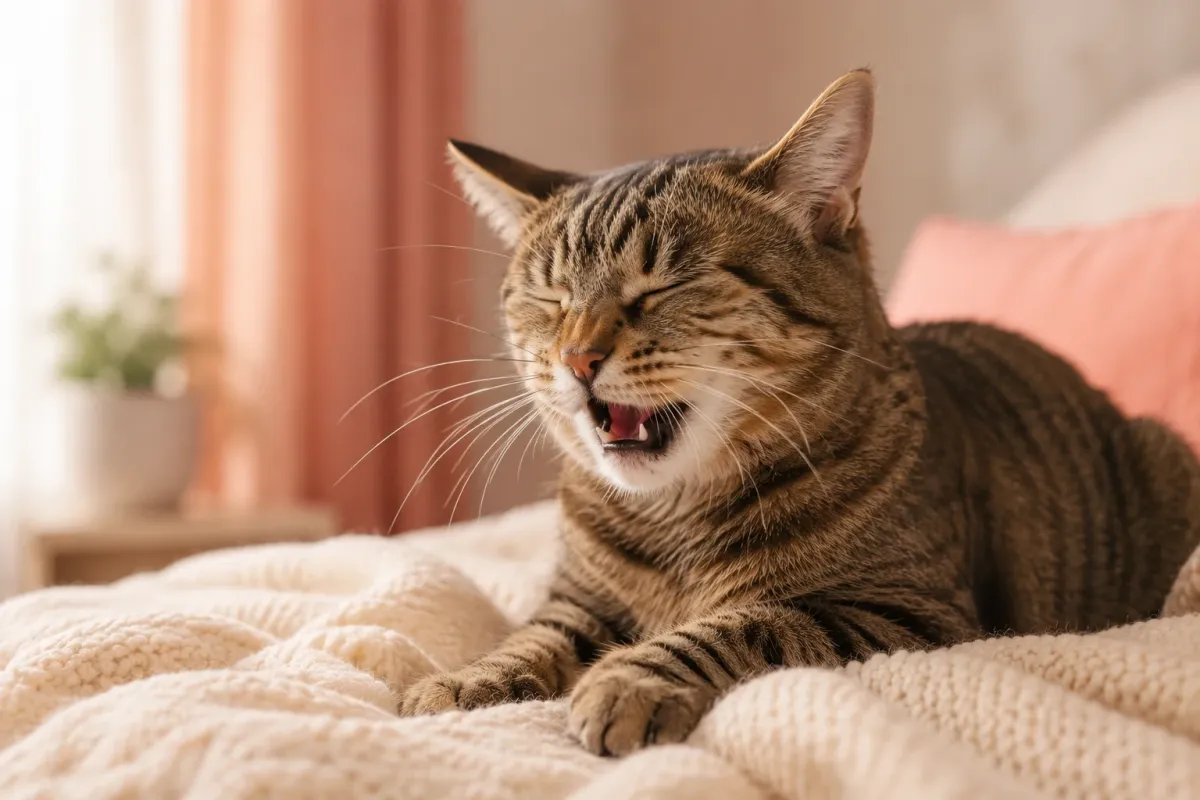
The distinction matters for reading what you actually see. A cat bringing up a hairball is usually vomiting it: an active process with visible abdominal contractions, hunching and a distinctive retching sound, ending with a compact, cylindrical mass, often wet and log-shaped from being compressed in the esophagus on the way out. That is the normal, mechanical version of a hairball.
Regurgitation looks different: a more passive bringing-up of undigested food shortly after eating, with little or no warning and no abdominal effort. If what you are seeing looks more like the second description, it is not a hairball at all, and it points toward a different set of causes, from eating too fast to a problem further up the digestive tract, worth its own conversation with a vet rather than treated as a hairball issue.
Why kittens rarely get hairballs
Hairballs are mostly an adult cat problem; Cornell notes that kittens and young cats are less apt to get them than older, more practiced groomers. Kittens under about four to six months groom themselves far less thoroughly than adults, since self-grooming and the mutual grooming cats do with each other are both behaviors that develop with age and social learning. A kitten's coat is also typically finer and sheds less than an adult coat. A kitten producing frequent hairballs is unusual enough that it is worth mentioning at their next vet visit rather than assumed to be normal development.
How often is normal?
For most short-haired, healthy adult cats, a hairball every few weeks or less is unremarkable, and the Cornell Feline Health Center says one every week or two is not uncommon in a cat with no other problems. Cats that groom heavily, shed a lot, or have long coats bring one up more often, simply because there is more loose fur in circulation to begin with.
Frequency worth paying attention to looks more like this:
- Long-haired breeds (Persians, Maine Coons, Ragdolls), which Cornell flags as higher risk, may reasonably produce one every couple of weeks during heavy shedding seasons.
- Short-haired cats bringing up more than one a week are grooming more than expected, which is worth a look on its own.
- Any cat retching repeatedly without producing anything is not a hairball problem at all; it is a different symptom that needs its own answer, and Cornell points out it can even be a sign of asthma.
When frequent hairballs point at something else
A cat that suddenly starts producing hairballs far more often than before is usually grooming more, not just shedding more, and grooming that increases sharply has its own list of causes:
- Stress or anxiety. Cats often over-groom as a self-soothing behavior in response to a change at home, a new pet, or conflict with another cat.
- Skin irritation or allergies. Fleas, food sensitivities and environmental allergies all cause itching that leads to more licking and more swallowed fur.
- Pain in a specific area. A cat that repeatedly over-grooms one spot, rather than all over, is often licking at something that hurts underneath, not something itchy on the surface.
Bald or thinning patches, especially on the belly or inner legs, are the clearest sign that grooming has crossed from normal into a symptom.
What actually reduces hairballs
Most of the useful fixes work on the same idea: less loose fur available to swallow, and an easier path through the gut for what is swallowed.
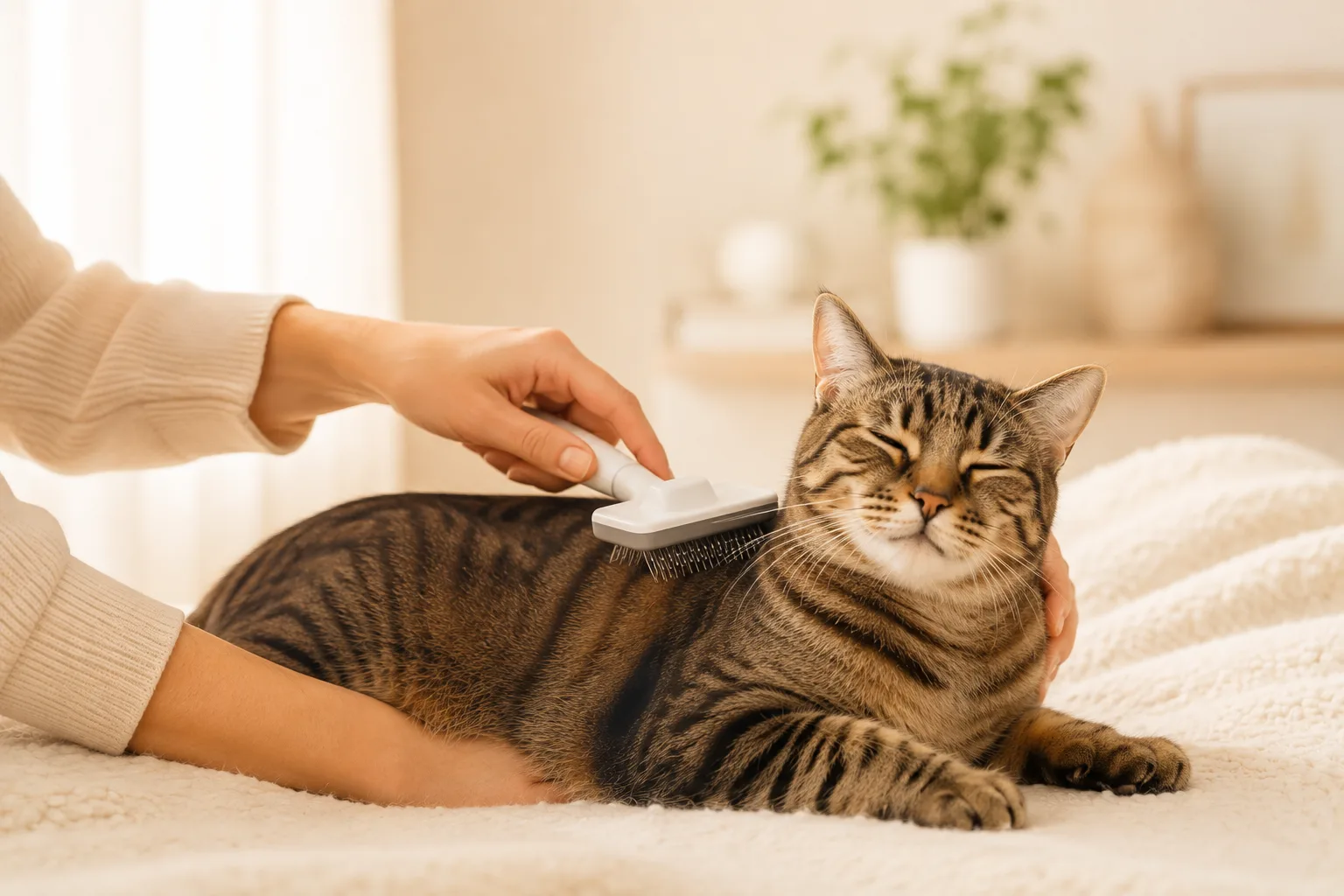
- Brush regularly. A few minutes a few times a week removes loose fur before your cat does, and is the single most effective thing most owners can do. Long-haired cats benefit from daily brushing, especially during shedding season.
- Consider a hairball-control diet. Foods formulated for hairball control add extra fiber, which helps carry swallowed fur through the digestive tract rather than letting it sit and clump.
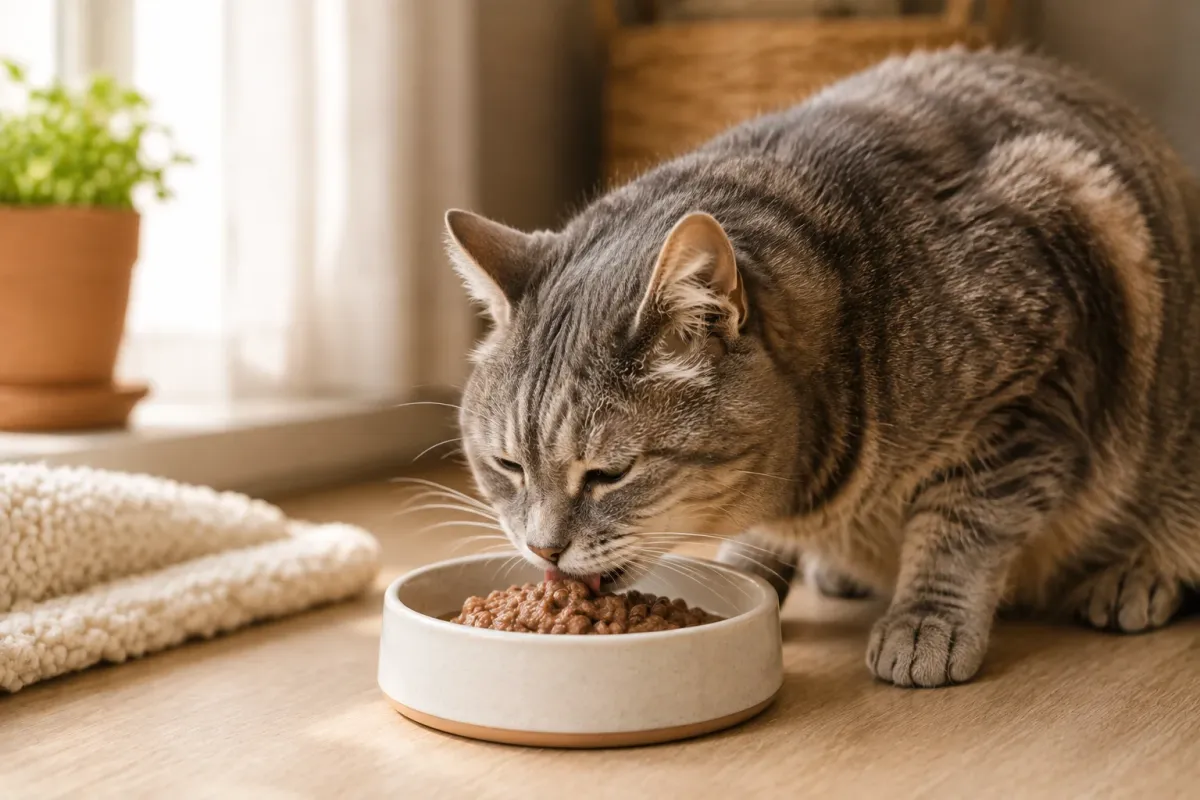
- Keep water intake up. Good hydration supports normal gut motility. Wet food contributes meaningfully more water than dry kibble alone.
- Ask about a hairball remedy. Petroleum- or oil-based lubricant pastes, sold specifically for cats, can help fur pass through rather than accumulate. Check with a vet before starting one regularly: a Cornell veterinarian strongly advises never giving a cat a laxative without veterinary approval, since overuse can interfere with nutrient absorption.
- Look at the ingredient, not just the label. Hairball formulas generally lean on one of two mechanisms: added fiber, often from beet pulp or psyllium, which bulks the stool and physically carries fur along with it, or mild lubricant oils that coat fur so it slides through more easily. Neither is inherently better; a vet can help match one to your cat if over-the-counter options have not helped.
- Support the coat itself. Omega-3 fatty acid supplements, and diets that include them, are sometimes recommended to reduce shedding and support skin health, which indirectly means less loose fur available to swallow in the first place.
Diet plays a role beyond hairballs too. If you are not sure your cat's current food and portions are right for their size and life stage, our cat calorie calculator works it out from their weight, activity level and body condition.
Matching the brush to the coat
Not every brush works on every coat, and the wrong tool is a common reason brushing does not seem to reduce hairballs much:
- Short-haired cats usually do best with a rubber curry brush or a fine-toothed comb, used once or twice a week, which lifts loose undercoat without pulling at healthy fur.
- Long-haired cats need a slicker brush or a wide-toothed comb able to reach past the topcoat, ideally daily during heavy shedding, since mats trap loose fur rather than releasing it.
- Double-coated breeds, with a dense undercoat beneath a longer topcoat, often benefit from a dedicated undercoat rake a few times a week on top of regular brushing, particularly at the change of seasons when shedding peaks.
A cat that resists brushing usually responds better to shorter, more frequent sessions than one long one. Pairing brushing with a treat or a favorite moment, such as right before a meal, makes it easier to build into a routine both of you tolerate.
When a hairball is actually an emergency
A true intestinal blockage from a hairball is uncommon, but it happens, and it is a genuine emergency when it does. The warning signs look different from an ordinary hairball:
- Repeated retching or gagging with nothing produced
- Vomiting that continues over more than a day
- Loss of appetite lasting more than 24 hours
- Lethargy, or a visibly swollen or painful abdomen
- Constipation or straining without a bowel movement
Any of those, especially in combination, is a same-day call to the vet rather than something to wait out. A blocked intestine is uncommon but, in the words of a Cornell veterinarian, without surgery it can be fatal.
How a vet checks for a blockage
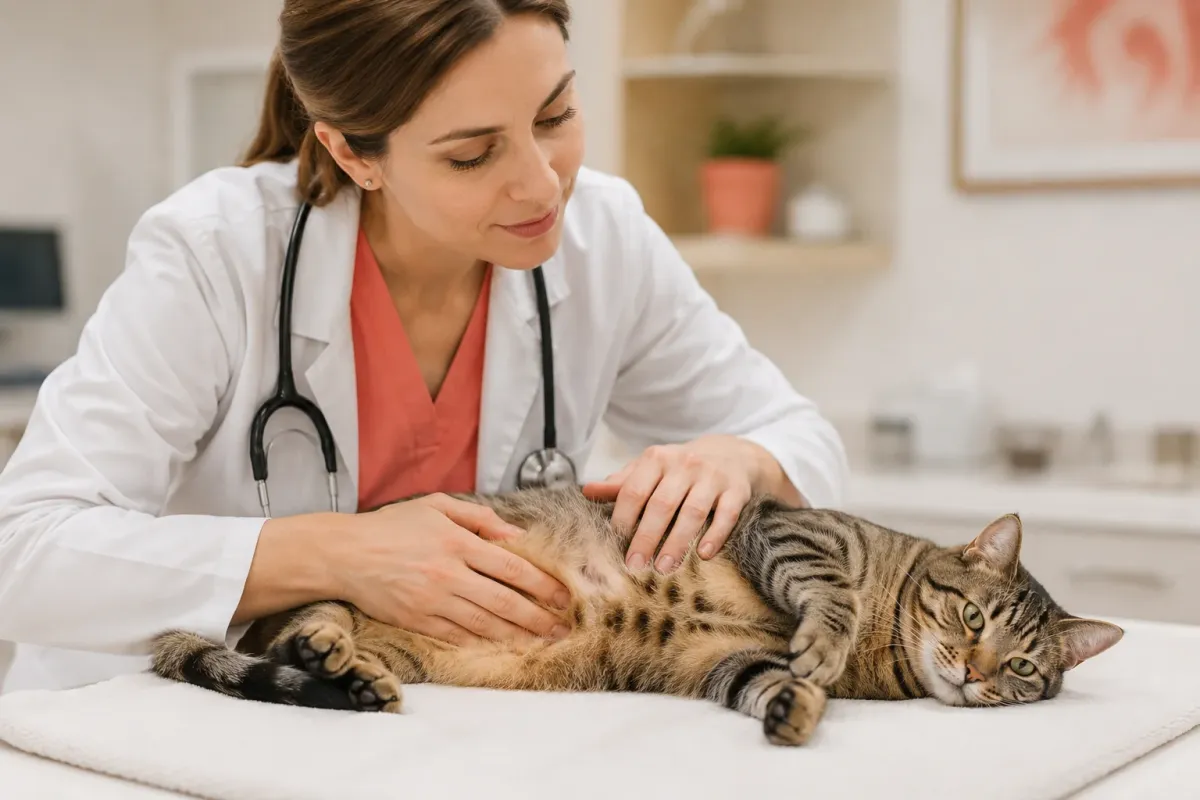
A physical exam is the first step, since a vet can sometimes feel a firm mass through the abdominal wall. From there, an X-ray or ultrasound is the usual next step to confirm whether something is actually obstructing the intestine and where. Because a hairball is made of hair rather than bone, it does not always show up clearly on a plain X-ray the way a swallowed object might, so a contrast study or ultrasound is sometimes needed to see it properly. If a blockage is confirmed and will not pass on its own, surgical removal is usually the only reliable fix.
If your cat has been off in other ways too, not just around hairballs, our guide to the early signs a cat is unwell covers the full list of what is worth watching for.
Frequently asked questions
How often should a cat get hairballs?
For most short-haired, healthy adult cats, every few weeks or less is unremarkable. Long-haired breeds may reasonably produce one every couple of weeks during heavy shedding. A short-haired cat bringing one up weekly or more is grooming more than expected, which is worth a closer look.
What causes frequent hairballs?
A sharp increase usually means more grooming, not more shedding. Common causes include stress or anxiety, skin irritation or allergies causing itchiness, and pain in one area that leads to repeated licking of the same spot.
How can I stop my cat from getting hairballs?
Regular brushing to remove loose fur before it is swallowed is the single most effective step. A hairball-control diet with added fiber, good hydration, and an occasional vet-approved lubricant paste all help fur move through rather than accumulate.
Can a hairball be an emergency?
Yes, though it is uncommon. Repeated retching with nothing produced, vomiting that continues over more than a day, loss of appetite, lethargy or a swollen abdomen can mean an intestinal blockage, which sometimes needs surgery and is not something to wait out.
Do hairball remedies actually work?
Petroleum- or oil-based lubricant pastes made for cats can help fur pass through the digestive tract rather than clump. They work best as an occasional aid alongside regular brushing, not as a replacement for it, and are worth checking with a vet before using regularly.
Are hairballs more common in certain breeds?
Yes. Long-haired breeds such as Persians, Maine Coons and Ragdolls tend to produce them more often simply because there is more loose fur in circulation, especially during seasonal shedding.
Do kittens get hairballs?
Rarely. Kittens under about four to six months groom less thoroughly than adults, and mutual and self-grooming behaviors are still developing, so frequent hairballs in a young kitten are unusual enough to mention to a vet rather than assumed to be normal.
How does a vet check for a hairball blockage?
Usually a physical exam first, since a firm mass can sometimes be felt through the abdomen, followed by an X-ray or ultrasound to confirm and locate an obstruction. Because hair does not always show up clearly on a plain X-ray, ultrasound or a contrast study is sometimes needed.
Sources
- Cornell Feline Health Center: The Danger of Hairballs How papillae make cats swallow fur, higher risk in long-haired breeds, laxative safety, and blockages.
- Cornell Feline Health Center: A Hairy Dilemma Why kittens get fewer hairballs, and daily brushing to prevent them.
- Cornell Feline Health Center: Vomiting How often a hairball is normal, and when vomiting needs a vet.
- VCA Animal Hospitals: Trichobezoars in Cats Clinical overview of hairball formation, prevention and obstruction.
General information, not veterinary advice. If your cat's behavior has changed suddenly, speak to a vet rather than an article.
How this guide was researched and checked is set out in how our guides are written.

Want an answer in seconds?
The calculators handle age, due dates and portions without an account.