How to Tell If Your Cat Is Sick: 12 Signs to Watch For

On this page
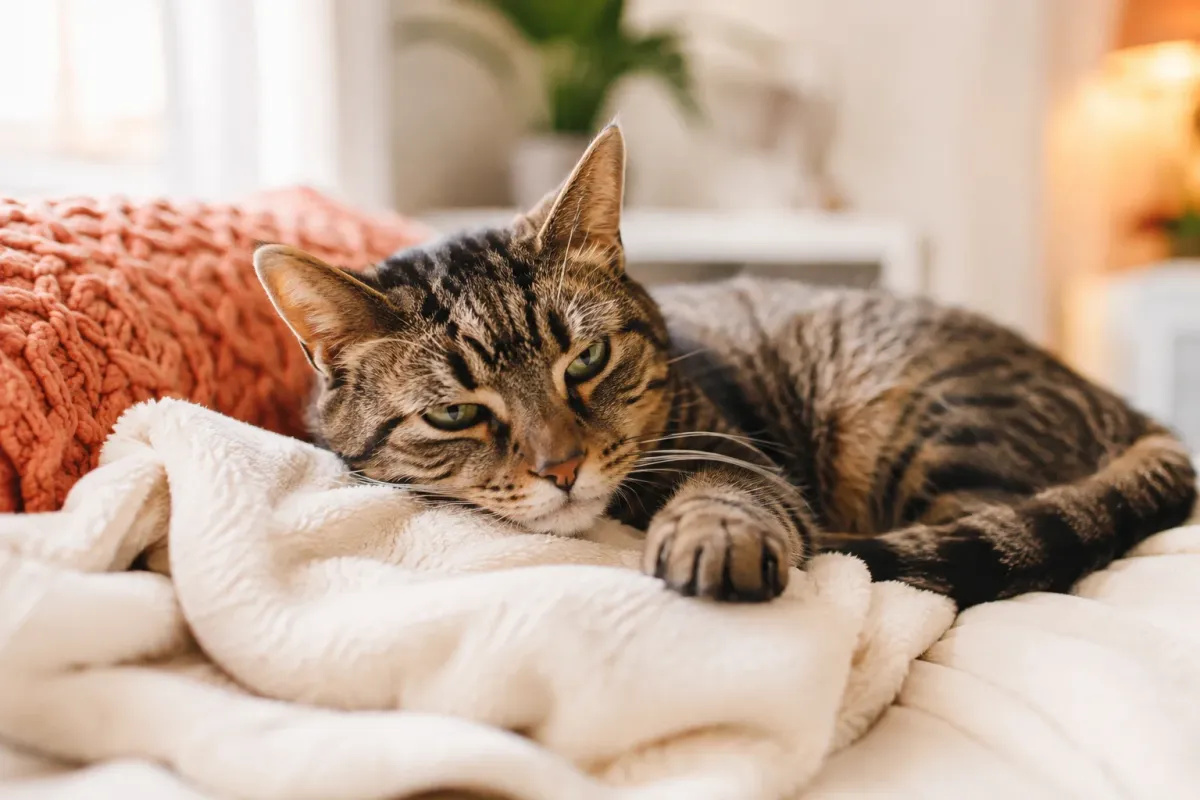
Cats are good at looking fine right up until they are not. It is not stoicism, it is instinct: a wild cat that looks weak is a target, so the ones we live with still default to hiding pain and illness rather than showing it. That is exactly what makes the early signs worth knowing, because by the time a cat looks obviously unwell, whatever is wrong has usually had time to progress.
None of the twelve signs below confirm anything on their own. What matters is a change from what is normal for your own cat, and whether more than one of them shows up together.
This guide is written from published veterinary sources, named and linked as they come up and listed again at the bottom. It is not an examination of your own cat, and nothing here replaces one.
Why cats hide being sick
In the wild, a cat that looks sick or slow is the one a predator picks off, and the instinct never went away just because the cat now lives on a sofa. That is why the earliest signs are usually behavioral rather than dramatic: a little less interested in food, a little quieter, a spot they do not normally sleep in. Cats mask discomfort well enough that owners often only notice once a second or third sign appears.
When is this an emergency?
Some of the signs below can wait for a routine appointment. Others cannot. If any of these are happening right now, call an emergency vet rather than waiting:
- Straining in the litter box with little or no urine coming out
- Labored, open-mouthed, or noisy breathing
- Collapse, or a cat who will not get up
- Repeated vomiting, especially if nothing is staying down
- Bleeding from anywhere, or a swollen, painful belly
- A cat who will not respond to you at all
A blocked bladder in particular, more common in male cats, is what the Cornell Feline Health Center calls an absolute emergency, and it can become fatal quickly if it is not treated. That specific combination, straining with little or nothing coming out, is one of the few feline symptoms that genuinely cannot wait until morning.
| What you're seeing | What to do |
|---|---|
| One mild sign, cat otherwise acting normal | Monitor |
| Two or more signs together | Watch closely |
| Any sign lasting more than a day | Contact your vet |
| Not eating for over 24 hours | Contact your vet promptly |
| Straining with little or no urine | Urgent care |
| Collapse, or breathing looks labored | Urgent care |
Treat this as a rough guide, not a diagnosis. It exists to help you decide how quickly to act, not to replace an exam.
Not eating, or eating much less
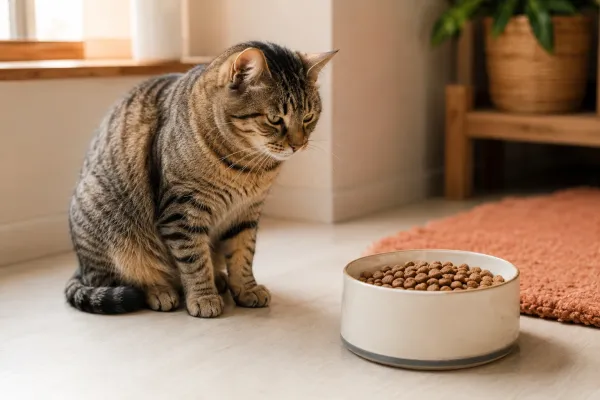
A change in appetite is usually the first thing owners notice, and it can mean almost anything, from a minor stomach upset to dental pain to something more serious. What matters most is duration: a cat that skips one meal and is otherwise normal is not an emergency. A cat that has not eaten in over 24 hours, particularly one who is overweight, is: a sudden stop in eating puts a heavy cat at risk of fatty liver disease, which the Cornell Feline Health Center names as the danger of a cat going without food.
Hiding more than usual
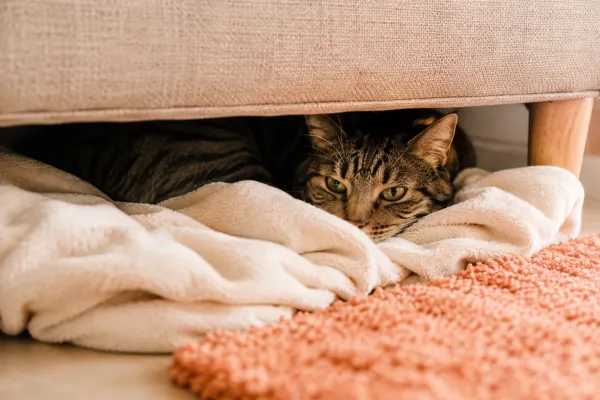
A cat that suddenly wants to be under the bed, behind the sofa, or in a closet rather than in their usual spots is telling you something even if nothing else looks different yet. Hiding is one of the most reliable early behavioral signs precisely because it costs a cat nothing to do and requires no visible symptom at all.
Low energy or seeming lethargic
Every cat has an off day. What is worth noting is a cat who is consistently less interested in play, in greeting you, or in moving around than they normally are, especially alongside any other sign on this list. Lethargy on its own is vague; lethargy plus almost anything else is a reason to look closer.
Vomiting
Cats vomit more casually than most owners expect, and an occasional hairball or a too-fast meal coming back up once is not usually cause for alarm. The Cornell Feline Health Center puts the line at more than once a week. Repeated vomiting, vomiting alongside not eating, or vomiting that contains blood is different, and any of those is worth a same-day call to the vet rather than a wait-and-see approach.
Losing weight
Weight loss in a cat who is eating normally is one of the more telling signs on this list, because it points at something happening beneath the surface rather than an obvious cause. It is also one of the easiest signs to miss in a cat with a thick coat, since the change is felt more than seen at first.
This matters more in older cats, where gradual weight loss is frequently one of the earliest signs of kidney disease, an overactive thyroid, or diabetes. Cornell lists weight loss despite a good appetite as one of the two signs of diabetes owners most often notice at home. If you are not sure what life stage your cat is in, our cat age calculator converts their age into human years and the AAFP life stage that determines how often they should be seeing a vet in the first place.
Drinking more water than usual
A cat drinking noticeably more, and often urinating more as a result, is a classic early sign of diabetes, kidney disease, or an overactive thyroid, particularly in cats over seven or eight. In kidney disease, as Cornell explains, the kidneys lose the ability to concentrate urine, so the cat drinks more to compensate. It is easy to miss because increased thirst does not look like illness. Refilling the water bowl more often than you used to is worth mentioning at the next vet visit even if nothing else seems wrong.
Changes in the litter box
Straining, going more or less often, blood in the urine or stool, or a sudden move away from the litter box are all worth attention. Straining with little or nothing coming out is the one to treat as an emergency, not a behavior problem, since it can point at a blocked bladder, which is genuinely life-threatening.
Breathing changes
Fast, labored, open-mouthed breathing, or breathing with visible effort, is always worth same-day attention in a cat. If what you are actually seeing is sneezing, a runny nose or watery eyes rather than labored breathing itself, that is more likely a respiratory infection than an emergency; our guide to cat sneezing covers that specific pattern and when it needs a vet.
Changes in grooming or coat
Cats are fastidious groomers, and a cat who stops, whose coat turns dull, greasy or matted, or who over-grooms one spot until the fur thins, is showing you something. Under-grooming often points at pain or nausea making the effort not worth it; over-grooming one area can be stress, or it can be the cat's way of drawing attention to somewhere that hurts.
Sudden weight gain or a swollen belly
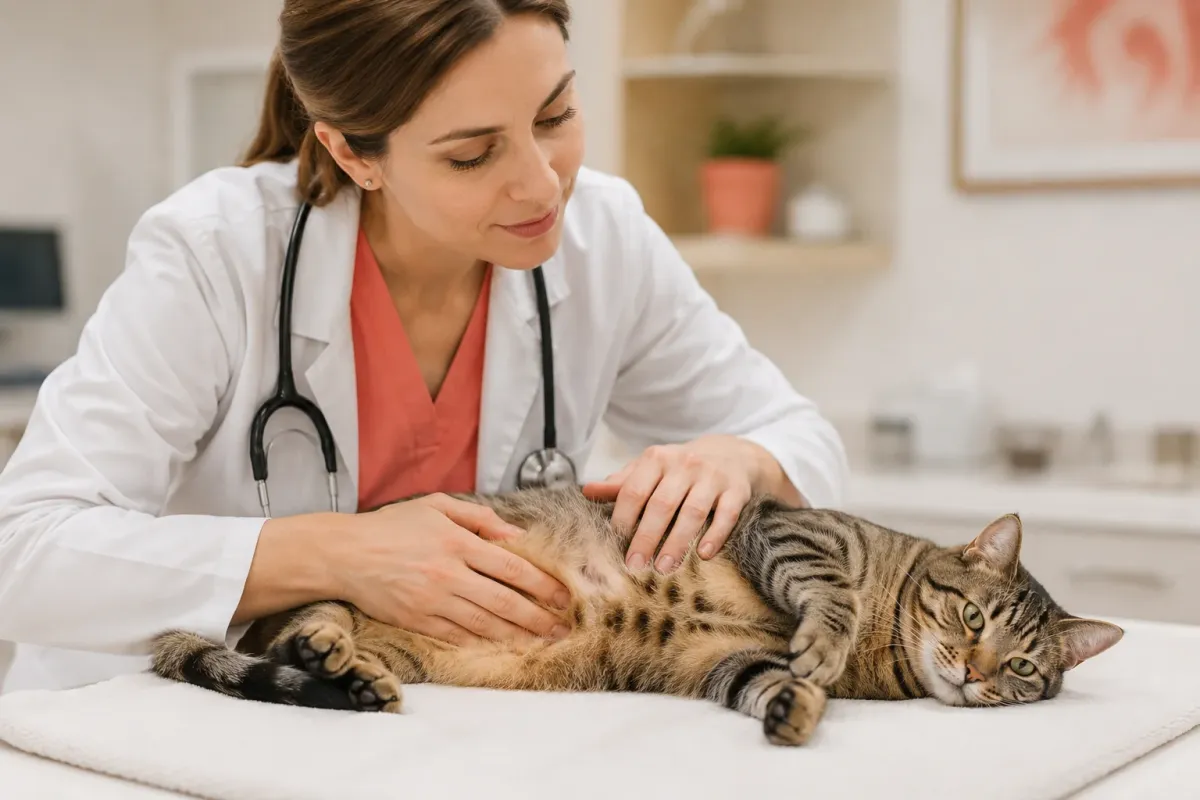
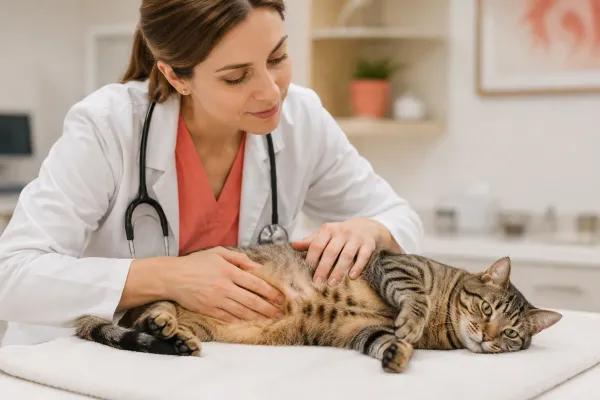
Weight gain over months is usually just diet. Weight gain, or a visibly swollen or firm belly, over days is different, and can point at fluid buildup from several serious conditions. A belly that looks bloated or feels hard, especially paired with reduced appetite, is worth a vet visit rather than a wait.
Vocalizing more, or differently
A cat who suddenly yowls more, especially at night, or whose meow changes in pitch or urgency, is often trying to tell you something. In older cats this is sometimes linked to cognitive changes, where Cornell describes loud vocalizing, often in the middle of the night, or to high blood pressure; in any cat, a new or unusual vocal pattern is worth mentioning to a vet, particularly if it started suddenly.
Signs of pain
Cats do not limp and whimper the way dogs often do. Pain in a cat looks like reluctance to jump onto a usual spot, hunching, growling or flinching when touched in a specific area, hiding, or simply moving less. Because these signs overlap with several others on this list, pain is frequently the thing tying two or three of them together rather than a standalone symptom.
What to do next
One mild sign in a cat who is otherwise acting normally is worth watching for a day. Two or more signs together, or anything from the emergency list above, is worth a call now rather than a wait. When you do call, describe what changed and when, since a vet works from a comparison to your own cat's normal rather than a general checklist.
If you are still learning what is normal for a cat you have only just brought home, our complete guide for new cat owners covers the first vet visit and what to expect in those early weeks. Our vaccination tracker is worth checking too, since a missed booster is a common, overlooked reason a cat falls behind on care.
Frequently asked questions
How can I tell if my cat is sick if they seem fine otherwise?
Watch behavior more than mood. A cat can still purr and greet you while eating less than usual or sleeping in a different spot than normal. The reliable signals are changes from your own cat's normal pattern: appetite, energy, litter box habits, and how they hold themselves.
Why do cats hide when they are sick?
It is an instinct left over from being both predator and prey in the wild. A visibly weak animal is a target, so cats default to hiding discomfort rather than showing it. That is also why a cat who does let you see them struggling is often further along than a first-time sign.
What is the most common early sign of illness in cats?
A change in appetite, either eating less or stopping altogether, is usually the first thing owners notice, followed by hiding more than usual. Neither one confirms anything specific on its own; they are what prompt a closer look at everything else.
How long should I wait before taking my cat to the vet?
For a single mild sign in a cat who is otherwise acting normally, a day of closer watching is reasonable. For anything severe, such as repeated vomiting, labored breathing, or a cat who will not move, same-day care is the right call. Not eating for more than 24 hours is also a reason to call, especially in a cat who is already thin.
Can indoor cats get sick even if they never go outside?
Yes. Indoor cats are protected from traffic, fights and many infectious diseases, but they still develop kidney disease, diabetes, dental disease, urinary blockages and cancer at similar rates to cats that go outdoors. Being indoors lowers risk, it does not remove it.
Is it normal for an older cat to slow down?
Some slowing down is normal with age, but it should be gradual, not sudden. A senior cat who stops jumping onto a favorite spot within a week, rather than over months, is showing a change worth mentioning to a vet rather than aging alone.
What should I tell the vet when I call about a sick cat?
What changed, and when. Vets work from a comparison to your cat's normal, so 'stopped eating yesterday morning' or 'has been hiding under the bed for two days' is more useful than 'acting sick'. Mention every change you have noticed, even ones that seem unrelated.
When is a sick cat an emergency?
Straining in the litter box with little or no urine, labored or open-mouthed breathing, collapse, repeated vomiting, or a cat who will not respond to you are all same-hour emergencies, not same-day. A blocked bladder in particular can become fatal within a day if untreated.
Sources
- Cornell Feline Health Center: Lower Urinary Tract Disease Why a urethral obstruction is an emergency, and why male cats are at higher risk.
- Cornell Feline Health Center: Vomiting When vomiting is normal and when it needs a vet.
- Cornell Feline Health Center: Chronic Kidney Disease Increased thirst and urination as kidney function declines.
- Cornell Feline Health Center: Feline Diabetes Weight loss despite a good appetite, and increased thirst.
- Cornell Feline Health Center: Cognitive Dysfunction Night-time vocalizing and other behavior changes in older cats.
- Cornell Feline Health Center: Obesity Why a heavy cat that stops eating risks hepatic lipidosis.
- AAFP: Feline Life Stage Guidelines Health checks and warning signs for each life stage.
General information, not veterinary advice. If your cat's behavior has changed suddenly, speak to a vet rather than an article.
How this guide was researched and checked is set out in how our guides are written.

Want an answer in seconds?
The calculators handle age, due dates and portions without an account.