Why Is My Cat Sneezing? When It's Normal and When to Worry

On this page
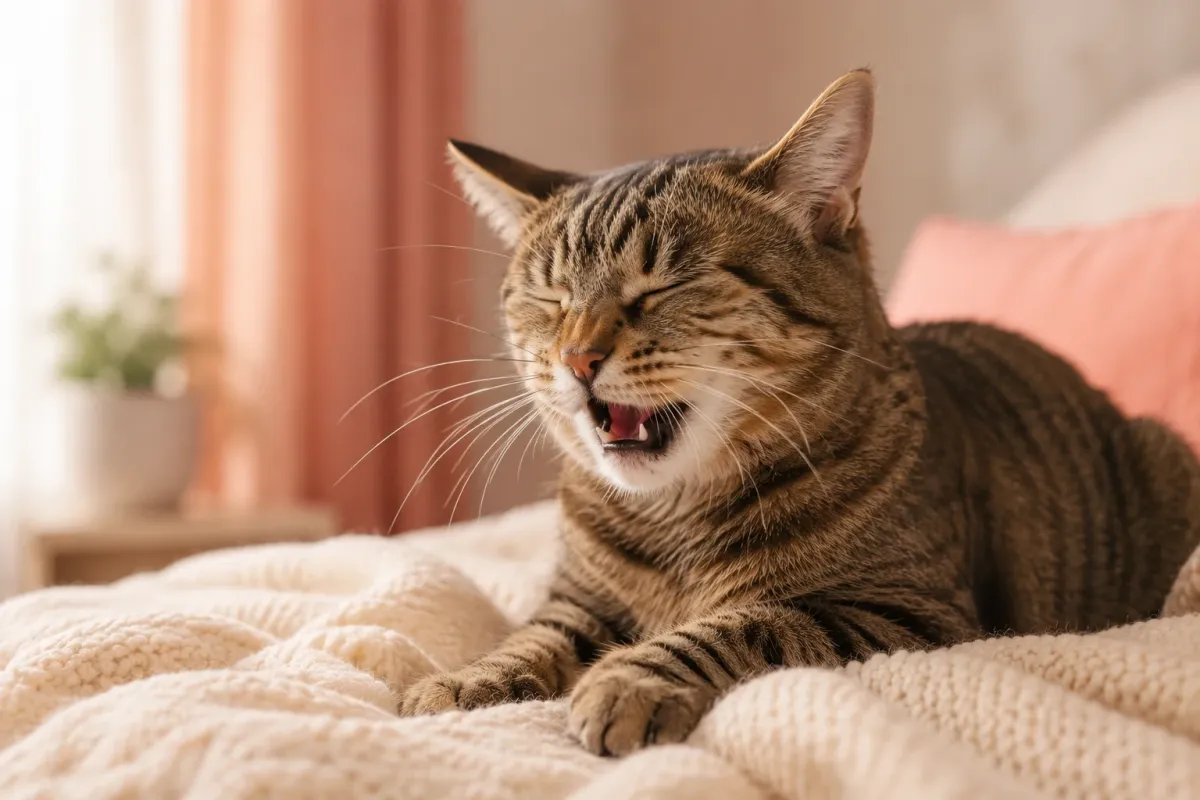
Cats sneeze for the same reason people do: something tickled the inside of their nose. Dust from the litter box, a gust of cold air, a strong perfume, and it is over in a second and forgotten. That is most sneezing, and it needs nothing from you.
What is worth paying attention to is the pattern around it. A single sneeze from an otherwise normal cat is not the same thing as sneezing that keeps happening, or that arrives with a runny nose, watery eyes or a cat that has stopped eating. Here is how to tell the difference.
This guide is written from published veterinary sources, named and linked as they come up and listed again at the bottom. It is not an examination of your own cat, and nothing here replaces one.
Is it normal for a cat to sneeze?
Yes, occasionally. A cat's nose is at floor level and close to whatever it is investigating, so it picks up more dust, pollen and fine litter particles than yours does. One or two sneezes while your cat is otherwise playing, eating and behaving normally is not a sign of anything.
What changes the picture is frequency and company. Sneezing that repeats through the day, that continues for more than a day or two, or that arrives alongside discharge, is no longer just dust.
When should I take my sneezing cat to the vet?
This is the section worth reading first if you are actually worried right now. Call the vet if any of the following apply:
- Sneezing has continued for more than two or three days
- There is any blood in the sneeze or the discharge
- Discharge has turned yellow or green
- Only one nostril is affected
- Your cat has stopped eating, or seems unusually quiet or lethargic
- Breathing looks labored, or your cat is breathing through their mouth
- It is a kitten, a senior cat, or a cat with an existing health condition
None of these need to wait for a routine appointment. A same-day or next-day visit is the right call for any of them, and blood in a sneeze specifically is worth calling ahead about rather than just booking in.
If sneezing is one of several things that seem off, rather than the only thing, our guide to the early signs a cat is sick covers the wider pattern of appetite, energy and behavior changes worth watching alongside it.
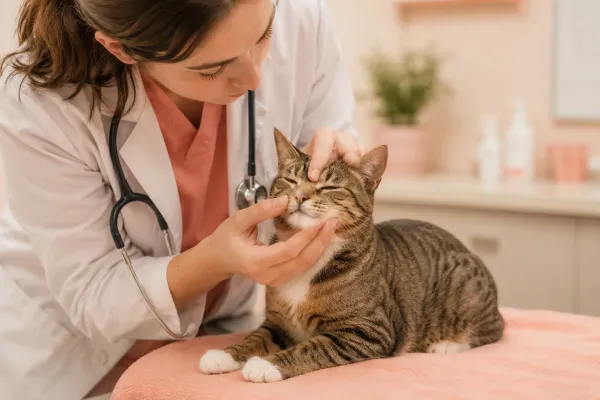
At a glance, here is roughly how the ASPCA's general guidance on recognizing illness in cats maps onto sneezing specifically:
| What you're seeing | What to do |
|---|---|
| One or two sneezes, cat otherwise normal | Monitor |
| Sneezing repeats through the day | Watch closely |
| Sneezing with nasal or eye discharge | Contact your vet |
| Not eating, hiding, or low energy | Contact your vet promptly |
| Breathing looks labored or open-mouthed | Urgent care |
| Any blood in the sneeze or discharge | Contact your vet promptly |
Treat this as a rough guide, not a diagnosis. It exists to help you decide how quickly to act, not to replace an exam.
Why does my cat keep sneezing?
Sneezing that keeps coming back usually means one of two things: an ongoing irritant, or an infection.
An irritant is the easier one to rule out. Scented candles, air fresheners, cleaning sprays, cigarette smoke and dusty, scented litter are the most common causes, and switching the litter or airing the room for a day is often enough to tell you whether that was it.
If nothing has changed in the house, an upper respiratory infection is the more likely explanation. Feline herpesvirus and calicivirus are extremely common in cats, particularly cats who spent time in a shelter or came from a large litter, and the Cornell Feline Health Center lists both among the most frequent causes of cold-like symptoms in cats, sneezing included. Cornell estimates that up to 97% of cats are exposed to feline herpesvirus in their lifetime, and that it becomes a lifelong infection in up to 80% of them, which is why flare-ups can return with stress.
My cat is sneezing but acting completely normal. Should I worry?
Generally, no. A cat that is still eating, drinking, playing and seeking you out despite a mild sneeze is not showing signs of a serious problem. The behavior around the sneezing tells you more than the sneezing itself.
Keep an eye on it rather than dismissing it. Mild viral infections sometimes start exactly this way, with a few days of sneezing and nothing else, before other symptoms appear or before it resolves on its own. If mild sneezing continues for several days, even while your cat seems otherwise well, it is worth a call to your vet for advice rather than waiting it out. Symptoms vary enough by cause that "wait and see" is not a rule you can rely on from a distance.
My cat is sneezing and has a runny nose or watery eyes
This combination is one of the clearest signs of an upper respiratory infection. What the discharge looks like is a useful clue, though not a reliable one on its own:
- Clear discharge tends to go with the early, viral stage of an infection, the feline equivalent of a common cold.
- Thick, yellow or green discharge can mean a secondary bacterial infection has joined the virus. Color is a clue a vet weighs alongside everything else, not proof on its own, and whether antibiotics are actually needed is their call to make, not something to decide from a photo or a description.
- Discharge from one nostril only is different again, and points more toward something physically stuck in the nose, a tooth root problem, or in older cats, a nasal polyp.
Watery eyes alongside sneezing is common with the same viral infections, since feline herpesvirus affects the eyes as often as the nose.
Why is my kitten sneezing so much?
Kittens catch upper respiratory infections easily, and their symptoms tend to hit harder than an adult cat's. A kitten's immune system has not built up the same resistance yet, which is why sneezing, watery eyes and congestion spread quickly through shelters and multi-kitten litters.
Take a kitten who stops eating more seriously than you would an adult with the same symptoms. A blocked nose can be enough to put a kitten off food because they cannot smell it, and kittens dehydrate and lose weight faster than adult cats do. A kitten that stops eating is worth a call to the vet, especially if it is also congested, lethargic, or has eye or nasal discharge alongside it, rather than something to time by the hour.
Kittens change fast in general, and knowing roughly what stage yours is at makes a lot of their health and behavior easier to read. Our cat age calculator converts an age into human years and the life stage they are in.
What causes a cat to sneeze?
According to VCA Animal Hospitals, roughly in order of how often each one turns out to be the cause:
- Viral upper respiratory infection. Feline herpesvirus and calicivirus, by far the most common cause of repeated sneezing.
- Environmental irritants. Dust, scented litter, cleaning products, smoke and strong perfume.
- Allergies. Less common in cats than in people, but they do happen, usually alongside itchy skin or watery eyes.
- A foreign body. A blade of grass or a seed caught in the nose causes sudden, intense, usually one-sided sneezing.
- Dental disease. A tooth root abscess near the nasal passage can produce sneezing and discharge that looks respiratory but is not.
- Nasal polyps or, rarely, a tumor. Usually in older cats, and usually chronic rather than sudden, with sneezing that persists for weeks.
A vet works through this list roughly in this order too, which is part of why a physical exam matters more than guessing from symptoms alone.
Can I do anything at home while I wait?
A little, and only as comfort rather than treatment. A humidifier, or a few minutes sitting with your cat in a steamy bathroom, can loosen congestion and make breathing easier. Gently wiping discharge away from the nose and eyes with a damp cloth keeps your cat more comfortable and stops it crusting.
What not to do is reach for a human cold remedy. Decongestants, antihistamines and pain relievers made for people are frequently unsafe for cats, and several common ones are outright toxic: the Cornell Feline Health Center names cold relievers and pain relievers such as aspirin, acetaminophen and ibuprofen among the most common causes of feline poisoning. If your cat needs medication, it needs to come from a vet who has actually examined them.
If you have just brought a new cat or kitten home and this is your first time navigating a health question like this one, our guide to why cats knead covers a gentler, purely behavioral side of getting to know a new cat.
Frequently asked questions
Is it normal for a cat to sneeze?
Yes, occasionally. Dust, a strong smell or a change in the air can trigger a single sneeze, just as it does in a person, and it means nothing on its own. What is not normal is sneezing that repeats through the day, or that keeps happening over more than a day or two.
Why does my cat keep sneezing?
Repeated sneezing over several hours or days is usually either an ongoing irritant, such as dusty litter, a scented candle or cleaning spray, or an upper respiratory infection. Cats carry feline herpesvirus and calicivirus at very high rates, and both cause cold-like symptoms that include sneezing.
Why is my cat sneezing but acting completely normal?
A cat that is eating, drinking and playing normally alongside a mild sneeze is usually dealing with a minor irritant or the early days of a cold. Keep watching rather than worrying: it is the cats that stop eating, hide, or develop discharge that need a same-day vet visit.
What does it mean if my cat is sneezing and has a runny nose?
Sneezing paired with nasal discharge is one of the clearest signs of an upper respiratory infection. Clear discharge tends to go with the early, viral stage; thick yellow or green discharge can mean a secondary bacterial infection has joined it. Color alone cannot confirm that on its own, and it is not something to diagnose from home: a vet examines the cat and decides whether antibiotics are actually needed.
Why is my kitten sneezing so much?
Kittens catch upper respiratory infections easily, especially if they came from a shelter or a large litter, and their symptoms tend to hit harder than an adult cat's. A kitten that stops eating is a more urgent case than an adult with the same symptoms, because kittens dehydrate and lose weight fast.
What causes a cat to sneeze?
The common causes are, roughly in order of likelihood: viral upper respiratory infection, environmental irritants such as dust or fragrance, allergies, a foreign body caught in the nose, dental disease affecting the roots near the nasal passage, and, less commonly, nasal polyps or a fungal infection in older cats.
When should I take my sneezing cat to the vet?
Book a visit if sneezing lasts more than two or three days, if there is any blood, if discharge turns yellow or green, if your cat stops eating or seems lethargic, or if only one nostril is affected, which can point at something physically stuck rather than an infection.
Can I give my cat anything at home for sneezing?
A humidifier or a few minutes in a steamy bathroom can loosen congestion, and gently wiping discharge away keeps your cat more comfortable. There is no over-the-counter medication that is safe to give a cat without a vet's direction; several common human cold remedies are toxic to cats.
Sources
- Cornell Feline Health Center: Respiratory Infections Feline herpesvirus and calicivirus, how common they are, and their symptoms.
- VCA Animal Hospitals: Feline Upper Respiratory Infection Causes of sneezing in rough order of frequency, and treatment.
- Cornell Feline Health Center: Poisons Why human cold and pain medicines are dangerous to cats.
- ASPCA: Cat Care General guidance on recognizing illness in cats.
General information, not veterinary advice. If your cat's behavior has changed suddenly, speak to a vet rather than an article.
How this guide was researched and checked is set out in how our guides are written.

Want an answer in seconds?
The calculators handle age, due dates and portions without an account.