
Can Cats Eat Sweets?
Why cats react differently to sweets
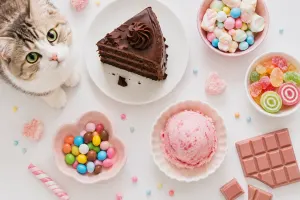
A cat's disinterest in dessert is not willpower, it is wiring. The gene that builds a sweet-taste receptor in most mammals is present in cats only as a broken, non-functional copy, so a cat licking frosting off a plate is responding to fat and dairy on its tongue, not sugar. Offered plain sugar water next to plain water, a cat shows no preference for either, a result researchers have replicated directly by measuring what cats choose to drink.
That single fact reframes this entire category. In fruit or vegetables, at least some of what a cat eats is nutritionally neutral, water and fiber a cat's gut can shrug off. Sweets are different: this is a category built almost entirely around ingredients formulated for a human palate a cat does not share, and several of those ingredients are dangerous regardless of how much or how little a cat happens to want them.
Chocolate contains theobromine and caffeine, compounds a cat's liver clears far more slowly than a person's does, and the amount that causes real harm scales down with a cat's small body weight, not up with how good it smells. Xylitol, a sugar substitute now common in sugar-free gum, some peanut butter and diet baked goods, triggers a documented and fast-acting insulin crisis in dogs; the same has not been shown in cats, but the evidence for cats is thin enough that treating any xylitol exposure as a genuine unknown, not a green light, is the only defensible position.
So the real danger with sweets was never a cat begging for cake. It is a dropped square of baking chocolate, an open box of sugar-free mints, a bowl left unattended on a counter. Nothing here is a craving to manage. It is a set of specific ingredients that need to stay physically out of reach, because a cat's biology gives it no internal reason to leave them alone on its own.
Chocolate and xylitol are true poisons
Which sweets are most dangerous to cats?
The verdict above covers sweets as a whole. For the specific one in front of you, this is the breakdown.
| Item | Verdict | Note |
|---|---|---|
| Dark or baking chocolate |
Never
Theobromine runs 130-450 mg per ounce depending on cacao content, roughly seven to ten times milk chocolate. A single baking square can reach a toxic dose in an average cat. Treat any ingestion as an emergency. |
Theobromine runs 130-450 mg per ounce depending on cacao content, roughly seven to ten times milk chocolate. A single baking square can reach a toxic dose in an average cat. Treat any ingestion as an emergency. |
| Milk chocolate |
Never
Same theobromine mechanism as dark chocolate, at a lower concentration, around 44-64 mg per ounce. VCA puts the toxic threshold for an average cat near 11 ounces, but a kitten can be affected by as little as 1 ounce. |
Same theobromine mechanism as dark chocolate, at a lower concentration, around 44-64 mg per ounce. VCA puts the toxic threshold for an average cat near 11 ounces, but a kitten can be affected by as little as 1 ounce. |
| White chocolate |
Caution
Contains cocoa butter, not cocoa solids, so theobromine is negligible, roughly 1 mg per ounce. The real risk is fat and sugar upsetting a lactose-sensitive gut, not chocolate poisoning. |
Contains cocoa butter, not cocoa solids, so theobromine is negligible, roughly 1 mg per ounce. The real risk is fat and sugar upsetting a lactose-sensitive gut, not chocolate poisoning. |
| Xylitol-sweetened items (sugar-free gum, peanut butter, diet baked goods) |
Caution
Causes rapid insulin-driven hypoglycemia in dogs; a small feline study found no blood sugar drop, but liver-injury risk remains unstudied. Treat any exposure as a call-your-vet precaution. |
Causes rapid insulin-driven hypoglycemia in dogs; a small feline study found no blood sugar drop, but liver-injury risk remains unstudied. Treat any exposure as a call-your-vet precaution. |
| Plain hard candy |
Caution
No toxic ingredient, plain or sugar-free. Saliva makes it slick, and a cat's poor chewing turns it into a genuine choking and airway-obstruction risk. Take it away before it's swallowed whole. |
No toxic ingredient, plain or sugar-free. Saliva makes it slick, and a cat's poor chewing turns it into a genuine choking and airway-obstruction risk. Take it away before it's swallowed whole. |
| Gummy candy |
Caution
Sticky, chewy texture is a choking and dental-adhesion hazard, plus GI upset from sugar cats digest poorly. Xylitol versions are lower-urgency in cats than in dogs, but still worth a vet call. |
Sticky, chewy texture is a choking and dental-adhesion hazard, plus GI upset from sugar cats digest poorly. Xylitol versions are lower-urgency in cats than in dogs, but still worth a vet call. |
| Marshmallows (plain) |
Caution
Not toxic; sugar offers no nutrition and the sticky texture is a choking risk. Skip sugar-free versions, often xylitol-sweetened, and any chocolate-coated or s'mores-style marshmallow entirely. |
Not toxic; sugar offers no nutrition and the sticky texture is a choking risk. Skip sugar-free versions, often xylitol-sweetened, and any chocolate-coated or s'mores-style marshmallow entirely. |
| Honey |
Caution
Not toxic for healthy adults, but raw or pasteurized honey can carry botulism spores an immature gut may not suppress. Skip it for kittens under a year, and for senior or immunocompromised cats. |
Not toxic for healthy adults, but raw or pasteurized honey can carry botulism spores an immature gut may not suppress. Skip it for kittens under a year, and for senior or immunocompromised cats. |
| Maple syrup |
Caution
Essentially sucrose and water, no unique toxin. No nutritional upside since cats can't taste the sweetness, and repeated sugar contributes to GI upset and weight gain over time. |
Essentially sucrose and water, no unique toxin. No nutritional upside since cats can't taste the sweetness, and repeated sugar contributes to GI upset and weight gain over time. |
| Plain cake or cupcake (no chocolate or raisins) |
Caution
Milk and butter content risks loose stool in a lactose-sensitive cat. A pea-sized crumb as a one-off is low-risk; skip frosting, and any recipe containing raisins. |
Milk and butter content risks loose stool in a lactose-sensitive cat. A pea-sized crumb as a one-off is low-risk; skip frosting, and any recipe containing raisins. |
| Cookies (plain, no chocolate or raisins) |
Caution
Same dairy and sugar profile as plain cake. Trace nutmeg or cinnamon at normal recipe levels isn't a toxicity concern. Always skip chocolate chip and raisin cookies. |
Same dairy and sugar profile as plain cake. Trace nutmeg or cinnamon at normal recipe levels isn't a toxicity concern. Always skip chocolate chip and raisin cookies. |
| Ice cream (plain) |
Caution
Most adult cats lose the lactase needed to digest dairy, so a lick risks gas or diarrhea. Skip chocolate, coffee and rum-raisin flavors entirely, each carries a separate real toxin. |
Most adult cats lose the lactase needed to digest dairy, so a lick risks gas or diarrhea. Skip chocolate, coffee and rum-raisin flavors entirely, each carries a separate real toxin. |
| Frozen yogurt |
Caution
Same lactose-intolerance risk as ice cream, and often just as much sugar despite a healthier reputation. Skip flavored or mix-in varieties, especially chocolate chips or swirls. |
Same lactose-intolerance risk as ice cream, and often just as much sugar despite a healthier reputation. Skip flavored or mix-in varieties, especially chocolate chips or swirls. |
| Donuts |
Caution
A bite of plain glazed or cake donut is a fat and sugar issue, not a poison. Skip chocolate-glazed (real theobromine, low dose) and raisin-filled versions as a precaution. |
A bite of plain glazed or cake donut is a fat and sugar issue, not a poison. Skip chocolate-glazed (real theobromine, low dose) and raisin-filled versions as a precaution. |
| Frosting or icing |
Caution
Dark or semisweet chocolate frosting is a genuine theobromine risk even in a licked amount. Plain sugar or cream-cheese frosting won't poison a cat but can trigger GI upset. |
Dark or semisweet chocolate frosting is a genuine theobromine risk even in a licked amount. Plain sugar or cream-cheese frosting won't poison a cat but can trigger GI upset. |
| Whipped cream (plain) |
Caution
A few licks is usually tolerated despite lactose sensitivity. Never offer sugar-free or 'zero sugar' versions, which can contain xylitol, or chocolate- and mocha-flavored toppings. |
A few licks is usually tolerated despite lactose sensitivity. Never offer sugar-free or 'zero sugar' versions, which can contain xylitol, or chocolate- and mocha-flavored toppings. |
| Candy corn |
Caution
No known feline toxin in the standard recipe. A large amount risks pancreatitis, with onset that can take two to four days to appear. Skip sugar-free versions that substitute xylitol. |
No known feline toxin in the standard recipe. A large amount risks pancreatitis, with onset that can take two to four days to appear. Skip sugar-free versions that substitute xylitol. |
| Caramel |
Caution
Sticky texture risks choking and sticking to teeth. Check for chocolate coating or filling first, and skip sugar-free versions that may use xylitol, both change this from an upset stomach to a possible poisoning. |
Sticky texture risks choking and sticking to teeth. Check for chocolate coating or filling first, and skip sugar-free versions that may use xylitol, both change this from an upset stomach to a possible poisoning. |
Safe means fine as described here. Caution means keep it small, plain and occasional. Never means no safe amount, keep it out of reach.
What to do if your cat ate sugar
There is no safe serving size to quote for sweets as a category, because "sweets" is not one risk, it is several unrelated ones stacked under a single word, and the gap between the mildest and the most dangerous item here is enormous. A lick of plain vanilla ice cream is, at worst, a lactose problem: most adult cats lose much of the enzyme that digests milk sugar after weaning, so a small taste risks loose stool over the following day, nothing more.
A square of baking or high-cacao dark chocolate is a different category of event entirely. Theobromine concentration runs roughly seven to ten times higher in baking chocolate than in milk chocolate, and for an average 11-pound cat, mild toxic signs can begin around 100 mg of theobromine, an amount a single square of concentrated baking chocolate can already supply. Nothing about small size makes that safer.
A cat is smaller than the dog or person a chocolate warning is usually written for, which means the same few grams that would barely register in a larger animal can reach a toxic dose in a cat. Treat quantity as informative only within an item, never as a reason to relax across items: "a small amount" of ice cream and "a small amount" of baking chocolate are not comparable statements.
The one practical habit worth building is reading labels before offering anything sweet, or before assuming a dropped item is harmless. Xylitol shows up on ingredient lists as xylitol, birch sugar, or occasionally an unlabeled "sugar alcohol," and it turns up in products that don't read as candy at all, like a jar of peanut butter, sugar-free gum, or a "diet" baked good. Chocolate hides in frosting, mix-ins, coatings and flavored whipped toppings, not just a chocolate bar.
Beyond those two specific dangers, the rest of this category earns caution for the same reason vegetables or grains do: sugar and fat offer a cat's body nothing it needs, and a habit of sweet treats contributes to obesity over time even where no single ingredient is toxic. The practical rule is simple even if the reasons behind it vary by item: keep desserts, candy and baking ingredients somewhere a cat cannot reach them, and treat any accidental exposure by checking exactly what was in it before deciding how urgent it is.
If your cat already ate some
This is not a category to introduce on purpose, there is nothing here worth building into a cat's diet, so the real scenario is a cat that has already gotten into something sweet. The first step is figuring out exactly what was eaten, not just "some dessert." Check the packaging or recipe for chocolate in any form, cocoa powder included, and for xylitol, sometimes listed as birch sugar, since those two ingredients are the ones that change everything about how urgently to act.
Any confirmed or suspected chocolate, and any confirmed or suspected xylitol, is a call-your-vet-now situation, not a wait-and-see one: call a veterinarian or an animal poison control line immediately, mention what was eaten and roughly how much, and don't wait for symptoms to appear before making that call. Speed matters more for xylitol than for chocolate, and for a specific reason: if xylitol does affect a cat the way it affects a dog, the mechanism is a fast insulin surge that can drop blood sugar dangerously within 30 to 60 minutes, while chocolate's theobromine typically takes two to four hours to produce visible signs.
A wider window for chocolate is not a reason to relax, just a different clock. If what was actually eaten is plain, a lick of vanilla ice cream, a bite of a butter cookie with no chocolate or raisins, watching at home for the next 12 to 24 hours for vomiting or loose stool is a reasonable response, not an overreaction in either direction.
Which sweets should cats never eat?
- Any dark, semisweet or baking chocolate, in any amount: theobromine concentration is high enough that a single baking square can reach a toxic dose in an average cat, and onset is typically two to four hours, treat it as an emergency, not a wait-and-see.
- Any product containing xylitol: sugar-free gum, some peanut butter, diet baked goods and sugar-free candy or whipped topping. The dog-specific danger (rapid insulin surge, hypoglycemia within 30 to 60 minutes) hasn't been shown in cats, but feline safety data is thin enough that any exposure still warrants an urgent vet call.
- Milk chocolate in any real quantity: lower theobromine than dark chocolate, but a full bar or a box of chocolates can still reach a toxic dose, especially for a kitten or a smaller cat.
- Raisin-containing desserts of any kind: raisins carry an established kidney-injury risk in cats and dogs with no known safe dose, even though the exact toxic mechanism is unconfirmed.
- Anything containing rum, coffee, or alcohol as a mix-in, rum-raisin ice cream in particular, since it stacks two separate toxins in one flavor.
- Sugar-free or 'diet' versions of any sweet as a default swap: checking the label for xylitol before offering anything sugar-free is a habit worth building, not an occasional precaution.
- Chocolate-coated or chocolate-drizzled versions of anything otherwise low-risk, marshmallows, caramel, pretzels, since the coating carries a real, separate toxin the base item doesn't.
Full guides: Can Cats Eat Chocolate?
Signs of a bad reaction to watch for
- Chocolate (theobromine): vomiting, diarrhea, restlessness, an elevated or irregular heart rate, and in severe cases tremors or seizures, typically appearing two to four hours after ingestion, not immediately.
- Xylitol: weakness, vomiting, loss of coordination, or collapse, appearing much faster than chocolate signs, within 30 to 60 minutes in dogs and, out of caution, treated the same way in cats until more feline data exists.
- Any confirmed or suspected chocolate or xylitol ingestion warrants an immediate call to a vet or an animal poison control line, regardless of whether symptoms have started yet.
- Loose stool, gas, or mild vomiting in the 12 to 24 hours after a plain dairy or sugar item like ice cream or cake, most often a lactose or sugar reaction rather than poisoning.
- Gagging, drooling, pawing at the mouth, or repeated swallowing after any sticky or hard candy, a possible sign it's lodged rather than swallowed cleanly.
Any of these, or anything that seems off beyond what is listed here, is worth a call to your vet. Our guide to the early signs a cat is sick covers the wider list of what to watch for at any time, not just after eating something new.
Frequently asked questions
Which sweets are genuinely dangerous, and which are just empty calories?
Two ingredients carry real toxicity: chocolate, and xylitol, which labels also call birch sugar or a sugar alcohol. The rest of this group, plain marshmallows, plain cake, ice cream, caramel, is a question of lactose, sugar, fat or a choking texture rather than poisoning. That distinction is the point of this page: a lick of vanilla ice cream and a square of baking chocolate are not comparable events.
What should I do if my cat got into something sweet?
Work out exactly what was in it before deciding how urgent it is. Chocolate in any form, cocoa powder included, and xylitol, sometimes listed as birch sugar, both mean calling a vet or an animal poison control line straight away rather than waiting for symptoms. Xylitol acts faster than chocolate, within 30 to 60 minutes in dogs against two to four hours for chocolate. If what was eaten was plain, watch at home for 12 to 24 hours for vomiting or loose stool.
Is xylitol toxic to cats?
It's unresolved, not confirmed safe. Xylitol causes a fast, dangerous insulin surge in dogs; a small feline study found no blood-sugar drop, and no confirmed feline poisoning case exists. But the evidence is thin, so any exposure still deserves an urgent vet call, not a shrug.
Can cats eat ice cream?
A small lick of plain vanilla is low-risk, though most adult cats have reduced lactase and can get loose stool or gas from dairy. Skip flavored or mix-in varieties entirely: chocolate, coffee and rum-raisin each carry a separate real toxin worth avoiding altogether.
Is sugar bad for cats?
Sugar itself isn't a poison, but it offers a cat's body nothing useful, since cats can't taste sweetness and have no metabolic need for it. Repeated sugary treats contribute to obesity and dental issues over time, which is the real long-term risk rather than any single sweet bite.
Can cats eat cake or cookies?
A pea-sized crumb of plain, unfrosted cake or a plain butter cookie is low-risk as a one-off. The dairy content can cause loose stool in a lactose-sensitive cat. Always skip anything containing chocolate or raisins, and skip frosting, which is a separate risk on its own.
Can cats eat marshmallows or candy?
Plain marshmallows and plain candy aren't toxic, but they offer zero nutrition and their sticky or hard texture is a genuine choking risk since cats chew poorly. Skip sugar-free versions, which may contain xylitol, and any chocolate-coated candy or marshmallow, which is a separate confirmed toxin.
Can cats have honey?
A drop-sized taste is generally fine for a healthy adult cat, though it offers no nutritional benefit. Avoid it entirely for kittens under a year old, and as a precaution for senior or immunocompromised cats, since honey can carry botulism spores an immature or weakened gut may not suppress.
Sources for this guide
- ASPCA Animal Poison Control Center The reference list behind which human foods are genuinely toxic to cats.
- Cornell Feline Health Center Background on feline nutrition and why cats need a meat-based diet.
- WSAVA Global Nutrition Guidelines The nutritional framework behind why extras cannot replace a complete diet.
 By Ahsan Nawaz
Published Updated
