
Can Cats Eat Treats & Snacks?
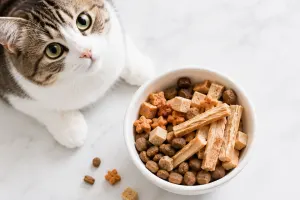
Why cats react differently to treats & snacks
Treats are how most day to day training and bonding with a cat actually happens. A reward timed to a behavior within a second or two teaches a cat to associate that behavior with something good, which is the entire mechanism behind clicker training, carrier training, or just teaching a cat to come when called. None of that requires much food.
A pea-sized piece delivered at the right moment does the behavioral job just as well as a handful, since the timing and consistency of a reward matter more than its size. The real risk in this category was never treats existing at all, it is scale and quality.
A cat's total daily calorie need is small to begin with, often only 200 to 250 calories for an average indoor cat, so treats handed out across a few training sessions, a greeting at the door, and a bedtime routine add up faster than they look, especially since treats rarely get weighed or counted toward a meal the way regular food does. That is calorie creep: no single treat is the problem, the running total across a day is.
Quality compounds that risk rather than causing a separate one. A treat built mostly from corn syrup, glycerin, and artificial coloring, with a trace of actual meat, delivers calories without much nutritional payoff, so a cat can sit right at its daily treat ceiling while getting comparatively little from it. That is a real reason to glance at an ingredient label, not a reason to treat every packaged treat as suspect. A genuinely short, meat-forward ingredient list is common on the market and worth choosing over a filler-heavy one, and a plain reading of the package is usually enough to tell the difference between the two.
Under 10% of daily calories
Which treats & snacks are safe for cats?
The verdict above covers treats & snacks as a whole. For the specific one in front of you, this is the breakdown.
| Item | Verdict | Note |
|---|---|---|
| Cat grass |
Safe
Real grass, not toxic houseplants, grown from wheat, oat, barley, or rye seed sold for pets. May help move swallowed hair along and adds trace vitamins. Overwatering grows mold, and outdoor lawn grass can carry pesticide residue or parasite eggs. |
Real grass, not toxic houseplants, grown from wheat, oat, barley, or rye seed sold for pets. May help move swallowed hair along and adds trace vitamins. Overwatering grows mold, and outdoor lawn grass can carry pesticide residue or parasite eggs. |
| Plain cooked chicken (unseasoned) |
Safe
Home-cooked, boneless, skinless, nothing added: no salt, butter, oil, onion, or garlic. A lean, digestible protein cats handle well in small pieces. Never substitute rotisserie, deli, or canned chicken, which routinely carry added sodium or onion and garlic powder. |
Home-cooked, boneless, skinless, nothing added: no salt, butter, oil, onion, or garlic. A lean, digestible protein cats handle well in small pieces. Never substitute rotisserie, deli, or canned chicken, which routinely carry added sodium or onion and garlic powder. |
| Cooked egg (plain) |
Safe
Fully cooked, scrambled or boiled, no salt, butter, milk, or seasoning. A good small source of protein. Favor the white over the yolk, which is fat-dense enough to matter for a cat prone to pancreatitis or already managing its weight. |
Fully cooked, scrambled or boiled, no salt, butter, milk, or seasoning. A good small source of protein. Favor the white over the yolk, which is fat-dense enough to matter for a cat prone to pancreatitis or already managing its weight. |
| Commercial cat treats (bagged or pouched) |
Safe
Mainstream bagged and pouched treats are formulated to be safe at the printed portion size. Check the calorie count rather than trusting a "light" or "low-calorie" claim, often not meaningfully lower than the regular version. |
Mainstream bagged and pouched treats are formulated to be safe at the printed portion size. Check the calorie count rather than trusting a "light" or "low-calorie" claim, often not meaningfully lower than the regular version. |
| Freeze-dried meat treats (chicken or salmon) |
Caution
Freeze-drying reduces bacteria in raw meat, it does not eliminate it, so Salmonella and Listeria exposure is a real, documented risk. Favor a single-ingredient product from a brand stating a validated pathogen-kill step like HPP, and wash hands after handling. |
Freeze-drying reduces bacteria in raw meat, it does not eliminate it, so Salmonella and Listeria exposure is a real, documented risk. Favor a single-ingredient product from a brand stating a validated pathogen-kill step like HPP, and wash hands after handling. |
| Dental treats and dental chews |
Caution
Mechanically scrub plaque as a cat chews, but that benefit is proven only for products carrying the Veterinary Oral Health Council seal. An unproven or overly hard chew mainly adds calories and a real tooth-fracture risk without doing the job. |
Mechanically scrub plaque as a cat chews, but that benefit is proven only for products carrying the Veterinary Oral Health Council seal. An unproven or overly hard chew mainly adds calories and a real tooth-fracture risk without doing the job. |
| Catnip treats |
Caution
The nepetalactone response itself is harmless and non-addictive per VCA. Skip it for a cat with a seizure history, since it may lower seizure threshold, and check the label: many packaged "catnip" treats are seasoned chicken-meal snacks, not plain herb. |
The nepetalactone response itself is harmless and non-addictive per VCA. Skip it for a cat with a seizure history, since it may lower seizure threshold, and check the label: many packaged "catnip" treats are seasoned chicken-meal snacks, not plain herb. |
| Plain cooked fish |
Caution
Boneless, plain-cooked, no oil or seasoning, as an occasional bite rather than a routine one. Repeated fish-heavy feeding is linked to steatitis and to taurine-deficiency heart disease, since canning leaches out taurine. Favor lower-mercury species over tuna or swordfish. |
Boneless, plain-cooked, no oil or seasoning, as an occasional bite rather than a routine one. Repeated fish-heavy feeding is linked to steatitis and to taurine-deficiency heart disease, since canning leaches out taurine. Favor lower-mercury species over tuna or swordfish. |
| Cheese (small amount) |
Caution
A dice-sized piece of plain, aged cheese like cheddar, once or twice a week. Most adult cats have reduced lactase and react with GI upset. Skip moldy cheese, a tremor-linked toxin risk, or anything flavored with onion or garlic. |
A dice-sized piece of plain, aged cheese like cheddar, once or twice a week. Most adult cats have reduced lactase and react with GI upset. Skip moldy cheese, a tremor-linked toxin risk, or anything flavored with onion or garlic. |
| Canned tuna (small amount) |
Caution
Light tuna in water only, capped around a tablespoon, no more than once a week. Never albacore, which carries roughly three times the mercury. Repeated feeding risks vitamin-E-deficiency steatitis, since tuna is not supplemented the way a complete diet is. |
Light tuna in water only, capped around a tablespoon, no more than once a week. Never albacore, which carries roughly three times the mercury. Repeated feeding risks vitamin-E-deficiency steatitis, since tuna is not supplemented the way a complete diet is. |
| Lactose-free "cat milk" treats |
Caution
Labeled lactose-free products are typically lactose-reduced to well under one percent, not truly zero, and still carry added sugar and fat. A teaspoon once or twice a week is plenty. Never substitute kitten milk replacer, a different, complete-nutrition product entirely. |
Labeled lactose-free products are typically lactose-reduced to well under one percent, not truly zero, and still carry added sugar and fat. A teaspoon once or twice a week is plenty. Never substitute kitten milk replacer, a different, complete-nutrition product entirely. |
| Plain air-popped popcorn |
Caution
A piece or two of fully popped, plain, unbuttered popcorn is low-risk for a healthy adult cat. Kernels are a real choking hazard for a cat's mouth, and buttered or salted popcorn adds fat and sodium cats do not need. |
A piece or two of fully popped, plain, unbuttered popcorn is low-risk for a healthy adult cat. Kernels are a real choking hazard for a cat's mouth, and buttered or salted popcorn adds fat and sodium cats do not need. |
| Pretzels (plain, unsalted) |
Caution
A plain, unsalted pretzel is mostly a zero-nutrition novelty, not an acute poisoning risk in a small piece. Garlic, onion, "everything," or ranch-seasoned pretzels are the real hazard here, a common grocery-aisle flavor carrying concentrated Allium seasoning. |
A plain, unsalted pretzel is mostly a zero-nutrition novelty, not an acute poisoning risk in a small piece. Garlic, onion, "everything," or ranch-seasoned pretzels are the real hazard here, a common grocery-aisle flavor carrying concentrated Allium seasoning. |
| Baby food meat puree |
Caution
Plain, single-ingredient infant meat purees, no onion or garlic on the label, are sometimes used short-term to tempt a sick cat to eat. Skip mixed vegetable or grain "dinner" varieties, which inconsistently contain onion powder even under the same brand. |
Plain, single-ingredient infant meat purees, no onion or garlic on the label, are sometimes used short-term to tempt a sick cat to eat. Skip mixed vegetable or grain "dinner" varieties, which inconsistently contain onion powder even under the same brand. |
| Deli or lunch meat |
Caution
Sodium load and, more seriously, onion or garlic powder folded into a generic "seasoning" label are the real risks, since US rules do not require naming Allium powder individually. A truly plain, unseasoned slice is rare and still sodium-heavy. |
Sodium load and, more seriously, onion or garlic powder folded into a generic "seasoning" label are the real risks, since US rules do not require naming Allium powder individually. A truly plain, unseasoned slice is rare and still sodium-heavy. |
| Beef jerky and human jerky-style snacks |
Never
Onion and garlic powder are standard seasoning in virtually all commercial beef and human jerky, a confirmed cause of hemolytic anemia in cats. Our toxic foods guide covers the full mechanism. Never offer human jerky, plain freeze-dried meat instead. |
Onion and garlic powder are standard seasoning in virtually all commercial beef and human jerky, a confirmed cause of hemolytic anemia in cats. Our toxic foods guide covers the full mechanism. Never offer human jerky, plain freeze-dried meat instead. |
| Potato chips |
Never
Fat and oil trigger GI upset and pancreatitis risk even in a plain chip, and most sold varieties add onion or garlic powder besides. Our junk and fast food guide covers the full breakdown. Skip chips as a treat. |
Fat and oil trigger GI upset and pancreatitis risk even in a plain chip, and most sold varieties add onion or garlic powder besides. Our junk and fast food guide covers the full breakdown. Skip chips as a treat. |
Safe means fine as described here. Caution means keep it small, plain and occasional. Never means no safe amount, keep it out of reach.
How much treat can a cat eat?
The guideline used across pet nutrition sources is to keep treats of any kind under about 10 percent of a cat's total daily calories, with the other 90 percent coming from a complete, balanced food formulated to meet every actual nutrient requirement, taurine included. For an average indoor cat eating somewhere around 200 to 250 calories a day, that ceiling works out to roughly 20 to 25 calories, a small number in practice: most single commercial treats run about 2 to 3 calories apiece, so that is somewhere around 7 to 10 treats spread across a day, not a whole handful at once.
A cat on a weight-loss plan or with a smaller calorie budget has even less room, which is exactly why a flat treat count matters less than a percentage of that specific cat's total. Commercial cat treats are, as a category, formulated with that math already in mind. Reputable brands publish a calorie count per treat or per gram on the bag specifically so that math is possible, and the ingredients in a mainstream treat are chosen to be safe for a cat's body at the portion sizes actually printed on the label, not just palatable.
That is a different design goal from a human snack, which is formulated for a person's taste and calorie needs with zero consideration for a cat at all. Plain, unseasoned human food, a small piece of cooked chicken or a bite of cooked egg, still works within the same 10 percent ceiling, since the concern there is seasoning and portion size, not the base ingredient itself. Getting an exact number for a specific cat, rather than working from the 200 to 250 calorie average used above, is worth doing before treats become a daily habit.
Our cat calorie calculator works out a real daily calorie total from a cat's weight, life stage, and activity level, which turns the 10 percent rule from a rough guess into an actual number of calories to budget for treats each day.
How to introduce treat to your cat safely
A new treat or snack, whatever it is, deserves the same cautious first try as a new food: a small amount, not a full serving, and nothing else new offered alongside it. A single piece, or a piece cut down to about a quarter of what the package suggests for a first try, is enough to see how a cat's stomach handles it without risking much if it does not agree with them.
For a homemade human-food treat like a piece of plain chicken or a taste of cooked egg, the same logic applies: pea-sized for a first offering, not a spoonful. Wait roughly 24 hours before introducing anything else new, watching for vomiting, diarrhea, itching, or a cat that goes off its regular food, any of which is a reason to stop and not offer that specific treat again.
One new item at a time is what makes a reaction traceable: a cat given three unfamiliar treats in the same afternoon and then vomiting gives no way to know which one caused it, while a single new item and a clean 24-hour window turns a bad reaction into useful information instead of a guessing game. A cat that shows no interest in a new treat at all is simply not a fan of that one, not a sign anything is wrong, cats are individually picky about texture and flavor the same way people are.
Which treats & snacks should cats never eat?
- Onion or garlic powder in jerky, deli meat, or a seasoned dip: the concentrated powder is more potent gram for gram than the fresh vegetable, and it's the confirmed hazard behind jerky's unsafe verdict here.
- Chocolate coating, xylitol, or anything from the dessert aisle dressed up as a treat: covered in full in our sweets guide, not repeated here, since the mechanisms are the same regardless of the shape a sweet comes in.
- Deep-fried or heavily salted snacks like chips: the fat and sodium load, plus the onion or garlic powder in most flavored varieties, are covered fully in our junk and fast food guide.
- High sodium generally, in cured meats or processed snacks: cats evolved from a desert ancestor with concentrating kidneys and have a genuinely low physiological need for salt, so a person-sized salty snack is a bigger relative dose for a cat.
- Raw or freeze-dried treats from a brand that does not state a validated pathogen-kill step, especially for a kitten, a senior cat, or a household with someone immunocompromised, pregnant, or elderly.
- Any treat labeled "light" or "low-calorie" taken at face value: check the actual number on the label, since it is often not meaningfully lower than the regular version.
Full guides: Can Cats Eat Cheese?, Can Cats Eat Tuna?, Can Cats Eat Popcorn?, Can Cats Eat Chickpeas?, Can Cats Eat Bananas?
Signs of a bad reaction to watch for
- Vomiting, diarrhea, or a refused meal within a few hours of any new treat or snack
- Pale or yellow-tinged gums, weakness, or dark urine in the days after any onion or garlic exposure from jerky or seasoned deli meat, signs of the hemolytic anemia that mechanism causes
- Gagging, drooling, or repeated swallowing right after a hard treat, dental chew, or popcorn kernel, a possible sign it is stuck rather than swallowed cleanly
- Loose stool or GI upset in the 24 hours after a raw or freeze-dried treat, and extra hand-washing around one in a household with anyone immunocompromised, since the bacterial risk runs both directions
- Steady weight gain over a few weeks with no change in meals, or a cat skipping regular food to hold out for treats, both signs treat calories have crept past the 10 percent ceiling
Any of these, or anything that seems off beyond what is listed here, is worth a call to your vet. Our guide to the early signs a cat is sick covers the wider list of what to watch for at any time, not just after eating something new.
Frequently asked questions
Can cats eat treats?
Yes. Commercial cat treats and plain, unseasoned human snacks like a bite of cooked chicken are fine in normal amounts. The real risk is not treats existing as a category, it is letting them push past roughly 10 percent of daily calories, or picking one hiding onion, garlic, or heavy seasoning.
How many treats can a cat have a day?
Enough to stay under about 10 percent of daily calories, not a fixed number, since treats vary widely in calorie count. For an average indoor cat eating 200 to 250 calories a day, that works out to roughly 20 to 25 calories, and our calorie calculator turns that into an exact figure for a specific cat's weight and activity level.
Are cat treats bad for cats?
Not inherently. Commercial treats are formulated to be safe at the portion sizes printed on the label, and the actual failure mode is overfeeding them or choosing a filler-heavy product, not treats as a category. Real problems trace back to calorie creep, hidden onion or garlic seasoning, or excess sodium, not to the idea of treats itself.
What human snacks can cats eat?
Plain cooked chicken or fish, a small bite of cooked egg, or a dice-sized piece of plain cheese all count as reasonable human snacks for a cat, kept to a small amount. Skip anything seasoned, salted, sugared, or containing onion or garlic powder, all common in the real-world versions of these foods people actually eat.
Are dental treats good for cats?
Only ones carrying the Veterinary Oral Health Council seal, which certifies that a product's plaque and tartar-control claim actually held up in testing. An unproven or overly hard dental chew mainly adds calories and a real tooth-fracture risk in an aggressive chewer, without reliably doing the job the packaging implies.
Are freeze-dried cat treats safe?
With caution, not an outright yes. Freeze-drying reduces bacteria in raw meat, it does not eliminate it, so Salmonella and Listeria exposure is a real, documented risk. Picking a single-ingredient treat from a brand stating a validated pathogen-kill step, look for HPP on the label, meaningfully lowers that risk without giving up the treat entirely.
What are the healthiest cat treats?
A single-ingredient freeze-dried meat treat from an HPP-processed brand, a VOHC-accepted dental chew, or a spoonful of plain cooked chicken are all genuinely healthy choices. What actually makes a treat healthy is a short, meat-forward ingredient list and staying within the 10 percent calorie ceiling, not a "healthy" or "natural" label on the front of the bag.
How much is too many treats for a cat?
Once treats push past roughly 10 percent of a cat's total daily calories, or a cat starts skipping regular meals to hold out for them, that counts as too many. Steady weight gain over a few weeks with no change in meal size is usually the first real sign treat calories have crept past that line.
Sources for this guide
- ASPCA Animal Poison Control Center The reference list behind which human foods are genuinely toxic to cats.
- Cornell Feline Health Center Background on feline nutrition and why cats need a meat-based diet.
- WSAVA Global Nutrition Guidelines The nutritional framework behind why extras cannot replace a complete diet.
 By Ahsan Nawaz
Published Updated
