Why Do Cats Knead? Making Biscuits Explained

On this page
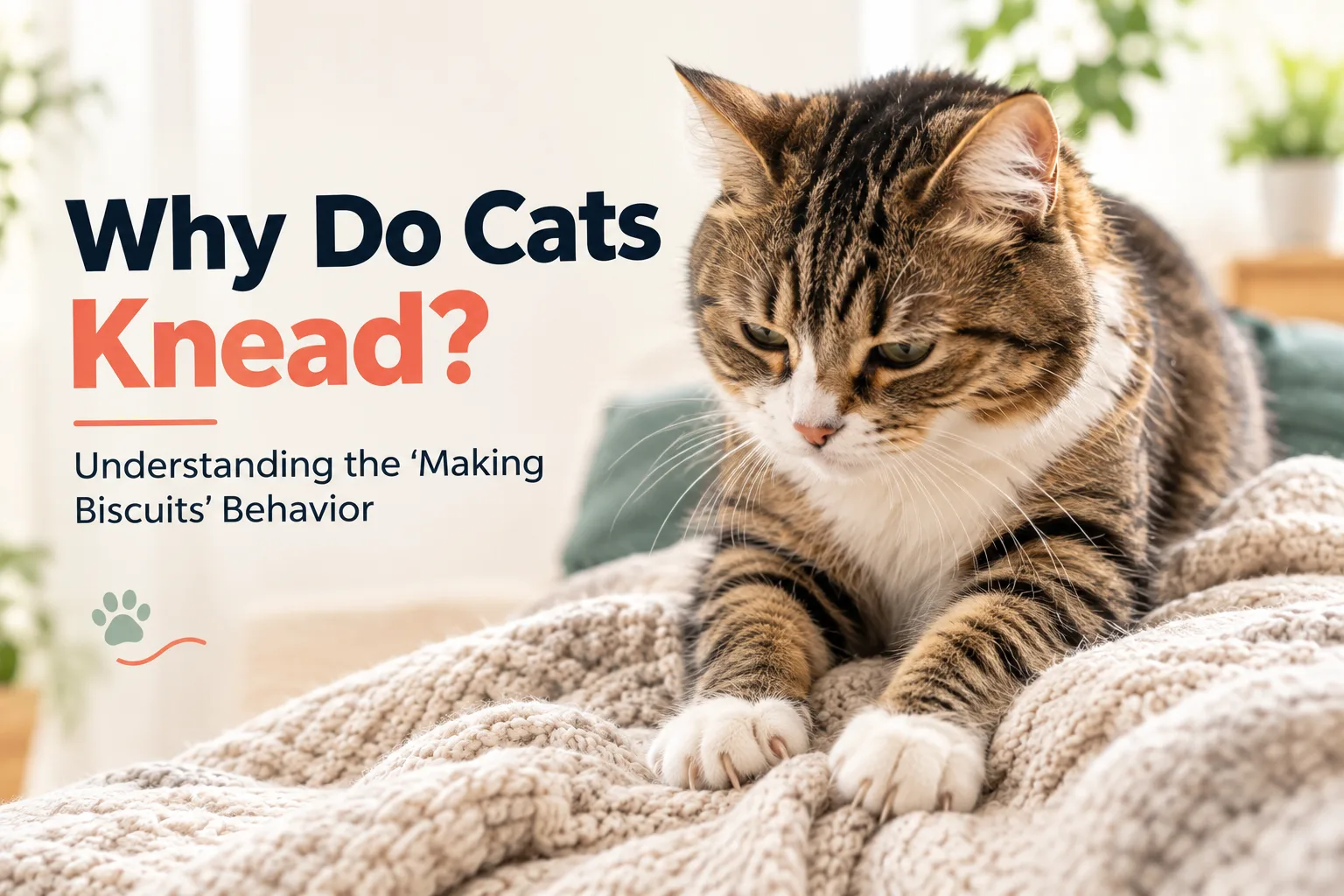
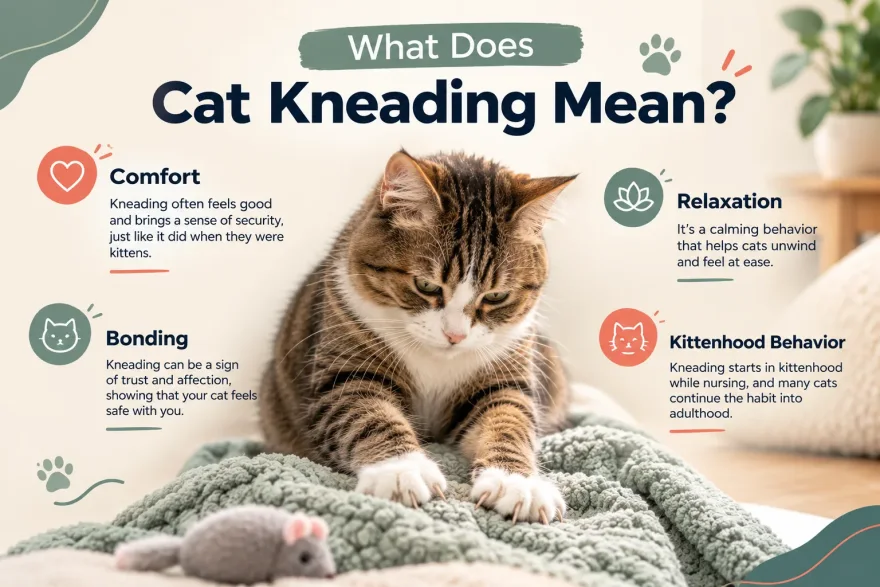
Cats knead mainly because it is a comforting habit carried over from kittenhood. Kittens press their front paws against their mother's belly while nursing, and many cats keep the motion into adulthood. [International Cat Care] Kneading is commonly associated with comfort, relaxation and feeling safe in familiar surroundings, which is why you most often see it on a lap, a soft blanket or a favorite bed.
Most people know it as making biscuits, because the rhythmic push of the paws looks like a baker working dough. There is no single proven explanation, and the reasons can vary from cat to cat, but in most cases kneading is a normal sign of a relaxed cat rather than a problem. Here is what is actually happening, and the few situations where it is worth a closer look.
Why do cats knead? The real reason
Kneading starts before a kitten can see. Newborns press their front paws against their mother's belly while nursing, and that pressure helps milk let down. [International Cat Care] It is one of the first things a kitten learns to do, and it is tied from the beginning to warmth, food and safety.
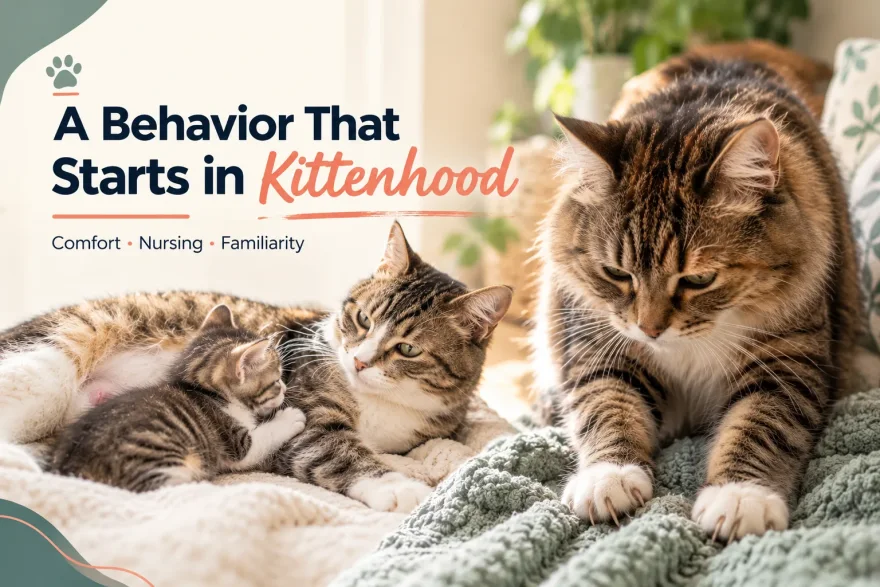
Most cats never let go of it. The behavior stops being about milk and becomes about the feeling that came with it. An adult cat kneading your lap is doing something closer to what a person does when they wrap their hands around a warm mug. International Cat Care notes that a cat kneading your lap is treating you much as it once treated its mother. [International Cat Care]
Kneading is not a request. It is a cat telling you, without meaning to, that nothing here needs guarding.
There are three things going on at once:
- Comfort. The motion is self-soothing, which is why it so often comes with purring, half-closed eyes and a cat who has clearly stopped paying attention to the room.
- Scent marking. Cats have scent glands in their paw pads, the same glands the Cornell Feline Health Center says they use when they scratch. [Cornell Feline Health Center] Every push leaves a trace of them on whatever they are kneading. It is not territorial in the way spraying is; it is closer to putting their name on something.
- Nesting. Wild cats pat down grass and leaves before lying down. A cushion, a folded blanket or your thigh all trigger the same ancient check that the spot is soft enough.
Kittens start kneading within days of being born, before their eyes have even opened. It is one of the first things a cat ever learns to do.
Pummelling, padding, marching: same thing, different names
There is no agreed word for this, which is why searching for it is frustrating. Depending on where you are and who you ask, the same behavior is called:
- Making biscuits, easily the most common online
- Kneading, the term most vets and behaviorists use
- Pummelling or pummelling the dough
- Padding, marching or paddling
- Pushing with their paws, which is what most people type before they know the word
All of them describe one behavior: alternating pressure from the front paws, usually slow, usually accompanied by purring. If you have seen your cat do it, you have seen all of the above.
Why does my cat knead me specifically?
Because kneading is a vulnerable thing to do, and cats do it where they feel least on guard. A cat mid-knead is not watching exits. If yours picks you over the sofa, that is a preference built on the fact that nothing bad has ever happened to them on your lap.
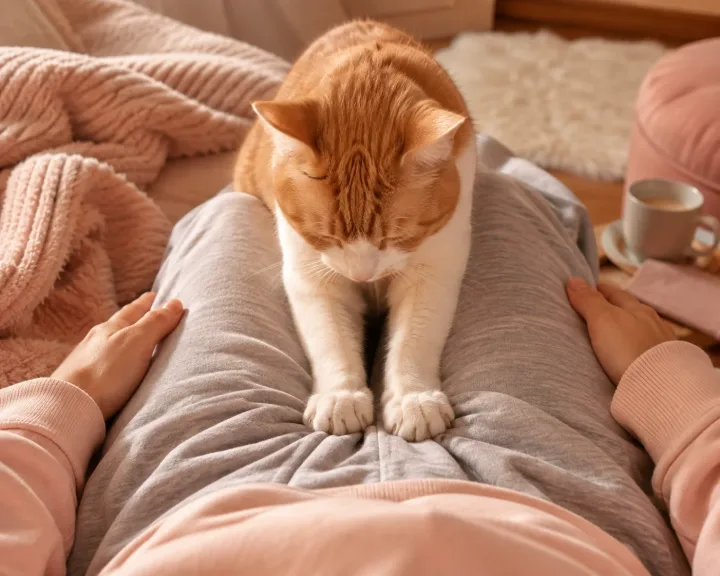
The scent marking matters here too. Cats build a shared group smell with the animals and people they live with, using scent glands on the face and body. [International Cat Care] Kneading is one of the ways they top it up. Head-butting and rubbing along your shins do the same job.
If your own cat never kneads, nothing is wrong, and it is not a verdict on your relationship. Kneading is one of several ways cats show contentment. Slow blinking, sitting with their back to you, and simply choosing the room you are in all say the same thing.
Why does my cat knead blankets and soft fabric?
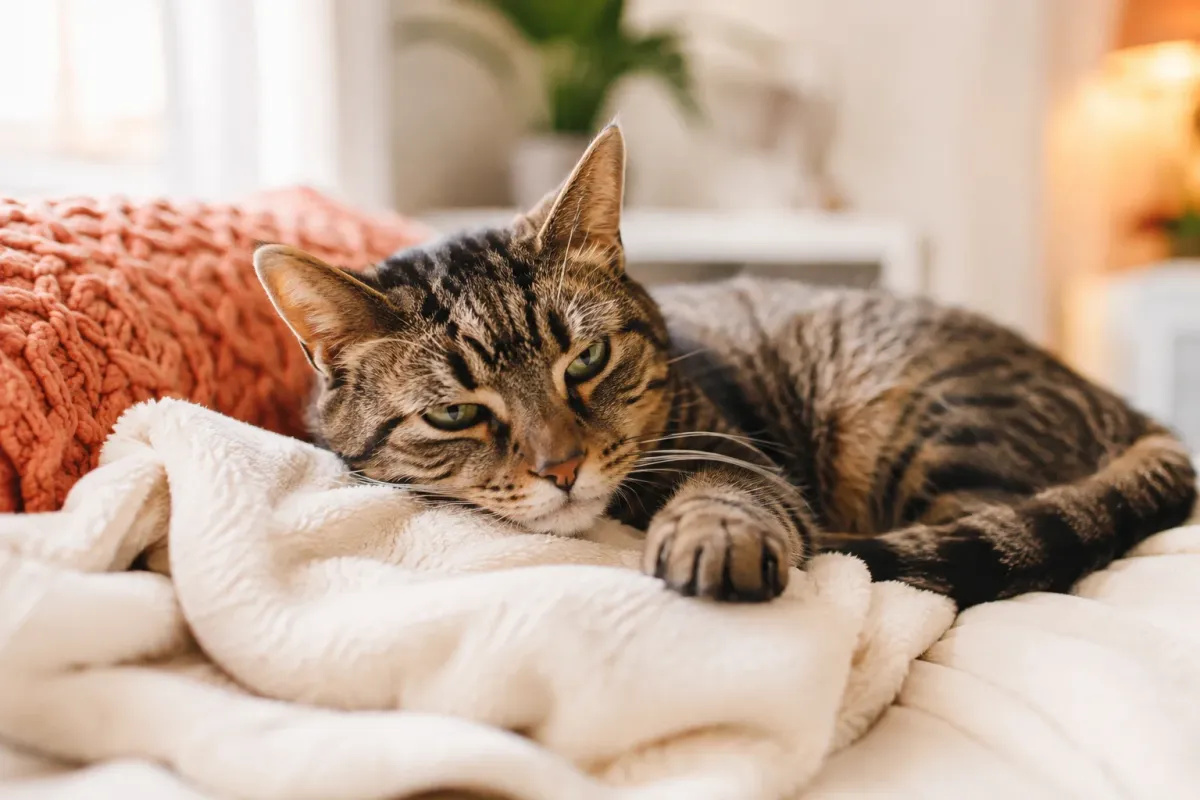
Soft, slightly yielding material is the closest thing in your house to a mother cat. Fleece blankets, wool jumpers, duvets and cushions all get the same response, and it is usually the most enthusiastic kneading you will see.
Some cats add suckling or drooling to it, which International Cat Care ties to a kitten anticipating the milk that kneading used to bring. [International Cat Care] A few take a corner of the fabric into their mouth while their paws work. That combination looks strange but it is a normal part of the same package, and fabric sucking is most often seen in Burmese and Siamese cats. It is worth keeping an eye on only if the cat is swallowing fabric rather than mouthing it, because swallowed fabric can cause a dangerous intestinal blockage. That is a different behavior, called pica, and one to raise with your vet. [Cornell Feline Health Center]
Why does my cat knead with claws out?
Because claws extend and retract as a natural part of the paw flexing, and most cats have no idea they are digging in. It is not aggression, and it is not your cat testing you.
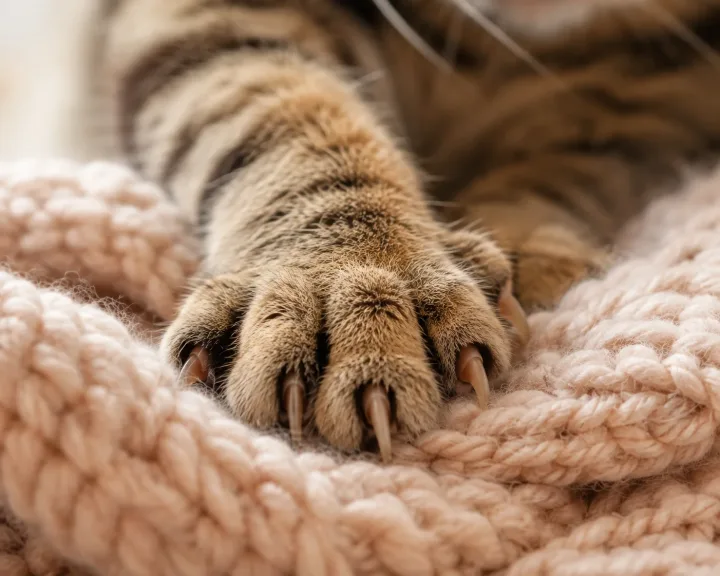
Three things help, in order of how well they work:
- Keep the nails trimmed. A blunt claw on a lap is a completely different experience. Every two to three weeks is typical, and Cornell has a step-by-step guide if you have never done it.
- Put a barrier down. Keep a folded blanket or a cushion where your cat likes to settle and move it onto your lap when they arrive.
- Redirect rather than reject. If it becomes too much, gently lift them onto the blanket beside you instead of pushing them off. Pushing a cat away mid-knead teaches them that settling on you ends badly.
What does not work is punishment of any kind. The cat is not doing anything wrong, and the only lesson available is that your lap is unpredictable. International Cat Care is clear that cats should never be punished for kneading, because it can damage your bond. [International Cat Care]
Why is my kitten making biscuits on me?
Kittens knead more than adults, and more intensely, because for them the behavior is still fresh from nursing. A kitten making biscuits on your arm is running the same routine it ran on its mother a few weeks earlier.
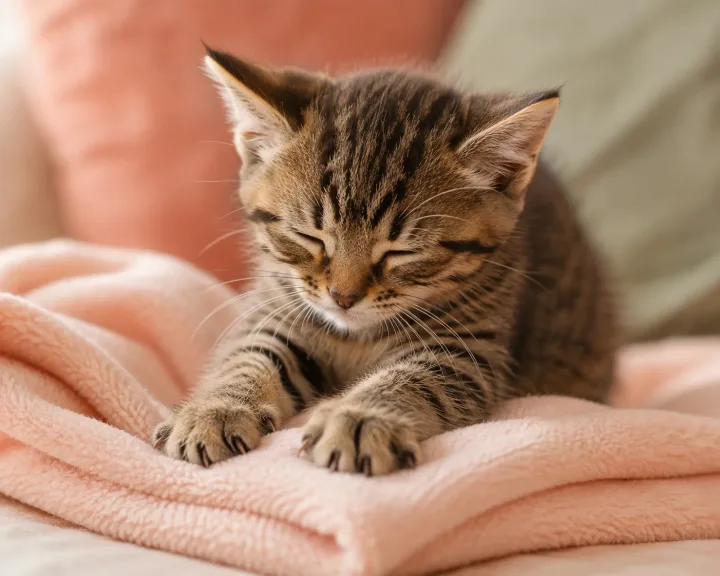
It usually settles down as they mature, though plenty of cats keep it for life. If you have just brought a kitten home, it is one of the earliest signs that they have decided you are safe, and it tends to appear before they will sleep in the open near you.
Kittens change fast in their first year, and knowing roughly where yours is in that stretch makes a lot of their behavior easier to read. Our cat age calculator converts an age into human years and tells you which life stage they are in and what that stage changes about their care.
When cats knead most
Whatever the trigger, it nearly always arrives with the same conditions:
- Settling down, rather than mid-play
- Being stroked, or lying against you
- On something soft: a blanket, a cushion, a lap
- Somewhere they are not watching the door
Every cat is different. Some knead daily, others a handful of times a year, and neither says anything about how attached they are.
Why do cats knead at night?
Evening is usually when the house goes quiet and the cat finally settles, and settling is exactly the state that brings kneading out. There is nothing nocturnal or strange about it.
Cats are crepuscular, which means they are naturally most active around dawn and dusk. A burst of energy in the evening followed by a long, kneading wind-down on your lap is the normal shape of a cat's day, not a sleep problem.
What does kneading mean in different situations?
Cats can knead for slightly different reasons depending on what is happening around them. Here is what the behavior may mean:
| When your cat kneads | What it may mean |
|---|---|
| Kneading your lap | Comfort, relaxation, or bonding |
| Kneading a blanket | Self-soothing and comfort |
| Kneading while purring | Often a sign of relaxation |
| Kneading with claws out | Normal part of the paw movement |
| Kneading and suckling a blanket | A kitten-like comfort behavior |
| Suddenly kneading much more than usual | Consider whether other behavior or health changes are present |
Every cat is different, so kneading does not always have one single meaning. Look at your cat's body language and the situation around the behavior. Our guide to the signs your cat is happy shows what relaxed, content body language looks like.
When should you be concerned about your cat's kneading?
Kneading is usually a normal and harmless behavior, at every age and in every breed. However, if your cat's kneading suddenly changes or happens alongside other unusual behaviors, it may be worth paying closer attention. Cats hide discomfort extremely well, and a shift in any habit is often the first visible sign that something is wrong: the ASPCA notes that many changes in behavior are signs of treatable medical problems and advises reporting them to your vet. [ASPCA]
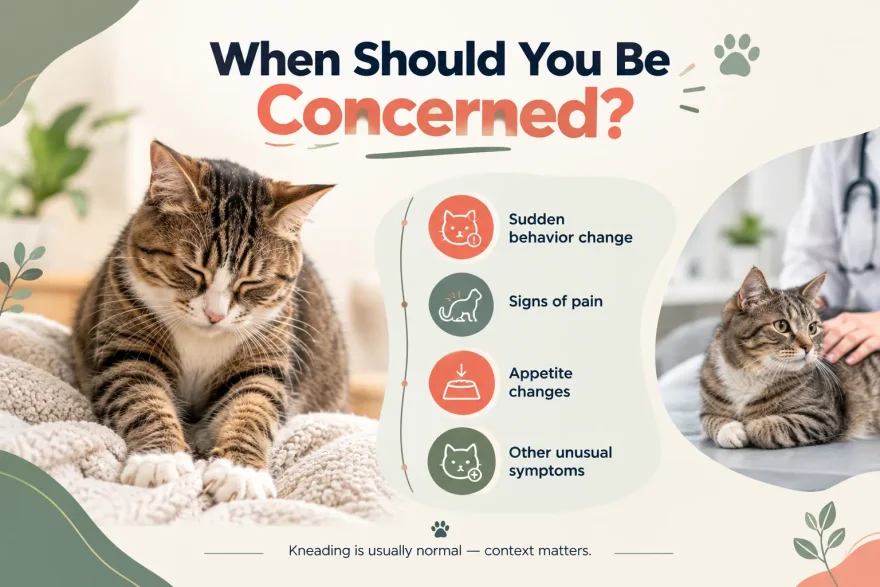
Consider speaking with your veterinarian if kneading is accompanied by:
- Signs of pain or discomfort, such as flinching when touched in a particular spot
- Hiding more than usual, or a sudden drop in how much they seek you out
- Changes in appetite or in how much they drink
- Excessive licking or grooming, especially of one area until the fur thins
- Changes in litter-box habits
- Vocalizing or becoming unusually restless
- A sudden major change in normal behavior
Kneading by itself usually isn't a reason for concern. The important thing is whether it occurs together with other changes in your cat's health or behavior: the kneading is not the symptom, the change is. Our guide to the early signs a cat is unwell covers the ones that show up first.
If you have only just brought a cat home and are still learning what is normal versus worth a call to the vet, our complete guide for new cat owners covers the basics beyond behavior too.
Frequently asked questions
Why do cats make biscuits?
Making biscuits is the same behavior as kneading, named after the way the paws push like a baker working dough. Kittens do it to stimulate milk from their mother, and adult cats keep it as a self-soothing habit tied to feeling safe.
Why does my cat knead me and not anyone else?
Because you are the person they associate with safety. Kneading is a vulnerable, relaxed behavior, and cats do it where they feel least on guard. Scent marking plays a part too: the glands in their paw pads leave your smell mixed with theirs.
Why does my cat knead with claws out?
It is not aggression. Claws extend and retract naturally as the paw flexes, and most cats are not aware they are digging in. Keep nails trimmed and put a folded blanket on your lap rather than pushing your cat away, which teaches them that affection ends badly.
Why do cats knead blankets?
Soft fabric feels similar to a mother cat, so blankets, cushions and jumpers all trigger the same response. Cats often pair it with purring, drooling or suckling the fabric, which are all part of the same comfort behavior.
Why do cats knead at night?
Evenings are usually when the house is quiet and the cat settles down with you, which is exactly the state that brings the behavior out. Cats are also crepuscular, so a burst of activity followed by settling in is a normal rhythm rather than a problem.
Should I stop my cat from kneading?
No. It is a normal, healthy sign of contentment. If the claws hurt, manage the claws rather than the behavior: trim them regularly and use a barrier. Stopping a cat mid-knead teaches nothing except that settling on you is unwelcome.
Is kneading ever a sign of a problem?
Rarely. Kneading itself is normal at any age. What is worth a vet visit is a sudden change in any behavior alongside other signs: hiding, appetite changes, over-grooming the same spot, or vocalising when touched. The kneading is not the symptom, the change is.
Do all cats knead?
No, and a cat that never kneads is not unhappy or unbonded. It is one of several ways cats show contentment, alongside slow blinking, head-butting, purring and simply choosing to sit near you.
Why does my cat knead and purr at the same time?
Both behaviors start in the same place: kittens knead and purr together while nursing. In an adult cat the pair usually means deep relaxation. Purring alone is not always a sign of contentment, since cats can also purr when stressed or unwell, so look at the whole picture: a loose body, half-closed eyes and a cat settling in are the reassuring signs.
Why does my cat knead and suck on blankets?
Suckling fabric while kneading is a kitten-like comfort behavior, and the Cornell Feline Health Center notes it is most often seen in Burmese and Siamese cats. Gentle sucking is harmless. Chewing holes in fabric or swallowing it is different and worth raising with your vet, because swallowed fabric can cause a blockage.
Why does my cat knead before lying down?
A common explanation is that it echoes wild ancestors patting down grass or leaves to make a safe, comfortable spot to rest. The scent glands in the paw pads also leave the cat's own smell on the spot. Either way, a few pats before settling is a normal part of getting comfortable.
Sources
- International Cat Care: Why do cats…? Kneading as a leftover of nursing, drooling while kneading, group scent, and why cats should never be punished for it.
- Cornell Feline Health Center: Destructive Behavior Scent glands in the paws, fabric sucking in Burmese and Siamese cats, the risk of swallowed fabric, and trimming claws safely.
- ASPCA: Older Cats with Behavior Problems Behavior changes as signs of treatable medical problems, and reporting them to your vet.
General information, not veterinary advice. If your cat's behavior has changed suddenly, speak to a vet rather than an article.
How this guide was researched and checked is set out in how our guides are written.

Want an answer in seconds?
The calculators handle age, due dates and portions without an account.