Can Cats Eat Bread? A Safe Feeding Guide

On this page
Bread is one of the most common household foods a cat ends up tasting by accident: a dropped crust, a corner pulled off a sandwich, a slice left within reach on the counter. Whether that is actually a problem depends almost entirely on one detail, and it is not the type of flour or whether it is white or wheat. It is whether the bread has been baked.
Baked bread and raw bread dough behave completely differently once they reach a cat's stomach, and mixing the two up is where most of the real risk in this topic comes from. One is low-value but mostly harmless. The other is a genuine emergency. This guide is written from published veterinary sources, named and linked as they come up and listed again at the bottom.
Is bread safe for cats?
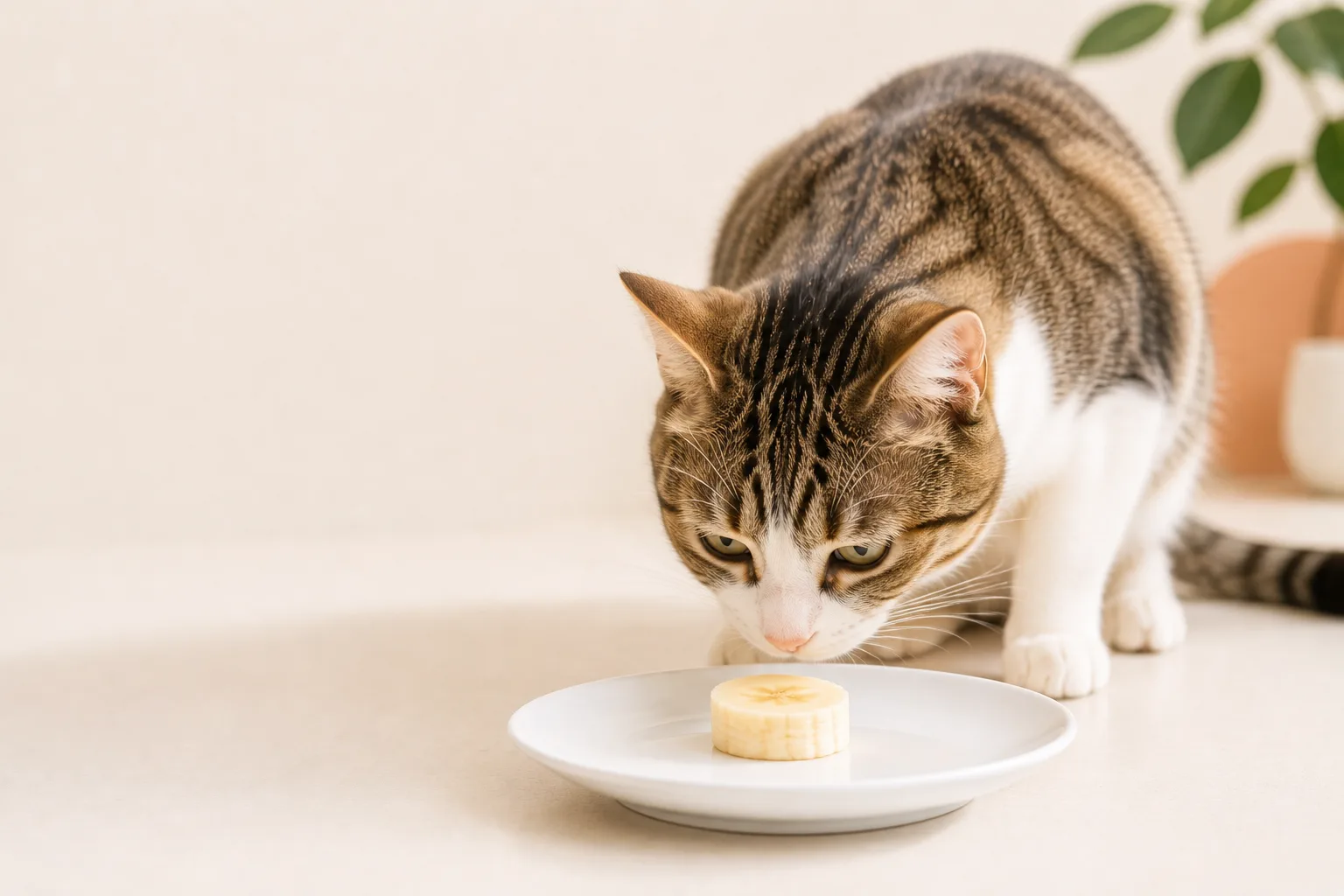
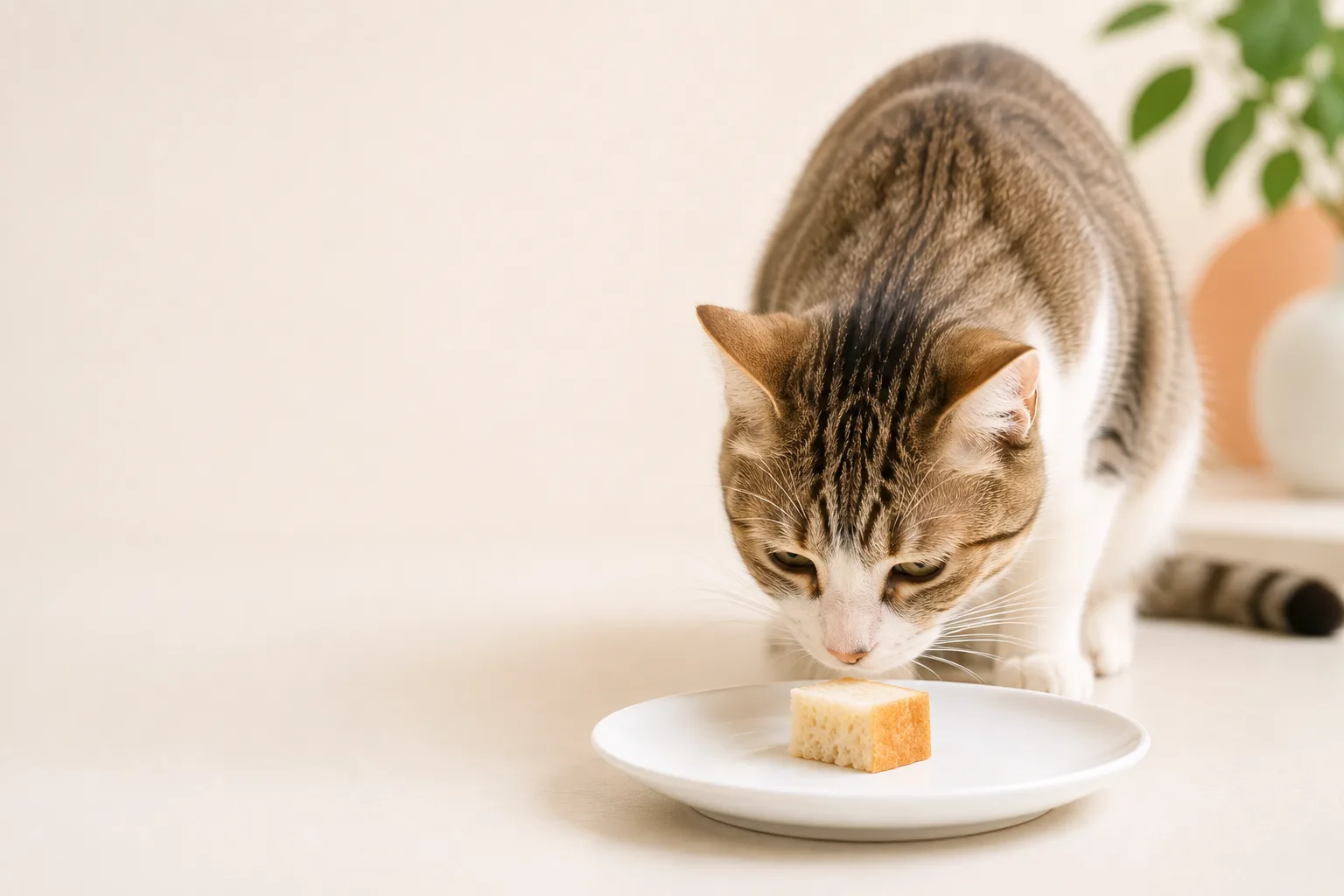
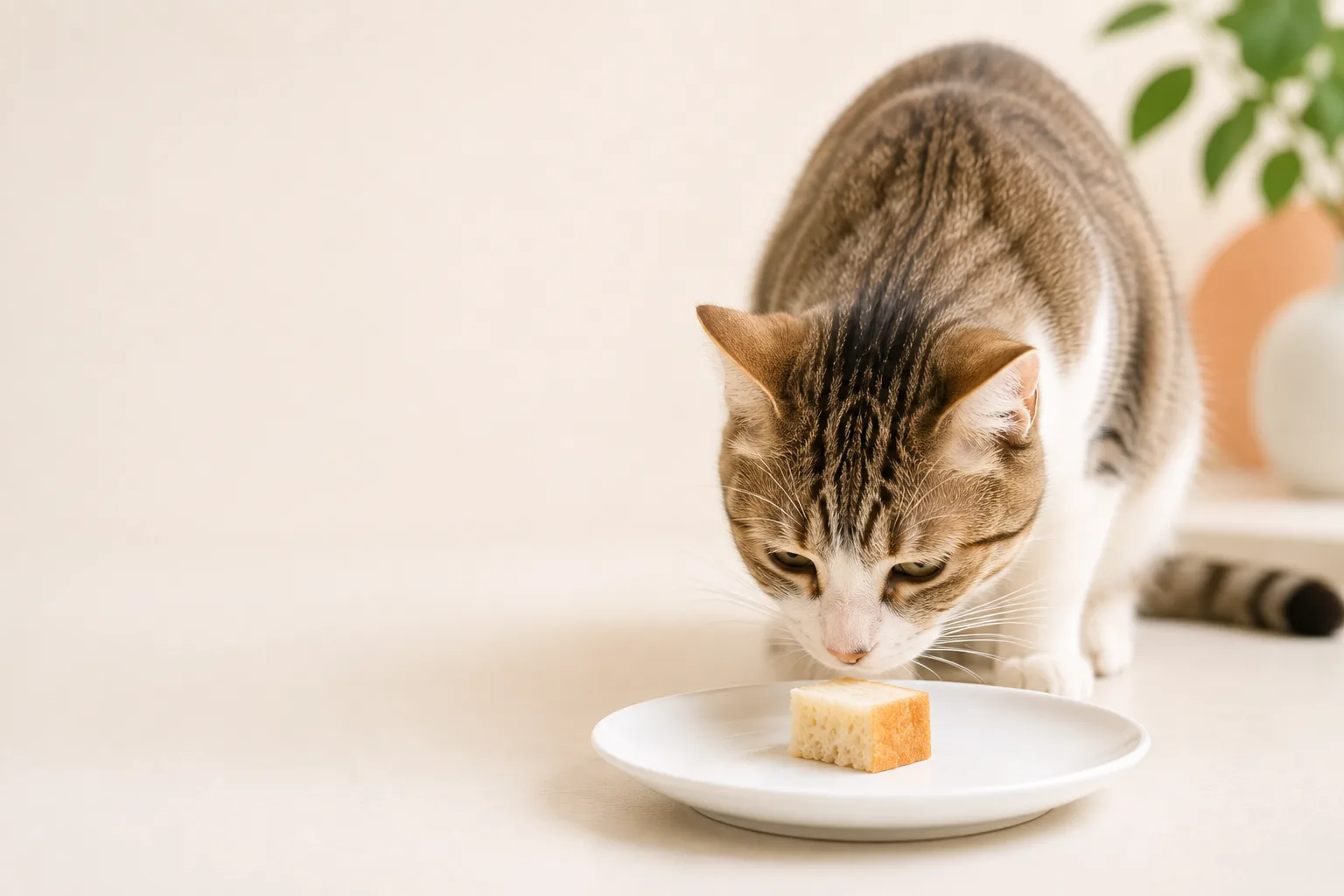
Plain, fully baked bread, white or wheat, with no seasoning and no mixed-in extras like raisins, garlic or onion, is not toxic to cats in small amounts. That said, it is not a food worth offering on purpose. Cats are obligate carnivores, and bread has no real nutritional value for them: it is essentially empty carbohydrate calories, offering none of the protein, taurine or fat a cat's diet actually needs. A small bite eaten occasionally, dropped on the floor and snapped up before anyone can stop it, will not hurt most healthy cats. It belongs in the "harmless if it happens" category rather than the "treat to give on purpose" one.
Bread is also calorie-dense for what little it offers in return. A cat that regularly gets bread as a treat is taking in extra calories with no nutritional upside, which over time contributes to unnecessary weight gain. A piece of cooked chicken or fish gives a similar-sized treat with real protein value attached. Bread simply does not, so even where it is not dangerous, it is rarely a good choice.
None of this makes bread a food to worry about the way some other kitchen items are. The point is simply that "not toxic" and "worth feeding" are two different questions, and for plain baked bread the answer to the first is yes while the answer to the second is not really.
Why raw dough is a real emergency
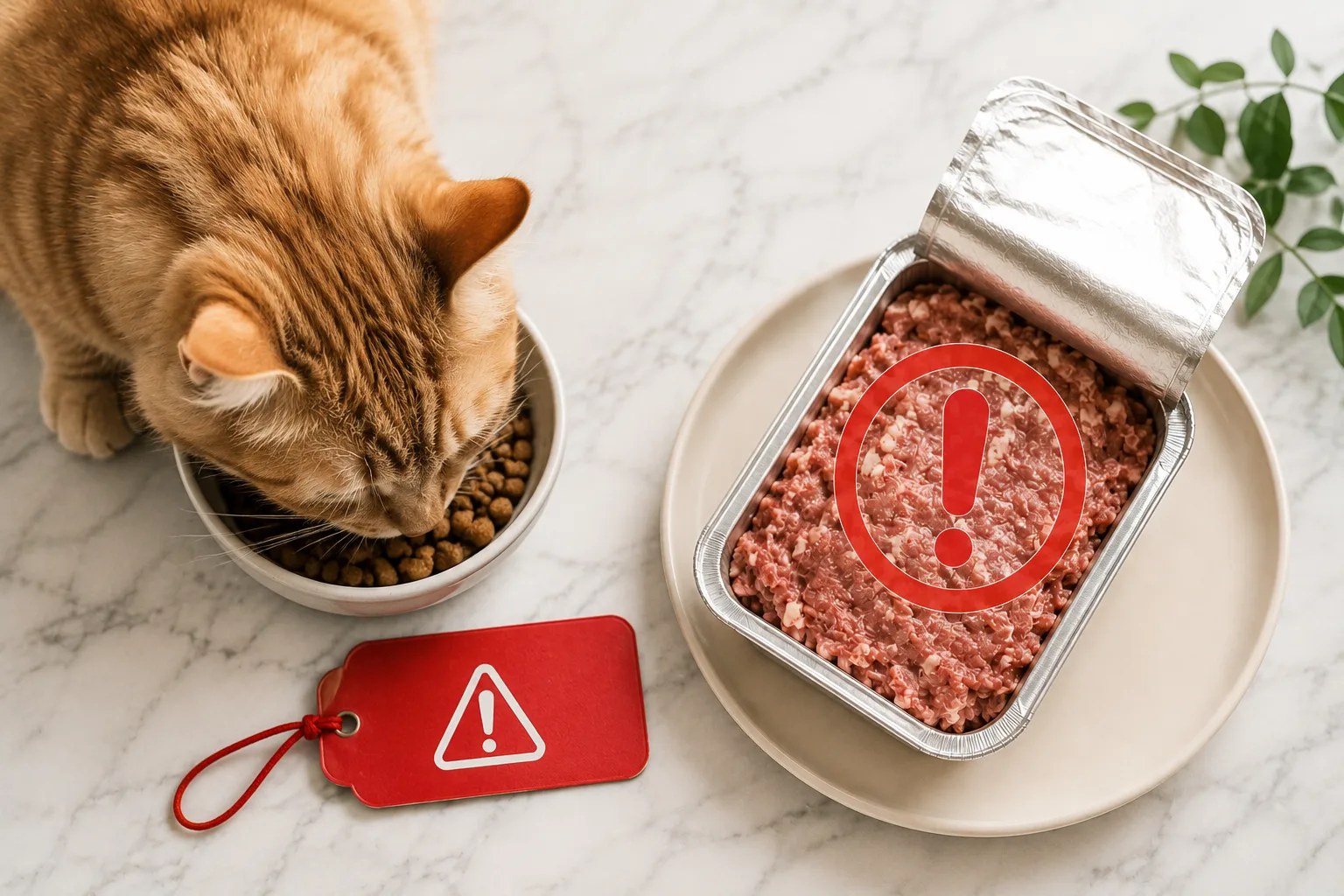
Raw, unbaked yeast dough is a completely different situation from baked bread, and it needs to be treated as a genuine emergency, not a minor food safety concern. This is the single most important thing to know in this entire guide.
Once a cat swallows raw dough, the warm, moist environment inside its stomach is close to ideal for the yeast that is still alive in it, and fermentation simply keeps going. That process produces ethanol as a byproduct, which the cat then absorbs into its bloodstream. This can cause real alcohol toxicosis, meaning actual alcohol poisoning, not a minor stomach ache.
At the same time, the same fermentation that produces ethanol also produces gas, so the mass of dough continues to expand and rise inside the stomach the way it would on a counter, except now it is doing so inside a small animal's abdomen. That expansion can cause severe, painful bloating, and in serious cases it progresses to a life-threatening gastric obstruction or even a rupture of the stomach wall, sometimes requiring emergency surgery to correct. This combination, alcohol poisoning on one hand and physical obstruction or rupture on the other, is well documented by veterinary toxicology sources, including ASPCA Animal Poison Control.
If a cat eats raw dough, this is an emergency. Call an emergency vet immediately rather than waiting to see if symptoms appear.
The danger here has nothing to do with quantity in the way many other food risks do. It is not about a large piece versus a small one. Any amount of raw, unbaked dough that has active yeast in it can start this process, which is exactly why raw dough gets treated as an emergency call rather than a wait-and-watch situation the way a small bite of baked bread would be.
Do not try to manage this at home or wait to see whether a cat "seems fine." Fermentation and gas production continue inside the stomach regardless of how the cat looks in the first few minutes, so the safe move is professional care as soon as possible, not a watch-and-wait approach.
What about raisin or garlic bread?
Avoid these entirely, regardless of the raw dough issue above and regardless of how small the piece is. Both carry risks that have nothing to do with whether the bread was baked.
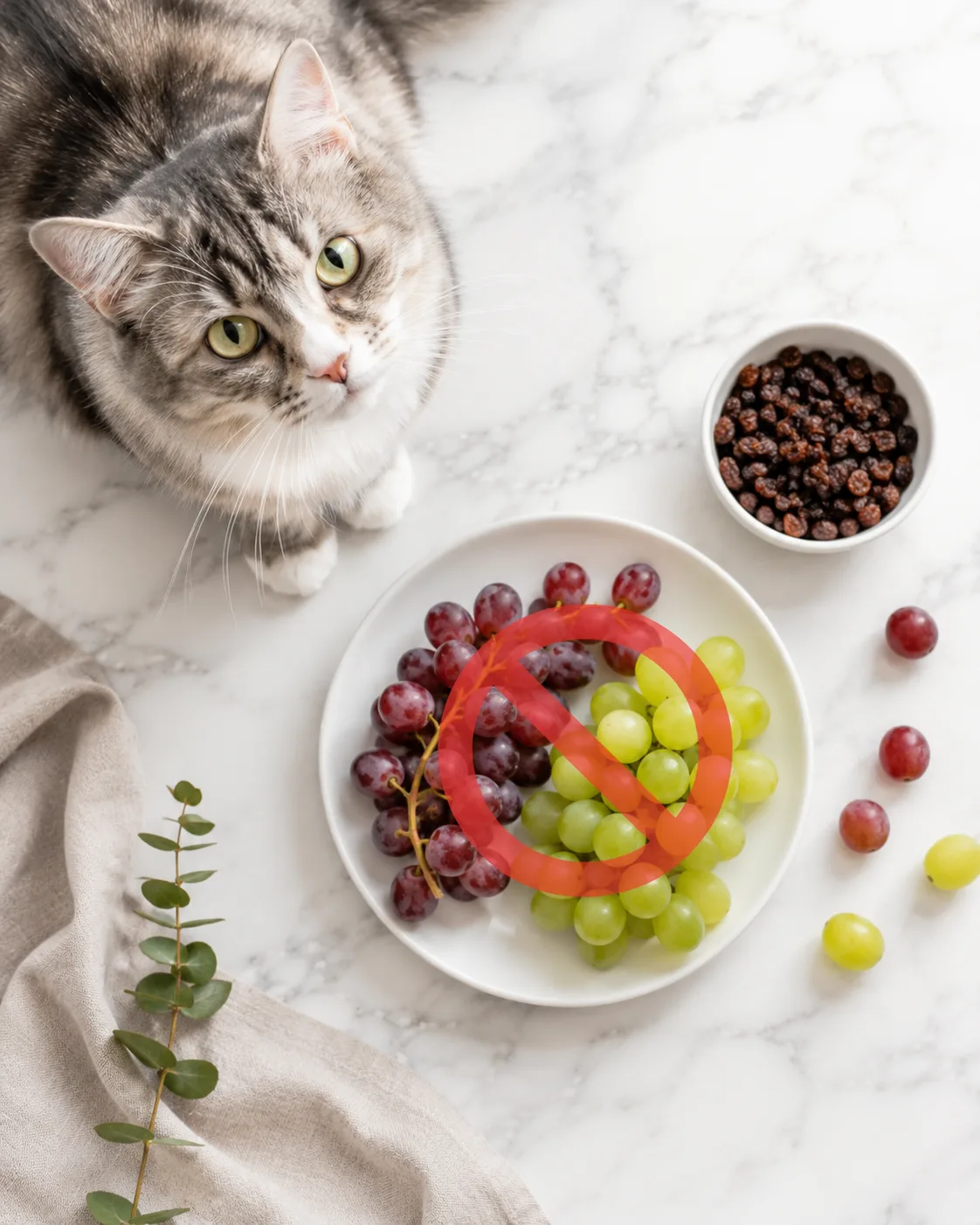
Raisin bread carries the same danger as grapes and raisins on their own, which the ASPCA lists among foods to keep from pets, and which our guide to grapes and raisins covers in depth: they are linked to acute kidney injury in cats, and there is no known safe amount, so there is no small-portion exception to fall back on. Garlic bread and onion-flavored breads are dangerous for a separate reason. Onion and garlic, in any form, damage a cat's red blood cells and can cause anemia, even in small amounts and even after cooking.
Neither of these risks is about quantity the way ordinary bread's low-value-but-not-dangerous profile is. Both should be kept away from a cat completely, not just limited to large portions or frequent servings. It is worth checking the ingredient list on any loaf, roll or slice before assuming it falls into the same low-risk category as plain bread, since raisins, garlic and onion are common additions that are easy to miss at a glance.
Can bread upset a cat's stomach?
It can, in some cats, though it is far from universal. A minority of cats show mild sensitivity to gluten or wheat, which usually shows up as soft stool or mild digestive upset after eating bread or other wheat-based foods. A true, diagnosed grain allergy is considerably less common in cats than pet food marketing tends to suggest, and grain-free labeling is often more about marketing than about a widespread medical need.
For most cats, an occasional small bite of plain bread will not cause any digestive issues at all. If a particular cat does seem to react to bread with soft stool or obvious discomfort, that is a reason to simply stop offering it rather than a sign of a broader health problem.
How much bread is safe?
A small bite of plain, fully baked bread, given occasionally and by accident more than on purpose, is low risk for most healthy cats. It is still not worth making a habit of, since it adds calories without adding anything nutritionally useful, and a cat gets nothing from it that a protein-based treat would not do better. Raw dough is the one version of this food that is never acceptable in any amount and always warrants an emergency call.
Raisin bread and garlic or onion bread should be avoided outright as well, for reasons that have nothing to do with portion size. Treats and extras are generally kept under about ten percent of a cat's daily calories. Our feeding guide covers how to work out a cat's daily calorie total so extras like this stay in proportion.
What actually happens inside a cat's stomach when dough rises?
A cat's stomach is warm and moist, which happens to be close to ideal conditions for yeast to keep fermenting after it has been swallowed. The Merck Veterinary Manual describes the process plainly: yeast replication expands the dough in the stomach while producing ethanol as a byproduct of fermentation, so the same lump of dough is generating two separate problems from the same reaction.
The expansion problem shows up first, usually as unproductive retching, abdominal distension and lethargy, since a stomach full of still-expanding dough cannot easily be emptied by vomiting. The ethanol problem follows as more of it is absorbed: ataxia and disorientation, then progressing toward profound depression of the nervous system, weakness, low blood sugar, a dangerously low body temperature, and in severe cases seizures or coma. Veterinary treatment often involves flushing the stomach with cold water specifically because cold slows the rate of yeast fermentation, which buys time while the dough itself is removed.
None of this applies to bread that has already been baked. Baking kills the yeast and the reaction is over, which is the entire difference between "a slice of bread is a low-risk extra" and "raw dough is a same-day emergency call."
This guide goes into more depth than Can Cats Eat Grains and Seeds?, which compares the whole group side by side.
Frequently asked questions
Can cats eat bread?
A small bite of plain, fully baked bread, white or wheat with no seasoning or mixed-in extras, is not toxic to cats. It has no real nutritional value for a cat, though, so it is best treated as harmless if it happens by accident rather than something worth offering on purpose.
What happens if a cat eats raw bread dough?
This is a genuine emergency. The warm, moist environment of a cat's stomach lets the yeast in raw dough keep fermenting, which produces ethanol that the cat absorbs and that can cause real alcohol toxicosis. The same fermentation also produces gas, so the dough keeps expanding inside the stomach, which can cause severe bloating and in serious cases a life-threatening obstruction or rupture. Call an emergency vet immediately if this happens.
Is raisin bread or garlic bread safe for cats?
No, avoid both entirely. Raisin bread carries the same risk as grapes and raisins on their own, which are linked to acute kidney injury in cats with no known safe amount. Garlic bread and onion-flavored breads can damage a cat's red blood cells and cause anemia even in small amounts, so both should be kept away from cats completely.
Can bread give a cat an upset stomach?
Some cats show mild sensitivity to gluten or wheat, which can show up as soft stool or mild digestive upset after eating bread. A true, diagnosed grain allergy is less common in cats than marketing often suggests, though, and most cats will not react to an occasional small bite of plain bread at all.
How much bread can I give my cat?
Keep it to an occasional accidental bite rather than a regular treat, since bread adds calories without any real nutritional benefit. Treats and extras are generally kept under about ten percent of a cat's daily calories, and our feeding guide covers how to work out a cat's daily calorie total so occasional bites like this stay in proportion.
Why is raw bread dough more dangerous than baked bread?
Raw dough keeps fermenting in a cat's warm stomach, expanding in size while producing ethanol as a byproduct. That combination causes both a physical obstruction risk and genuine alcohol poisoning. Baking kills the yeast before it ever reaches the cat, which is why baked bread carries none of that risk.
Sources
- Merck Veterinary Manual: Bread Dough Toxicosis in Animals How raw yeast dough expands in the stomach and produces ethanol.
- ASPCApro: Ethanol and Yeast Dough Intoxications ASPCA Animal Poison Control guidance on dough and alcohol poisoning.
- ASPCA: People Foods to Avoid Feeding Your Pets Grapes, raisins, onion, garlic and yeast dough.
- Cornell Feline Health Center: Feeding Your Cat Why cats are obligate carnivores.
General information, not veterinary advice. If your cat's behavior has changed suddenly, speak to a vet rather than an article.
How this guide was researched and checked is set out in how our guides are written.

Want an answer in seconds?
The calculators handle age, due dates and portions without an account.