Can Cats Eat Ham? What the Sodium Numbers Actually Say
 By Ahsan Nawaz
Published:
By Ahsan Nawaz
Published:
On this page
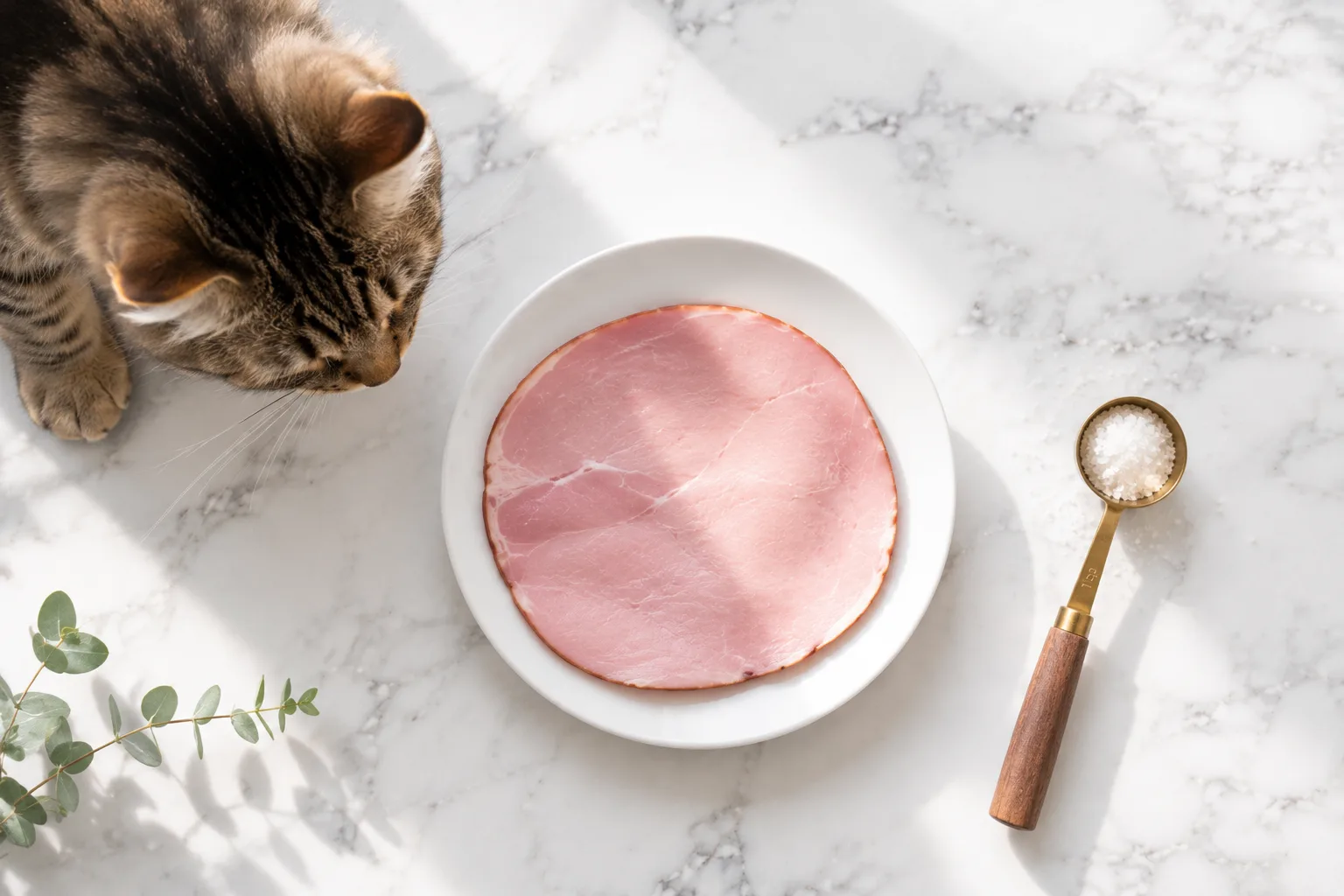
People ask whether cats can eat ham in one of two moments: a cat has just stolen a slice, or a joint is on the counter. Ham is not toxic to cats. It appears on no poison list published by the ASPCA Animal Poison Control Center, Pet Poison Helpline or the Merck Veterinary Manual, and one small piece of plain cooked ham is unlikely to hurt a healthy cat.
Ham as a routine food is another question, and there the answer is no, for reasons that are arithmetic rather than dramatic. This page prints the figures most pages leave out: a cat's real daily sodium and calorie budget, what each ham costs against it, and which part of a ham is genuinely dangerous. It is not the part you are usually warned about.
Is ham toxic to cats, or just a bad routine food?
Ham is not toxic, and that is worth saying plainly. Cured pork contains no compound with a known feline toxic dose. The ASPCA's list of people foods to avoid does not name ham, deli meat or bacon. Pet Poison Helpline's salt page lists salt dough, play dough, paintballs, de-icer and sea water as exposure sources, not lunch meat. Merck's salt toxicosis chapter does not mention ham either, and does not discuss cats at all. Ham simply fits a cat badly on four measurable counts: too much sodium against a small daily requirement, too many calories against a tiny treat allowance, almost no taurine compared with plain poultry, and, in processed hams, added inorganic phosphate that is close to fully absorbable.
The genuinely hazardous part of a ham is not the meat. It is whatever was rubbed or brushed onto the outside, because onion and garlic powder are standard in glazes and rubs, and alliums are among the few foods with a documented feline toxic dose. Our toxic foods guide covers that group, and the meat and seafood guide sets ham against meats that suit cats better.
How much sodium is in ham, and how much does a cat need?
A cat needs far less sodium than a slice of ham contains, but the honest comparison is more useful than the alarming one. AAFCO's Cat Food Nutrient Profiles set the sodium minimum for growth and adult maintenance at 0.5 g per 1000 kcal of metabolisable energy, or 0.2 percent of dry matter, and set no maximum at all, reasoning that a food would turn unpalatable before its salt did harm.
Merck gives resting energy requirement as 70 multiplied by body weight in kilograms to the power of 0.75, with a healthy neutered adult at about 1.2 times that. A 4.5 kg cat needs roughly 240 to 260 kcal a day, so the AAFCO minimum is about 120 mg of sodium. Our cat calorie calculator does that step for your own cat.
The part nearly every competing page omits is that cats do not eat the minimum. The control diet in a five year feline salt study delivered 1.02 g of sodium per 1000 kcal, about 245 mg a day for that cat, and the food those cats ate beforehand 2.3 g, about 550 mg a day. A healthy cat already takes in two to four and a half times the AAFCO minimum.
USDA figures per 100 g: sliced deli ham 814 to 945 mg of sodium, honey smoked ham 900 mg, cured boneless ham roasted off the joint 1500 mg, canned chopped ham 1280 mg, Spam 1410 mg, dry cured country style ham 2700 mg. A 28 g slice of ordinary ham carries about 228 mg, a 13 g thin deli slice about 123 mg. So one slice does not exceed a whole day's salt in any dangerous sense: it roughly doubles that day's sodium. USDA's low sodium cured ham still measures 969 mg per 100 g, so low sodium ham is not low sodium in cat terms.
How much ham can a cat eat, and how often?
Less than almost every other page on this subject says, and the binding constraint is calories rather than salt. WSAVA's owner handout sets the rule that treats should make up less than 10 percent of a cat's daily calories, and publishes the ceiling by body weight: 18 kcal a day for a 2.5 kg cat, 22 for a 4 kg cat, 24 for a 4.5 kg cat, 25 for 5 kg and 28 for 7 kg. The same handout lists ham at 46 kcal per 1 oz, 28 g, serving. Side by side, those two figures from one document say something blunt: one ordinary slice of ham is roughly double a 4.5 kg cat's entire daily treat allowance, before anyone mentions sodium.
So can cats eat ham as a regular treat? The popular portion advice does not survive that check. The most repeated recommendation on this topic is a 1 inch cube two or three times a week. A 1 inch cube weighs about 16 g, which is roughly 26 to 28 kcal and 130 to 150 mg of sodium, so one cube meets or exceeds the whole day's treat budget. Rival advice ranges from pea sized to fingernail sized pieces, an eight to ten fold spread, and none of it shows its working.
If you give ham at all, a piece of 2 to 3 g, roughly a fingertip, costs about 4 to 5 kcal and 20 to 25 mg of sodium. Give it occasionally, and subtract it from meals rather than adding it on top. The treats and snacks guide and our page on how much to feed a cat cover that accounting, and the cat weight checker tells you which row of the WSAVA table your cat is on.
One habit deserves a warning. Ham is a popular vehicle for hiding tablets, and a cat medicated in ham twice a day takes in hundreds of milligrams of extra sodium daily, indefinitely, which is a different exposure from a stolen scrap. Ask your vet about a pill pocket or a compounded liquid.
Can cats eat deli ham, lunch meat or sliced ham?
Deli ham is the least bad ham per gram, and still not a food to lean on. USDA lists pre-packaged sliced deli ham at 96 percent fat free as 945 mg of sodium, 107 kcal and 4 g of fat per 100 g, with a thin slice weighing 13 g. That slice is 123 mg of sodium and 14 kcal, so it fits inside a 4.5 kg cat's treat calories. Regular sliced ham at 11 percent fat is 814 mg of sodium and 164 kcal per 100 g, and its 28 g slice does not.
Two things ride along with lunch meat. The first is water and phosphate: products labelled ham with water added, or ham and water product, are pumped with a brine that usually contains phosphate salts. Measured work on cooked ham found 169 mg of inorganic phosphorus per 100 g in ham made with phosphorus preservatives against 102 mg in ham made without, a 66 percent increase, and inorganic phosphate from additives is close to 100 percent absorbable where the natural phosphorus in meat is only 40 to 60 percent absorbed. That is the most relevant number on the label for a cat with kidney disease.
The second is habit. Deli ham is pre-sliced and easy to hand over daily, which is what turns a harmless scrap into a chronic load: the problem is the schedule, not the slice. The junk food guide covers that category.
Can cats eat honey baked ham or glazed ham?
No, and this is the one form of ham that carries a documented feline toxin. It is not the sugar and not the salt. It is the onion and garlic powder in the glaze.
The Merck Veterinary Manual is explicit: eating raw, cooked or concentrated onion and garlic can cause Heinz body haemolytic anaemia, cats are the most susceptible species, and toxicosis is most often associated with concentrated forms such as dehydrated flakes, powders and dry soup mixes. Merck puts the feline threshold at less than a teaspoon of cooked onion, or 5 g of raw onion per kilogram of body weight, against 15 to 30 g per kilogram in dogs, making cats roughly three to six times more sensitive by weight. Garlic is three to five times more toxic than onion, and VCA notes that one teaspoon of garlic powder equals eight cloves of fresh garlic.
Working from Merck's own figures, a threshold dose for a 4.5 kg cat lands near a quarter of a teaspoon of garlic powder. That is derived from published thresholds rather than a published feline figure, so treat it as an order of magnitude. Be fair about the meat, too: a typical glaze uses about half a teaspoon each of garlic and onion powder across a three to five kilogram joint, so one slice carries a trivial fraction. The realistic hazard is concentrated glaze: the sticky crust, the drip pan, the roasting tin a cat licks out, the plate left on the table.
The sugar is pure cost, because cats cannot taste sweetness at all. The gene for one half of the sweet receptor, Tas1r2, carries a 247 base pair deletion in exon three plus stop codons in exons four and six, leaving it an unexpressed pseudogene in domestic cats, tigers and cheetahs. Your cat is drawn to ham by salt, fat and smell, never the honey. Our sweets guide covers sugary human food.
Can cats eat prosciutto, serrano or other dry cured ham?
Dry cured ham is the worst category for cats, and the reason is sodium rather than the raw meat worries most articles reach for first. USDA's country style dry cured ham measures 2700 mg of sodium per 100 g, roughly three times ordinary deli ham. A 28 g slice is about 756 mg, more than a healthy 4.5 kg cat takes in from a whole day of its own food. Prosciutto and serrano sit in that class: figures for Prosciutto di Parma cluster around 2000 to 2700 mg per 100 g and jamon serrano may contain up to 15 percent salt, though the USDA country ham figure is the verifiable anchor.
The microbiological question is legitimate, since these hams are cured rather than cooked, but it is smaller than the salt problem. Surveillance of uncooked slow dry cured ham finds low Listeria monocytogenes prevalence, with counts below 100 CFU per gram where measured, and Salmonella takes about 122 days of curing to be inactivated, so briefly cured product is the concern.
The pathogen worth real attention is Toxoplasma gondii, because cats are its definitive host and the consequence lands on the household as much as the cat. One study detected T. gondii in 26 of 38 raw hams from seropositive pigs, at low parasite burden, and viability depends on curing period, salt and temperature together: no viable parasites were found in Parma ham after 14 months of curing.
Long aged product is very probably clear; short cured or home cured raw ham is the unknown. Cornell notes that a newly infected cat sheds oocysts in the millions, starting two to three weeks after infection and continuing up to two weeks, and they turn infective one to five days after being passed. That is why litter trays get emptied daily in a house with a pregnant or immunocompromised person.
Can cats eat Spam, canned ham, gammon or bacon?
No to all four, and Spam is the worst single item here. Hormel's label puts a 2 oz, 56 g, serving at 180 kcal, 790 mg of sodium and 16 g of fat, which USDA corroborates at 1410 mg of sodium, 315 kcal and 26.6 g of fat per 100 g. One label serving is about seven times a 4.5 kg cat's daily treat calorie allowance, and more sodium than that cat gets from a full day of its own food. Canned chopped ham follows at 1280 mg of sodium, 239 kcal and 18.8 g of fat per 100 g.
Bacon is worse than ham on every axis: pan fried bacon measures 1680 mg of sodium, 468 kcal and 35.1 g of fat per 100 g, baked bacon 2190 mg, 548 kcal and 43.3 g. Pet Poison Helpline advises avoiding processed meats such as lunch meat and bacon because of their salt. Gammon is cured raw pork leg that is then cooked, so it maps onto the roasted cured ham figures of roughly 1380 to 1500 mg per 100 g. Canadian bacon is mildest at 993 mg and 146 kcal per 100 g, still a salty treat rather than a safe one.
Ham and cheese doubles the problem. WSAVA lists cheddar at 120 kcal per 28 g, five times a 4.5 kg cat's daily treat budget on its own, and many adult cats digest dairy poorly. See can cats eat cheese and the dairy and eggs guide.
Can cats eat ham fat, ham rind or ham bones?
Ham fat trimmings are the most calorie damaging thing here, and also the classic handout. USDA lists cured ham separable fat, heated, at 507 kcal, 51.6 g of fat and 677 mg of sodium per 100 g. A 28 g scrap, the sort of piece cut off a plate and put down for the cat, is about 142 kcal: well over half a 4.5 kg cat's entire daily energy requirement in one mouthful, and roughly six times the day's treat allowance. Ham rind is the same fat with salted, hardened skin attached, adding a chewing hazard to the calories.
Cooked ham bones should not be given. WSAVA's handout is blunt: bones, cooked and raw, can be very dangerous and cause significant damage if chewed or ingested by cats. Cooking dehydrates bone, so it fractures into sharp shards under a tooth instead of crushing. The FDA's bone treat reports name ham bones explicitly among products involved in about 68 reports of illness covering roughly 90 animals, with about 15 deaths.
Be honest about what those numbers are: all the FDA reports concerned dogs. The best feline series, 30 cats with oesophageal foreign bodies, found bones in only five cases and sewing needles in 25, with one cat in five suffering a complication such as perforation or abscess, and all 30 recovered after removal. VCA adds that in cats a bone fragment can obstruct the intestine or penetrate it and cause sepsis. The mechanism is well established even though ham bones themselves are documented mostly in dogs.
Can ham give a cat pancreatitis?
Probably not, and this is where most cat articles borrow a fact from dog medicine without checking it. VCA's page on nutrition and pancreatic disease in cats states it directly: unlike dogs, cats do not appear to develop pancreatitis as a result of eating a high fat diet. Cornell's Feline Health Center reports that in over 95 percent of feline cases there is no obvious underlying cause, and dietary fat does not appear among the risk factors it lists. What is associated with feline pancreatitis is chronic intestinal disease, liver and gallbladder disease, diabetes and Toxoplasma infection.
So a fatty scrap of ham is unlikely to trigger pancreatitis in a cat the way it might in a dog. What it reliably can do is cause acute gastrointestinal upset. Dietary indiscretion, rapid diet change and fatty table food are recognised triggers of feline acute gastroenteropathy, and unabsorbed fat is acted on by gut bacteria to form hydroxy fatty acids that worsen diarrhoea. Most cases settle within 24 to 72 hours. The other consequence is weight: adding 142 kcal of ham fat to a 240 kcal requirement is a 60 percent overshoot, and obesity, not pancreatitis, is the harm repetition causes.
If you are worried about pancreatitis anyway, know that in cats it is subtle. Cornell reports lethargy and reduced appetite as the commonest signs, with about half of affected cats vomiting or losing weight and abdominal pain detectable in only 10 to 30 percent. Diagnosis needs a feline pancreatic lipase test, which can still miss mild disease, plus ultrasound, which finds changes in up to two thirds of affected cats. Our guide to signs your cat is sick covers the wider picture.
Do the nitrates and nitrites in ham hurt cats?
There is no evidence that they do at the levels found in ham, and presenting nitrite as the main reason to keep ham from cats overstates what is known. The mechanism is real: nitrite ions oxidise the ferrous iron in haemoglobin to form methaemoglobin, which cannot carry oxygen. Merck puts clinical signs at 30 to 40 percent methaemoglobinaemia, cyanotic mucous membranes at 50 percent and near certain lethal toxicosis above 80 percent, treated with methylene blue at 4 to 15 mg per kilogram. That chapter, though, is a livestock chapter: it does not mention dogs or cats, and gives no threshold for any species.
There is exactly one documented feline incident. In New Zealand in 1997, three cats from two households died after eating a commercial pet food containing a mean of 2850 mg of total nitrite per kilogram, with necropsy finding brownish blood consistent with methaemoglobinaemia. Two of four dogs fed the same brand became ataxic and weak. That was a manufacturing fault in pet food, not cured meat.
Scale settles the question. A survey of 89 UK bacon samples found a mean residual nitrite of 10.8 mg per kilogram against a legal ceiling of 175, and a survey it cites put ham at about 16.1 mg per kilogram. At that level a 28 g slice holds around 0.45 mg of nitrite, roughly 177 times less concentrated than the food that killed those cats.
For chronic exposure, researchers have borrowed the human acceptable daily intake for sodium nitrite of 0.07 mg per kilogram of body weight, 0.32 mg a day for a 4.5 kg cat, precisely because no feline threshold exists. A slice nominally exceeds that, but an acceptable daily intake is a conservative lifetime benchmark, not a toxic dose. Cured does not always mean nitrites, either: Prosciutto di Parma uses only pork and salt.
Can cats with kidney disease or heart disease eat ham?
No. This is the one group for whom just a little bit genuinely is not fine, and it is worth being precise about why, because the popular explanation is wrong.
Start with the claim you will read everywhere, that salt raises a cat's blood pressure. The 2018 ACVIM consensus statement on systemic hypertension says close to the opposite: blood pressure in normal cats and dogs appears to be relatively salt insensitive, and substantial sodium restriction alone generally does not lower it. A two year study of 20 healthy aged cats found that 3.1 g of sodium per 1000 kcal, against a control of 1.0, left glomerular filtration rate, blood pressure and routine clinical pathology unaffected, and a five year study at 3.26 g concluded that the intake was safe for renal and cardiac function.
Both were small colony studies, and a crossover study of six cats with non-azotaemic kidney disease did find rises in urea, creatinine and serum phosphorus on high salt, so the question is not closed. The panel's position is to avoid high dietary salt while choosing the diet on the whole patient.
For a cat with chronic kidney disease, the stronger objection to ham is phosphorus. Phosphorus restriction is the most important dietary modification in feline CKD, therapeutic renal diets aim below roughly 1 g per 1000 kcal, and IRIS phosphate targets run from 2.7 to 4.6 mg/dL at stage 2 down to under 6 mg/dL at stage 4. Cured ham made with phosphate preservatives adds an almost fully absorbable phosphate load that works against all of that. CKD cats also often eat poorly, and a salty scrap can put one off the therapeutic food it needs.
Heart disease is where the sodium arithmetic bites hardest. For asymptomatic hypertrophic cardiomyopathy the advice is mild restriction plus counselling to avoid diets, treats and table foods high in sodium, keeping sodium under 0.40 percent of dry matter. For congestive heart failure the target is under 0.30 percent, roughly 180 mg of sodium a day for a 240 kcal cat. A single 28 g slice of ordinary ham at 228 mg exceeds that whole day's target by itself, and a dry cured slice exceeds it four times over. VCA adds a counterweight: adequate calories matter more than sodium restriction in heart failure, because cardiac cachexia causes muscle loss, so salt avoidance must never turn into appetite avoidance.
One related myth deserves correcting. Salt does not cause feline urinary disease: higher sodium diets are used deliberately to raise water intake and dilute urine in stone management. If urinary signs worry you, read cat UTI symptoms rather than blaming ham.
Can kittens eat ham?
No, and the case is stronger for kittens than adults, because every number above scales with body weight while the slice of ham does not. A 1.5 kg kitten sits below the lowest row of WSAVA's treat table, which starts at 18 kcal a day for a 2.5 kg cat, so one 28 g slice at 46 kcal is more than two days of treat calories.
Growth is also where diet composition matters most and where ham is at its worst. AAFCO requires a calcium to phosphorus ratio between 1 to 1 and 2 to 1 in cat food; plain muscle meat is roughly the inverse, and cured ham stacks bioavailable phosphate on top. AAFCO's taurine minimum for growth is the same as for adults, 0.10 percent of dry matter extruded and 0.20 percent canned, and ham is not a meaningful taurine source. Ham simply displaces the complete, balanced food doing the building work.
The allium threshold scales down too: Merck's 5 g of raw onion per kilogram is about 7.5 g for a 1.5 kg kitten, very little concentrated seasoning. If you want to give a kitten a taste of meat, a few shreds of plain cooked chicken are better on every measure.
Is ham better or worse for a cat than plain chicken or turkey?
Worse, by a wide margin, on the nutrient that matters most to cats. Taurine is an essential amino acid for cats, and measured values differ enormously between meats. In the standard reference measurements of taurine in animal feed ingredients, boiled deli ham contains 350 mg of taurine per kilogram of wet weight, smoked deli ham 277 and baked picnic ham 500, while chicken dark meat contains 1690 mg raw and 1990 broiled, and turkey dark meat 3060 raw and 2990 roasted. Plain dark meat poultry carries roughly five to ten times the taurine of processed ham, at a fraction of the sodium, with no phosphate additive and no cure.
Two details from the same work belong in the kitchen. Light meat is far poorer than dark: chicken breast measures 180 mg per kilogram against 1690 in thigh, and turkey breast 300 against 3060. And cooking matters, because taurine leaches into water: chicken leg fell from 337 mg per kilogram raw to 229 baked and 82 boiled, so roasting preserves much more than boiling.
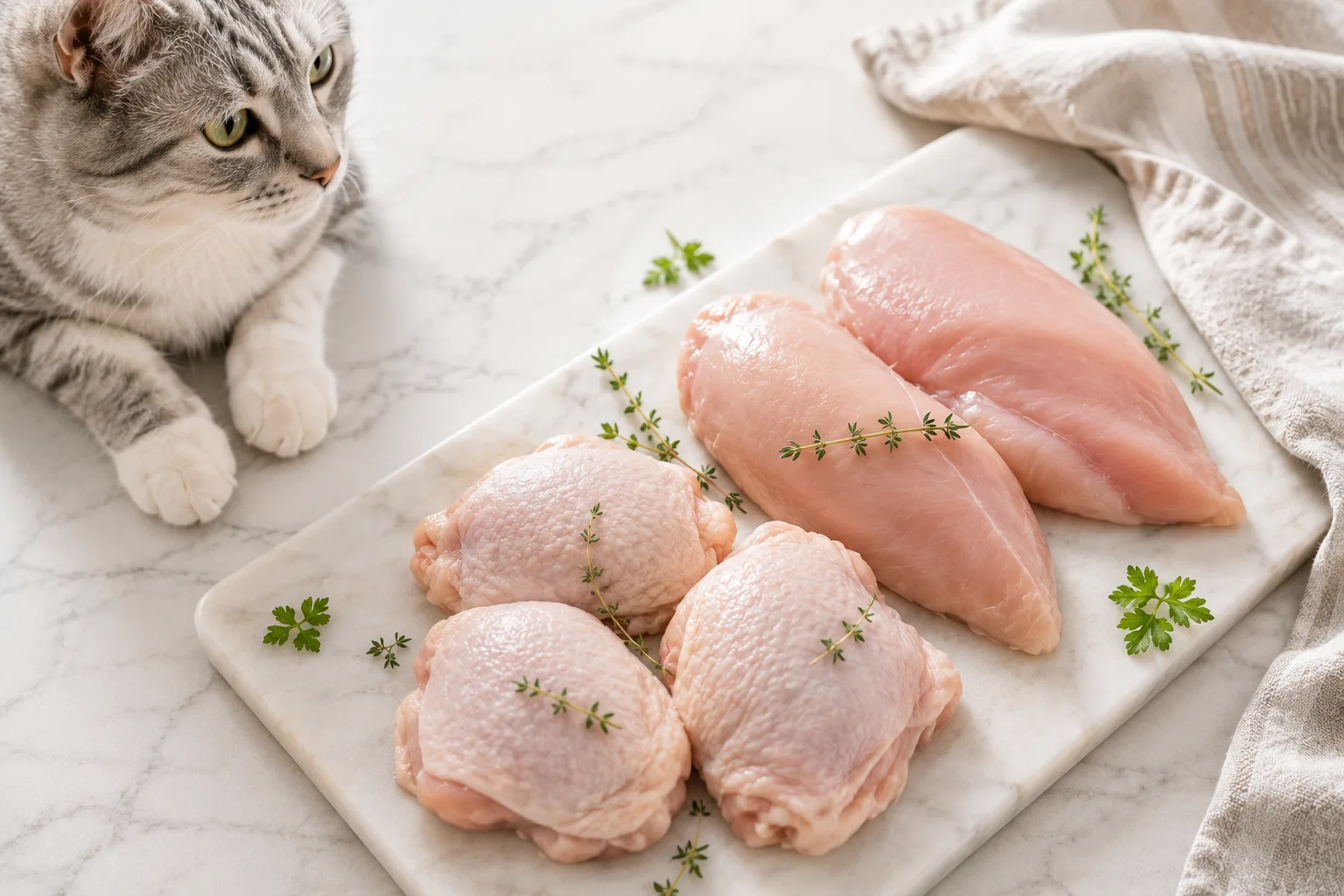
The practical swap is a few shreds of plain, unseasoned, boneless roast chicken or turkey thigh. Beef, lamb and cooked fish are reasonable in small amounts too, if plain and fully cooked. WSAVA's energy table gives the cost per 28 g: cooked prawns 29 kcal, canned tuna in water 36, cooked salmon 39, ham 46, lean chicken breast 47, lean turkey breast 50, lean beef 64. Read can cats eat chicken for the method, can cats eat tuna for why fish stays occasional, and can cats eat eggs for another cheap, high quality protein.
My cat ate a lot of ham. What should I do now?
Start by asking what kind of ham it was, because the risks run in a different order from the one most articles use. A glazed or seasoned ham justifies a phone call straight away, even if the cat looks well, because allium poisoning is silent for days.
Heinz body formation begins within 24 hours and peaks at about 72, haemolysis typically follows at three to five days, and signs do not appear until substantial red cell destruction has occurred: lethargy, loss of appetite, pale or yellowish gums, fast breathing, a fast heart rate, weakness, collapse, and red or brown urine. Call at once too if a bone was swallowed, if a lot of dry cured ham went down, if your cat has kidney or heart disease, if it is a kitten, or if there is any neurological sign.
For plain cooked ham, the realistic outcome is a stomach upset: possible vomiting, loose stools, a smaller appetite, more drinking and urinating. Increased thirst after a salt load is expected physiology, not poisoning, and most dietary indiscretion in cats resolves within 24 to 72 hours.
It helps to know how far away actual salt poisoning is. Merck gives no feline dose at all, so every figure in circulation is extrapolated from dogs, where signs appear at 2 to 3 g of sodium chloride per kilogram of body weight and about 4 g per kilogram can be fatal. Applied to a 4.5 kg cat, the lower figure means roughly 9 g of salt: about 375 g of deli ham, 236 g of roasted cured ham or 131 g of dry cured ham in one sitting. A cat cannot realistically eat that, which is why no poison control body lists ham as a salt poisoning source.
If a large quantity did go down, the signs run in order: vomiting first, usually within about three hours, then diarrhoea, lethargy and loss of coordination, then tremors, disorientation and seizures. Merck's diagnostic marker is a serum sodium above 160 mEq per litre, and correction has to happen at 0.5 to 1.0 mEq per litre per hour, because bringing sodium down too fast causes cerebral oedema. That makes it a veterinary job. Do not withhold water, offer it in small amounts frequently, and never try to make a cat vomit with salt, a practice Merck notes has fallen out of favour because of its lethal complications.
If the ham had a bone in it, watch for gagging, repeated swallowing, drooling, pawing at the mouth, refusal to eat and neck pain, the presenting signs in that feline foreign body series. Any cat that stops eating for a day or more should be seen whatever the cause, because prolonged loss of appetite is dangerous for cats in its own right. Useful numbers: the ASPCA Animal Poison Control Center on (888) 426-4435 and Pet Poison Helpline on (855) 764-7661, both of which charge a consultation fee, plus your own vet. Before you call, work out the type of ham, the amount, whether it was glazed, and your cat's weight.
This guide goes into more depth than Can Cats Eat Meat and Fish? and What Foods Are Toxic to Cats?, which compare the whole group side by side.
Frequently asked questions
Is ham OK for cats to eat?
A small piece of plain, unseasoned cooked ham is not poisonous, and ham appears on no veterinary poison list. It is still a poor choice. One 28 g slice is 46 kcal, about double a 4.5 kg cat's entire daily treat allowance under WSAVA's rule, and carries around 228 mg of sodium for almost no taurine in return.
How much ham can a cat have?
If you give it at all, keep it to 2 to 3 g, roughly a fingertip, occasionally rather than daily. WSAVA caps treats at 24 kcal a day for a 4.5 kg cat, and the widely repeated 1 inch cube of ham weighs about 16 g and supplies 26 to 28 kcal, which uses the whole day's allowance by itself.
Is ham too salty for cats?
Ham is salty relative to a cat's needs. AAFCO's minimum works out at about 120 mg of sodium a day for a 4.5 kg cat, and a 28 g slice of ham holds about 228 mg. That roughly doubles the day's sodium rather than poisoning the cat, but it matters a great deal for cats on cardiac or renal diets.
Can cats eat honey baked or glazed ham?
No. Glazes and rubs commonly contain onion and garlic powder, and the Merck Veterinary Manual names cats as the species most susceptible to allium toxicosis, with a threshold under a teaspoon of cooked onion. Signs are delayed: Heinz bodies peak at about 72 hours and haemolysis usually follows at three to five days.
Can cats eat ham bones?
No. WSAVA states that bones, cooked and raw, can be very dangerous to cats. Cooking dries bone so it splinters into sharp shards, and the FDA's bone treat reports name ham bones among products linked to choking, blockages, mouth injuries and death, although all of those reports involved dogs.
Is ham or turkey better for cats?
Turkey, clearly. Measured taurine in dark turkey meat is about 3060 mg per kilogram raw against 350 in boiled deli ham, and plain roast turkey carries a fraction of the sodium with no cure, no glaze and no added phosphate.
Can cats eat bacon?
No. Pan fried bacon measures 1680 mg of sodium, 468 kcal and 35.1 g of fat per 100 g, which is worse than ham on every axis, and Pet Poison Helpline advises avoiding processed meats such as lunch meat and bacon because of their salt content.
Can kittens eat ham?
No. A 1.5 kg kitten sits below the lowest row of WSAVA's treat table, one 28 g slice at 46 kcal is more than two days of treat calories for it, and ham inverts the calcium to phosphorus ratio of 1 to 1 up to 2 to 1 that AAFCO requires for growth.
What happens if a cat eats too much salt?
Vomiting usually comes first, often within about three hours, followed by diarrhoea, lethargy, loss of coordination, tremors and seizures. Reaching that point from ham is not realistic: using the dog derived threshold, a 4.5 kg cat would need roughly 236 g of cured ham at one sitting. Call a vet rather than treating it at home, do not withhold water, and never use salt to induce vomiting.
Sources
- AAFCO Dog and Cat Food Nutrient Profiles (2014 revised, Appendix A) Cat sodium minimum 0.5 g per 1000 kcal ME (0.2 percent dry matter) for growth and adult maintenance, with no maximum set. Taurine minimum 0.10 percent DM extruded and 0.20 percent canned. Calcium to phosphorus ratio 1:1 to 2:1.
- USDA FoodData Central (SR Legacy) All sodium, fat, calorie and portion figures for deli ham, honey smoked ham, roasted cured ham, country style dry cured ham, canned ham, Spam, ham fat and bacon, plus the 13 g and 28 g standard slice weights.
- Merck Veterinary Manual, Salt Toxicosis in Animals Dog thresholds of 2 to 3 g/kg sodium chloride for signs and about 4 g/kg for lethality; no cat-specific dose is given. Serum sodium above 160 mEq/L is diagnostic, correction is limited to 0.5 to 1.0 mEq/L per hour, and salt is no longer used as an emetic.
- Merck Veterinary Manual, Garlic and Onion (Allium spp) Toxicosis in Animals Cats are the most susceptible species. Feline threshold under a teaspoon of cooked onion or 5 g/kg raw onion, against 15 to 30 g/kg in dogs; garlic is 3 to 5 times more toxic. Heinz bodies begin within 24 hours, peak at 72, haemolysis at 3 to 5 days.
- Merck Veterinary Manual, Nitrate and Nitrite Poisoning in Animals Methaemoglobin mechanism and thresholds (30 to 40 percent for signs, above 80 percent usually lethal), methylene blue at 4 to 15 mg/kg. The chapter is livestock focused and does not mention dogs or cats or give species dose thresholds.
- Merck Veterinary Manual, Nutritional Requirements of Small Animals Resting energy requirement equation of 70 x (body weight in kg)^0.75, with a healthy neutered adult cat at 1.2 x RER. Used to derive the 240 to 260 kcal per day figure for a 4.5 kg cat.
- WSAVA, Feeding treats to your cat (owner handout) Treats should be under 10 percent of daily calories, with the ceiling table (24 kcal a day for a 4.5 kg cat). Lists ham at 46 kcal per 28 g and cheddar at 120 kcal, and states that bones, cooked and raw, can be very dangerous to cats.
- Cornell Feline Health Center, Feline Pancreatitis No obvious underlying cause in over 95 percent of feline cases, with dietary fat absent from the listed risk factors. Abdominal pain is detected in only 10 to 30 percent of cats; fPLI can miss mild disease and ultrasound finds changes in up to two thirds.
- VCA Animal Hospitals, Nutrition and Pancreatic Disease in Cats States that, unlike dogs, cats do not appear to develop pancreatitis as a result of eating a high fat diet. This is the source that corrects the widely repeated fat and pancreatitis warning in cat articles.
- Acierno MJ et al., ACVIM consensus statement on systemic hypertension in dogs and cats, J Vet Intern Med 2018;32:1803 Blood pressure in normal cats and dogs appears relatively salt insensitive, and substantial sodium restriction alone generally does not lower it, though the panel still recommends avoiding high dietary sodium chloride.
- Reynolds BS et al., PEANUT study: five year dietary salt safety in healthy aged cats, J Vet Intern Med 2024;38(1):285 Twenty healthy neutered cats fed 3.26 g sodium per Mcal ME against a 1.02 g control for up to 60 months, with no adverse effect on renal or cardiac function, blood pressure or other outcomes. Limited by small numbers and colony housing.
- Spitze AR et al., Taurine concentrations in animal feed ingredients, J Anim Physiol Anim Nutr 2003;87:251 Taurine in mg per kg wet weight: boiled deli ham 350, smoked deli ham 277, baked picnic ham 500, chicken dark meat 1690 raw and 1990 broiled, turkey dark meat 3060 raw. Also the boiling losses (chicken leg 337 raw, 229 baked, 82 boiled).
- Li X et al., Pseudogenization of a Sweet-Receptor Gene Accounts for Cats' Indifference toward Sugar, PLoS Genetics 2005;1(1):e3 The feline Tas1r2 gene carries a 247 base pair deletion in exon 3 plus stop codons in exons 4 and 6, making it an unexpressed pseudogene, so cats cannot detect sweetness. The same defect appears in tiger and cheetah.
- Sherman RA, Mehta O, Novel Differential Measurement of Natural and Added Phosphorus in Cooked Ham, Journal of Renal Nutrition 2012 Cooked ham with phosphorus preservatives contained 169 mg of inorganic phosphorus per 100 g against 102 mg without, a 66 percent increase. Additive phosphate is close to 100 percent absorbable against 40 to 60 percent for natural phosphorus.
- Abd Elkader NA et al., Oesophageal foreign bodies in cats, PLoS ONE 2020;15(6):e0233983 Thirty cats with oesophageal foreign bodies: sewing needles in 25 and bones in 5, complications in 20 percent including perforation and abscess, all recovered after removal. Presenting signs included anorexia, dysphagia and cervical pain.
- FDA Consumer Update, No Bones (or Bone Treats) About It About 68 reports of illness covering roughly 90 animals with about 15 deaths, with ham bones named among the products. Injuries included choking, gastrointestinal blockage, mouth wounds and death. All reports concerned dogs.
- Worth AJ et al., Nitrite poisoning in cats and dogs fed a commercial pet food, New Zealand Veterinary Journal 1997;45(5) The only documented feline nitrite fatality: three cats died after eating a pet food containing a mean 2850 mg of total nitrite per kg, with brownish blood at necropsy. Two of four dogs on the same food became ataxic and weak.
- Evaluating the Residual Nitrite Concentrations of Bacon in the United Kingdom (PMC7404468) Eighty-nine bacon samples averaged 10.8 mg of residual nitrite per kg against an EU ceiling of 175 mg/kg, and the paper cites a survey putting ham at about 16.1 mg/kg. Residual nitrite also declines during storage.
- Today's Veterinary Practice (ACVN Nutrition Notes), Nutritional Management of Chronic Kidney Disease in Cats and Dogs Renal diets run 0.5 to 1.0 g sodium per 1000 kcal in cats, no evidence that lowering dietary sodium reduces blood pressure, and over-restriction may activate the renin angiotensin aldosterone system. Source of the six cat non-azotaemic CKD crossover finding.
- VCA Animal Hospitals, Nutrition for Cats with Congestive Heart Failure Treats should not contain excessive sodium or fat, and many human foods carry excess sodium, but adequate calorie intake matters more than sodium restriction because of the risk of cardiac cachexia.
- Cornell Feline Health Center, Toxoplasmosis in Cats Cats become infected by eating raw meat or infected prey, shed oocysts in the millions beginning two to three weeks after infection for up to two weeks, and those oocysts turn infective one to five days after being passed.
- Toxoplasma gondii in raw and dry-cured ham: the influence of the curing process (Food Microbiology 2017) T. gondii detected in 26 of 38 raw hams from seropositive pigs at low burden, with viability strongly influenced by curing period, salt concentration and temperature. No viable parasites were found in Parma ham after 14 months of curing.
- FSANZ, Uncooked slow dry cured ready-to-eat ham and Listeria (risk review) Low Listeria monocytogenes prevalence in uncooked slow dry cured ready to eat ham, with counts below 100 CFU/g where enumerated, and Salmonella requiring about 122 days of processing to be inactivated.
- Hormel SmartLabel, SPAM Classic Manufacturer label for a 2 oz (56 g) serving: 180 kcal, 790 mg sodium, 16 g fat. Consistent with the USDA entry of 1410 mg sodium, 315 kcal and 26.6 g fat per 100 g.
- Pet Poison Helpline, Salt Lists salt dough, play dough, de-icer and ocean water as exposure sources, with gastrointestinal and neurological signs. Ham, deli meat and table scraps are not named, which is why this article does not treat ham as a salt poisoning source.
- American College of Veterinary Pharmacists, Salt Corroborates 2 to 3 g/kg for signs and 4 g/kg as potentially fatal, notes vomiting is usually the first sign and that signs are reported within three hours, and gives the ASPCA (888) 426-4435 and Pet Poison Helpline (855) 764-7661 numbers.
- ASPCA, People Foods to Avoid Feeding Your Pets Onion, garlic and chives cause gastrointestinal irritation and red blood cell damage leading to anaemia; salt can cause vomiting, diarrhoea, tremors and seizures. Ham, deli meat and bacon are not named anywhere on the list.
General information, not veterinary advice. If your cat's behavior has changed suddenly, speak to a vet rather than an article.
How this guide was researched and checked is set out in how our guides are written.

Want an answer in seconds?
The calculators handle age, due dates and portions without an account.