Best Food for Indoor Cats: What to Look For


On this page
"Indoor formula" on a bag of cat food describes a general approach, not a regulated nutritional standard. What actually matters for an indoor cat is closer to what matters for any cat: the right calories for how active they really are, a protein-first ingredient list, and a formula matched to their life stage.
This guide is written from published veterinary and regulatory sources, linked as they come up and listed again at the bottom.
What does "indoor formula" actually mean?
There is no official definition. In practice, foods marketed as indoor formulas tend to be somewhat lower in calories and higher in fiber for hairball control, on the reasoning that indoor cats are typically less active than cats with outdoor access. That is a reasonable starting assumption, but it is a marketing category rather than a standard every brand follows the same way, so reading the actual label tells you more than the word on the front of the bag.
What to actually look for on the label
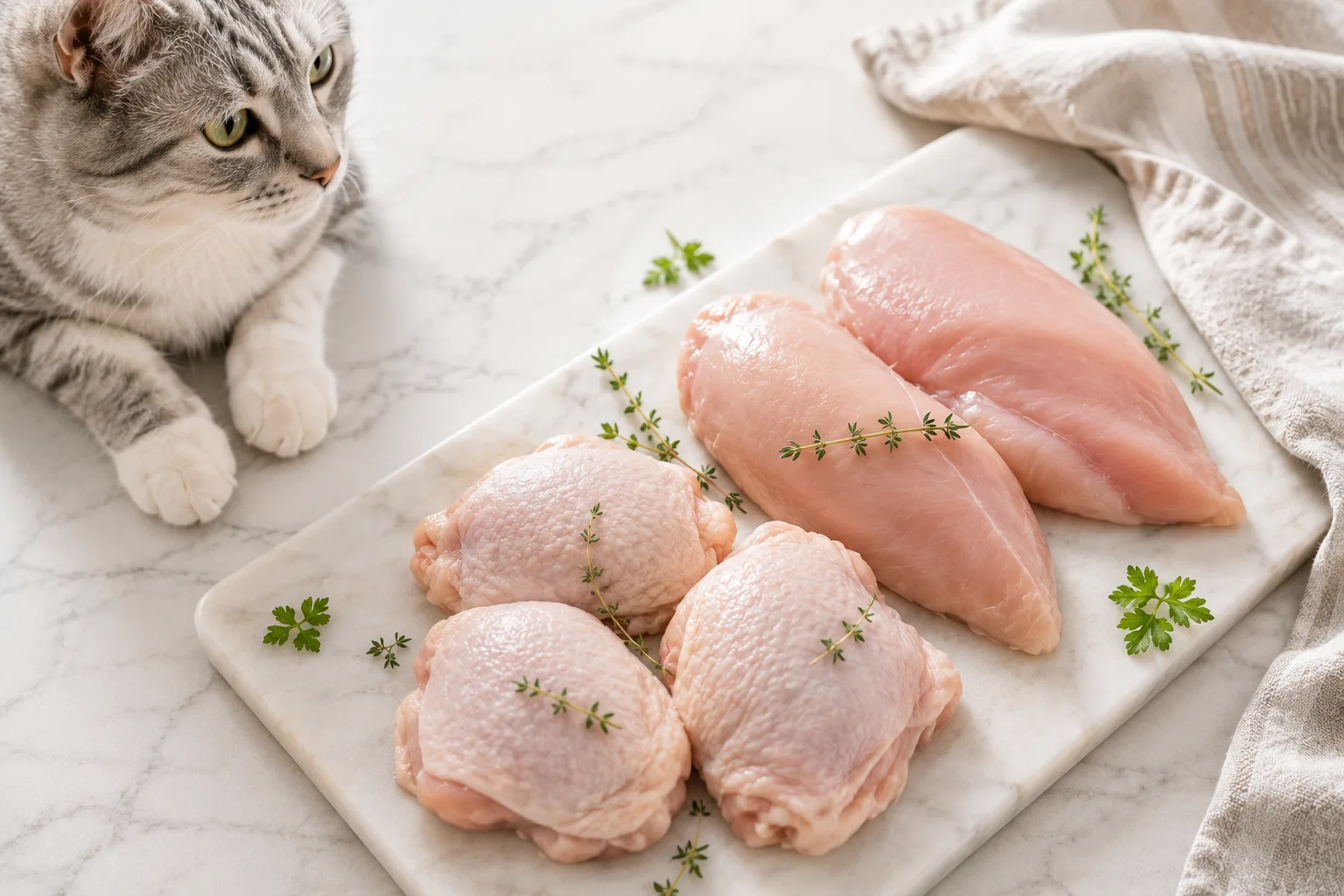
Cats are obligate carnivores, which means they rely on nutrients found only in animal products, as the Cornell Feline Health Center puts it, and that does not change based on lifestyle. A named animal protein, such as chicken, turkey or salmon, should be among the first ingredients, since ingredients are listed in order of weight.
The label should also carry a nutritional adequacy statement saying the food is complete and balanced for your cat's life stage. Under US rules, explained by the FDA, a complete and balanced cat food must either meet an AAFCO nutrient profile or pass an AAFCO feeding trial. Life stage affects nutritional needs far more than indoor versus outdoor does.
 A named protein first on the ingredient list matters more than the word "indoor" on the front of the bag.
How to decode the name on the bag
The wording of a product name is regulated more tightly than most owners realize. The AAFCO labeling rules set a minimum amount of the named ingredient for each style of name:
- "Chicken Cat Food": chicken makes up most of the product, at least 95% of it not counting added water.
- "Chicken Dinner", "Entrée" or "Platter": at least 25% chicken not counting water, and at least 10% of the total.
- "Cat Food with Chicken": as little as 3% chicken.
- "Chicken Flavor": only enough to give a detectable flavor.
So "with chicken" on the front can mean very little chicken. The ingredient list and the adequacy statement on the back tell you more than the name on the front.
Is there a special standard for senior cats?
No. The FDA notes that AAFCO sets just two nutrient profiles for cats: one for growth and reproduction, covering kittens and pregnant or nursing cats, and one for adult maintenance. A food labeled "senior" is still tested against the adult profile. Some foods are formulated for all life stages, which the Cornell Feline Health Center points out can simplify things in a home with cats of different ages.
Getting the calories right
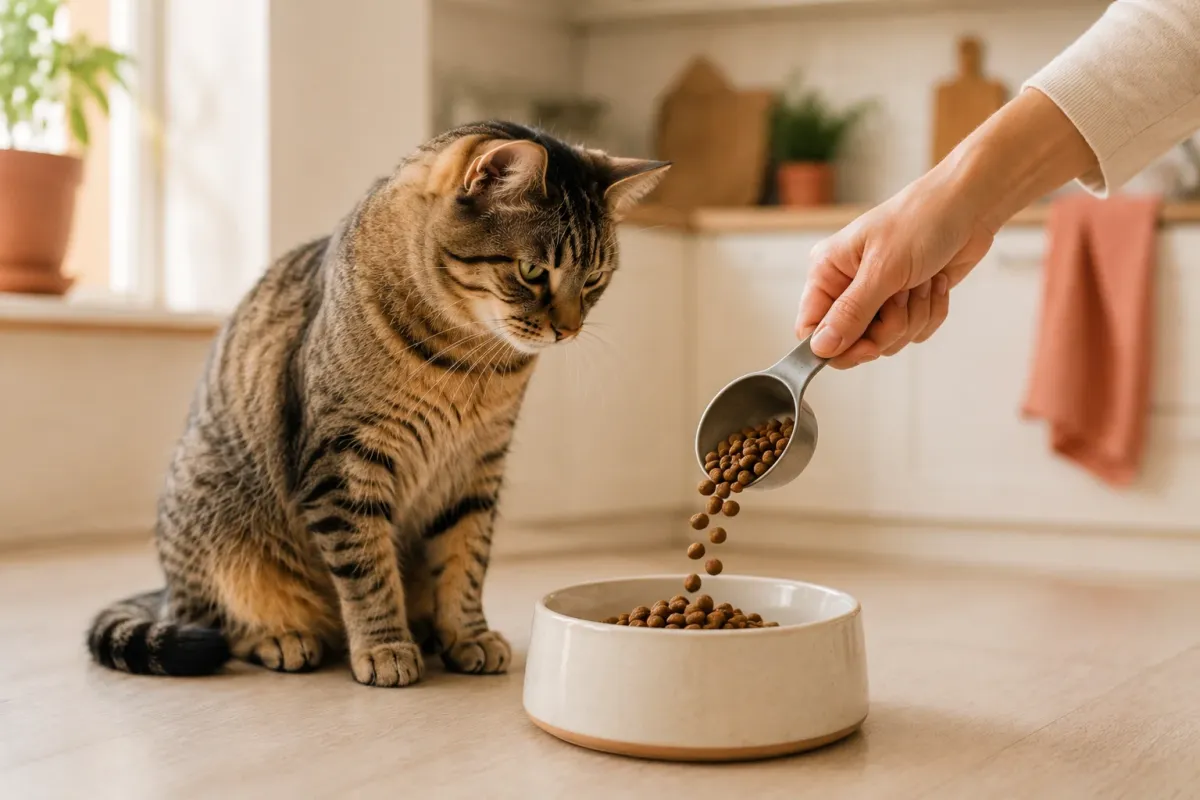
Indoor cats generally burn fewer calories than cats with regular outdoor activity, and weight gain is one of the more common issues among indoor cats as a result. Rather than relying on a bag's general "indoor" positioning, working out your specific cat's daily calorie needs from their weight gives a far more accurate portion. Our feeding guide has the formula vets use and a reference table by weight, and our cat calorie calculator does the math for you.
Wet or dry food for an indoor cat?
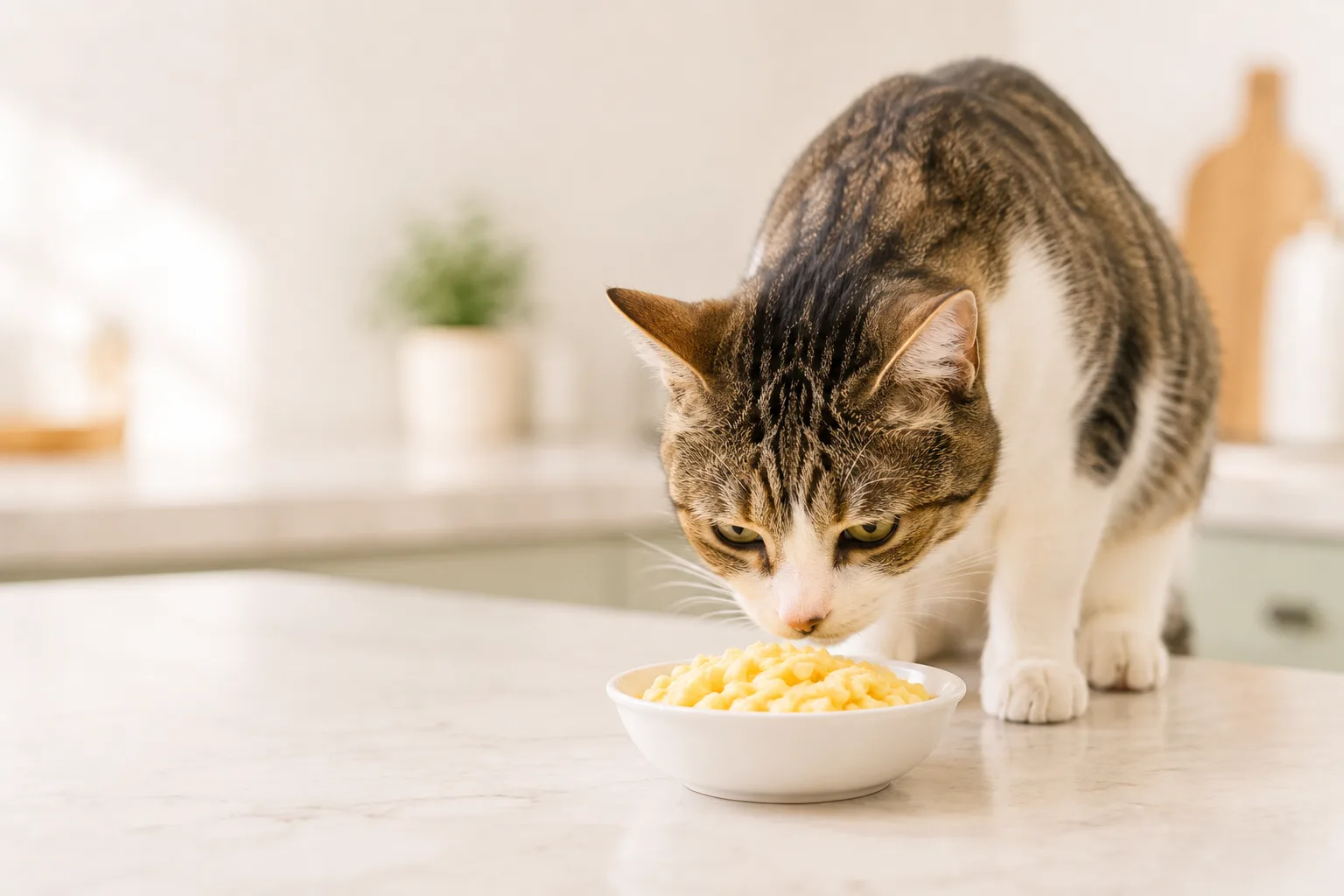
Both can be complete diets, and the choice matters less than getting the calories right within whichever you pick. Wet food does have one specific advantage: according to the Cornell Feline Health Center, canned food is at least 75% moisture, while dry food contains only 6 to 10% water. That matters for indoor cats in particular. Cornell's guide to lower urinary tract disease lists being overweight, getting little exercise, using an indoor litter box and drinking less water among the traits of the cats most often affected. Dry food is more convenient and typically cheaper per calorie, and plenty of indoor cats do fine on it with adequate water intake from a bowl or fountain.
Hairball control: food or brushing?
Indoor cats tend to groom more, simply from having less else to do, so hairballs come up more often as a concern. A fiber-adjusted hairball formula can help, but regular brushing does more for most cats than a specialized food does. Our hairball guide covers which brush suits which coat. A cat bringing up hairballs frequently, or straining without producing one, is worth mentioning to a vet rather than assuming a food swap will fix it.
Matching food to life stage
A kitten, an adult and a senior cat have meaningfully different needs, and that difference matters more than whether a cat goes outside. If you are not sure where your cat sits, our cat age calculator converts their age into the life stage that should be driving the food choice.
Can indoor and outdoor cats eat the same food?
Yes, as long as the portion is adjusted for how active each cat actually is. A complete, balanced adult formula works for both an indoor and an outdoor cat; what changes is how much of it each one needs, not which bag it comes from.
Frequently asked questions
Do indoor cats need special indoor formula food?
Not strictly. "Indoor formula" describes a general approach, usually somewhat lower in calories and higher in fibre for hairball control, but it is a marketing category rather than a standard every brand follows the same way. Reading the actual label, rather than trusting the word "indoor" on the front, tells you more.
What should I actually look for on the label?
A named animal protein, such as chicken or salmon, as the first ingredient; a statement that the food is complete and balanced for your cat's life stage; and a calorie count you can compare against what your cat actually needs, which our feeding guide walks through with a real formula rather than the number on the bag.
Is wet or dry food better for an indoor cat?
Both can be complete diets. Wet food adds meaningful water intake, which matters for indoor cats prone to concentrated urine and the urinary issues that can follow, and it is often easier to portion accurately since a whole can or pouch is one measured amount. Dry food is more convenient and typically cheaper per calorie.
How many calories does an indoor cat need?
Less than an equivalent outdoor cat, generally, because there is less activity to burn through. Our guide to how much to feed a cat has a reference table and the formula vets actually use, starting from body weight rather than a life-stage label.
Do I need a hairball control formula?
Only if hairballs are actually a recurring issue for your cat. Regular brushing does more for most cats than a specialised food, and a cat bringing up hairballs more than occasionally, or straining without producing one, is worth mentioning to a vet rather than solving with a bag swap alone.
Can an indoor cat just eat the same food as an outdoor cat?
Yes, as long as the calories are right for how active that specific cat actually is. Life stage and portion size matter more than an indoor or outdoor label on the packaging, and the same complete, balanced adult formula works for both if the amount is adjusted to fit.
Sources
- Cornell Feline Health Center: Feeding Your Cat Obligate carnivores, reading the ingredient list, and the water content of canned versus dry food.
- Cornell Feline Health Center: Feline Lower Urinary Tract Disease Traits of the cats most often affected, including indoor living and low water intake.
- FDA: "Complete and Balanced" Pet Food What the adequacy statement means, and the two AAFCO nutrient profiles for cats.
- AAFCO: Reading Pet Food Labels The 95%, 25%, "with" and "flavor" naming rules.
- WSAVA Global Nutrition Guidelines Veterinary nutrition assessment tools, including body condition scoring.
General information, not veterinary advice. If your cat's behavior has changed suddenly, speak to a vet rather than an article.
How this guide was researched and checked is set out in how our guides are written.

Want an answer in seconds?
The calculators handle age, due dates and portions without an account.